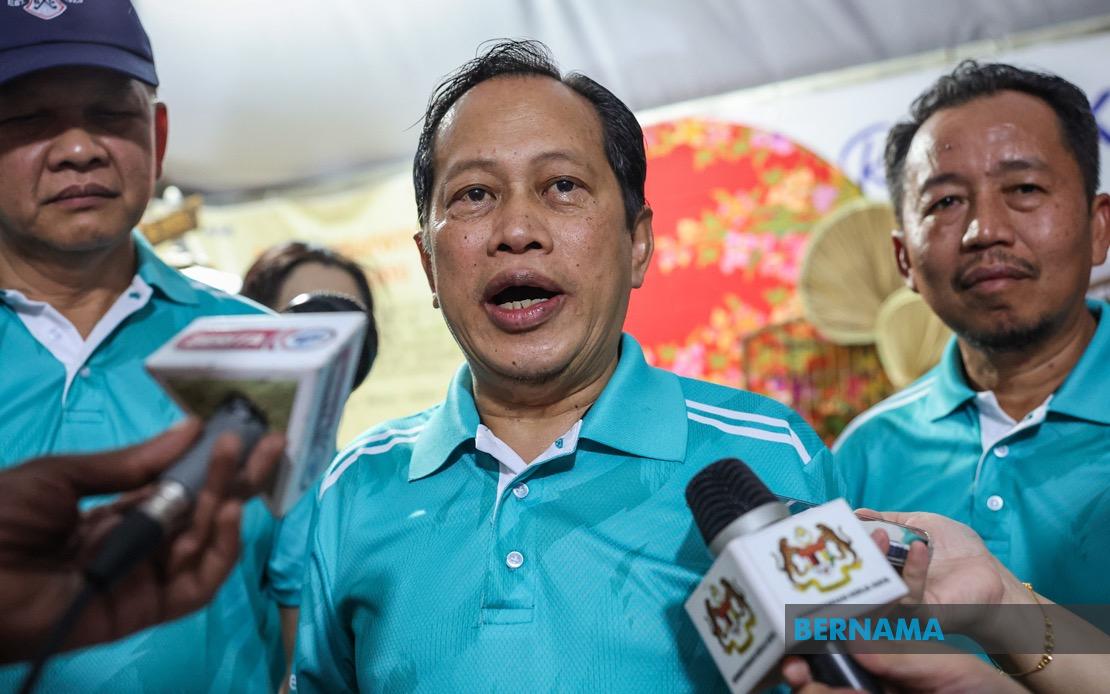
The Malaysian Works Ministry is mounting a push to secure the highest development allocation in Budget 2027, arguing that expanded funding is essential to accelerate infrastructure projects and maintenance work nationwide. Deputy Works Minister Datuk Seri Dr Ahmad Maslan made the appeal while attending the Cultural Night Run at the Sultan Abdul Halim Mu'adzam Shah Bridge in Batu Kawan on August 8, signalling the ministry's readiness to make its case to the Finance Ministry ahead of crucial budget negotiations scheduled for August 28.
Currently, the Works Ministry is consolidating funding requests from its subordinate agencies as part of the annual budgetary process. The compilation effort involves key entities such as the Malaysian Highway Authority (LLM), Construction Industry Development Board Malaysia (CIDB), and the Public Works Department (JKR), each submitting their requirements and priorities for the coming fiscal year. This coordinated approach reflects the ministry's determination to present a unified and comprehensive case for increased resources when it meets with Finance Minister II later this month.
The ministry's appetite for a larger budget stems from the constraints it faced in the previous allocation cycle. Ahmad Maslan indicated that in the most recent budget, the Works Ministry received approximately RM10 billion, of which RM9 billion was designated specifically for development expenditure. The distinction is significant: development funds typically cover new projects and major infrastructure improvements, while the remainder addresses operational costs and maintenance. The ministry's implicit argument is that the current development envelope is insufficient to meet the nation's infrastructure demands, particularly given Malaysia's geographic spread and the ongoing need to upgrade aging road networks.
Beyond the budgetary appeal, Ahmad Maslan used the occasion to highlight ongoing digital transformation initiatives within the transport infrastructure sector. The Works Ministry, through the LLM, is actively investing in smart highway technology that leverages artificial intelligence, closed-circuit television networks, digital lane management systems, and data analytics to enhance road safety and traffic flow. These technological upgrades represent a strategic pivot towards intelligent transportation systems that can better serve the travelling public while potentially reducing accident rates and congestion.
Central to this modernisation effort is TuJu, a locally-developed navigation application launched by LLM that competes with established global platforms such as Waze and Google Maps. What distinguishes TuJu is its highway-specific functionality: the app provides real-time feeds from CCTV cameras installed across Malaysia's 34 highways, displays current toll rates, pinpoints rest and recreation areas, facilitates emergency assistance requests, and integrates traffic data streamed from the LLM Traffic Control Centre. This integration of monitoring and user-facing technology creates a more comprehensive information ecosystem for motorists navigating Malaysia's extensive highway network.
The LLM Traffic Control Centre, which feeds data into TuJu, operates hundreds of surveillance cameras spread across all 34 highways, including both of Penang's major bridges. The scope of this monitoring infrastructure underscores the capital intensity of maintaining modern highways. Ahmad Maslan emphasised that TuJu functions as a hub within a larger ecosystem of transportation applications, linking also to the KKR and MYJalan platforms, which allow commuters to lodge reports and complaints regarding road conditions, creating a feedback loop that helps authorities identify and address infrastructure deficiencies more rapidly.
Malaysia's highway network, administered by 28 different concessionaires, spans more than 2,000 kilometres of roads. PLUS Malaysia Berhad alone operates over 1,000 kilometres of this total. The fragmented concession structure, while it has enabled the development of an extensive road network, creates coordination challenges, particularly regarding technological standardisation and interoperability. Ahmad Maslan's remarks about TuJu's integration with other platforms suggests the ministry is attempting to create a unified digital experience despite this operational fragmentation.
Another significant development initiative discussed is the Multi Lane Free Flow (MLFF) system, which eliminates the need for vehicles to stop at toll booths by enabling electronic toll collection as traffic moves continuously. However, Ahmad Maslan clarified that MLFF implementation remains at the proof-of-concept stage and will proceed through business-to-business arrangements between concessionaires without requiring government funding. This approach transfers both the financial burden and operational responsibility to private operators, allowing individual concessionaires to select either their own subsidiaries or third-party service providers to deliver the capability. PLUS Malaysia has already begun deploying JustGo, its subsidiary's MLFF solution, demonstrating that the private sector is willing to invest in this technology.
The push for increased budget allocation must be understood within Malaysia's broader infrastructure development context. The nation's highways, many constructed in the 1990s and 2000s, are entering phases where maintenance costs escalate significantly. Simultaneously, traffic volumes in major corridors have grown far beyond original design projections, necessitating system upgrades and capacity expansions. The Works Ministry's budgetary argument rests partly on the premise that deferred maintenance and belated capacity improvements ultimately cost more than proactive investment, a classic infrastructure economics argument that carries particular weight in developing economies where road networks form the backbone of commerce and mobility.
The Cultural Night Run event itself, which attracted 5,000 participants including 114 international visitors from 18 countries, served as a platform for the ministry to showcase its commitment to community engagement and national development. The event's organisation involved collaborative efforts between the Works Ministry, the Entrepreneur Development and Cooperatives Ministry (KUSKOP), the Youth and Sports Ministry (KBS), the Penang state government, and numerous other public and private partners, illustrating the multi-agency coordination required for large-scale infrastructure initiatives. Such public engagement exercises help build political support for enhanced allocations by demonstrating concrete benefits to Malaysian communities.
For Malaysian motorists and logistics operators, the implications of the Works Ministry's budgetary campaign are potentially significant. Increased development funding could accelerate the expansion and modernisation of highway networks, reduce congestion-related delays, and facilitate the deployment of safety-enhancing technologies. For regional development, improved highway infrastructure in states like Penang, Selangor, and Johor could strengthen economic integration and support manufacturing and services sectors that depend on reliable transport corridors. The ministry's emphasis on digital technologies also suggests a gradual shift towards data-driven traffic management, which could eventually improve the efficiency of Malaysia's logistics ecosystem and support the nation's broader aspirations towards becoming a high-income developed economy.

