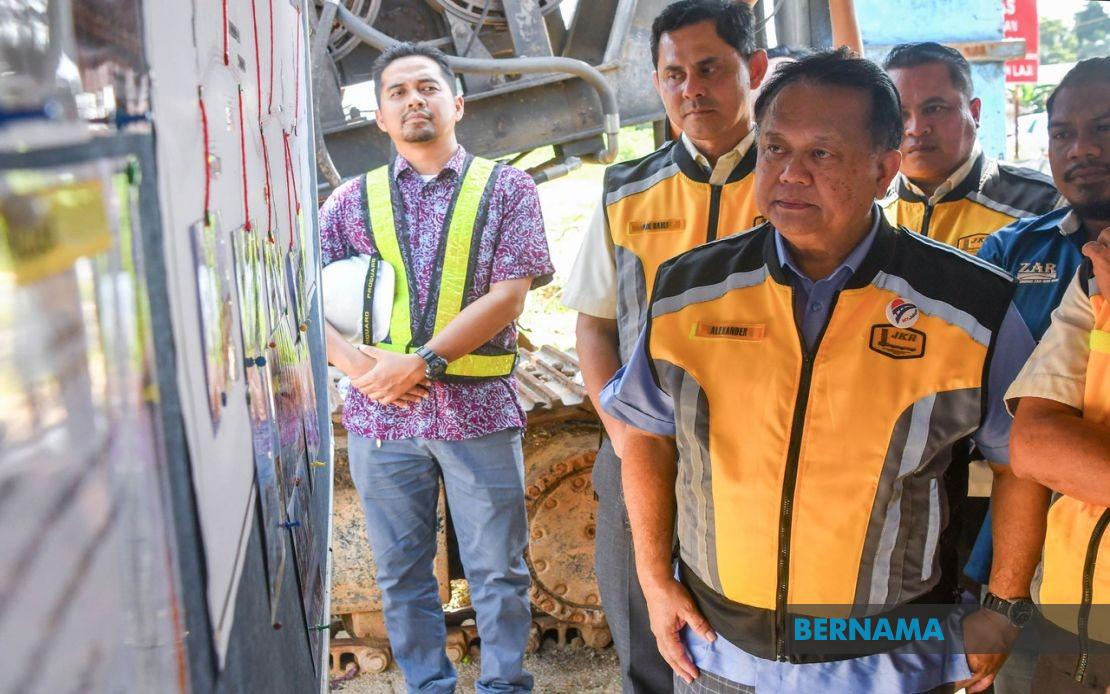
The Malaysian Works Ministry has established a rigorous monitoring regime for 50 projects experiencing significant delays, with the body conducting weekly assessments to determine whether troubled schemes should continue, receive extensions, or face termination. Works Minister Datuk Seri Alexander Nanta Linggi disclosed this comprehensive oversight framework during a working visit to a major road upgrading project in Kelantan, underlining the government's commitment to salvaging implementation schedules across a sprawling portfolio of 865 initiatives nationwide.
Identifying problematic projects represents only the first step in the ministry's recovery strategy. The 50 flagged schemes emerge from detailed scrutiny of a massive construction pipeline, with Kelantan alone housing 104 ministry projects, of which just seven carry the "sick" classification. This targeted identification process allows senior officials to concentrate resources and attention on the most troubled cases rather than attempting blanket interventions across the entire portfolio, a pragmatic approach that reflects the complexity of managing Malaysia's infrastructure development agenda.
The underlying causes of project delays reveal systemic vulnerabilities across Malaysia's construction sector. Contractors frequently encounter financial instability and organisational failures that undermine steady progress. Land acquisition complications, particularly in densely populated or complex ownership environments, routinely stall commencement or advancement. Utility relocation—moving electrical, water, telecommunications, and other essential services—introduces unexpected procedural delays. Equally significant are unforeseen ground conditions, such as underground obstructions never detected during initial surveys, which can necessitate expensive redesigns and schedule recalibrations. These multifaceted challenges underscore why construction management in Malaysia demands sustained ministerial engagement rather than passive administration.
The decision-making framework for troubled projects balances competing imperatives of cost control and timeline recovery. Nanta articulated a nuanced position: while terminating contracts and appointing replacement contractors might seem straightforward, such action often proves counterproductive financially. When projects approach completion with only ten to fifteen percent of work remaining, extension of time becomes more economical than termination and re-tendering, avoiding the substantial costs associated with contract dissolution, legal disputes, and mobilising new contractors. This pragmatism reflects hard lessons learned across Malaysia's infrastructure development experience, where rigid enforcement sometimes generates greater public expenditure than flexible management.
Weekly monitoring cycles integrated into post-Cabinet meeting agendas represent the operational backbone of this oversight system. By institutionalising review processes at the highest administrative level, the ministry ensures that project status updates inform broader government strategy rather than languishing in departmental files. Nanta has specifically tasked his deputy with coordinating nationwide sick project surveillance, creating a dedicated chain of command for performance management. This structural arrangement prevents monitoring from becoming merely symbolic, instead establishing genuine accountability mechanisms where delayed projects receive consistent high-level attention.
Projects demonstrating persistent poor performance face escalating consequences, though contract termination involves careful legal consideration. The ministry retains authority to remove underperforming contractors or cancel agreements entirely, but Nanta emphasised that such decisions demand meticulous adherence to governance protocols to avoid litigation and reputational damage. This caution reflects Malaysia's construction industry experience, where hasty contract terminations have frequently triggered prolonged disputes, cost overruns, and further delays—outcomes worse than tolerating temporary underperformance in some circumstances.
The FT209 and FT131 road upgrading project in Kelantan exemplifies both the scale of infrastructure challenges and the ministry's engagement with regional needs. This RM191 million initiative, targeting completion in September 2025, addresses chronic congestion affecting the Kubang Kerian to Sabak corridor and onwards to Pengkalan Chepa. Having achieved 71.61 percent physical progress, the project demonstrates measurable advancement despite land acquisition complexities involving 300 separate lots costing over RM200 million. Such scale indicates why delays ripple across entire regions, affecting commerce, commuting, and economic productivity for hundreds of thousands of Malaysians.
Flooding complications arising from construction works exemplify how infrastructure projects generate secondary problems requiring ministerial intervention. Pengkalan Chepa Member of Parliament Datuk Dr Ahmad Marzuk Shaary raised concerns about water management during implementation, prompting Nanta to instruct immediate construction of a 40-metre temporary drainage channel. This responsive action addresses community welfare whilst development continues, demonstrating how effective project management incorporates social considerations into implementation schedules. Resolving such issues prevents construction from becoming a source of public grievance and maintains stakeholder confidence in government infrastructure programmes.
The broader significance of intensive project monitoring extends beyond mere schedule management to encompassing efficient public resource deployment. Sick projects represent capital tied up unproductively, budgets consumed without corresponding benefits, and public confidence eroded by visible stalled development. Malaysia's transformation aspirations depend fundamentally on dependable infrastructure delivery, from transportation networks to utilities serving growing urban populations. The Works Ministry's systematic approach to identifying and remediating troubled schemes reflects recognition that infrastructure development success determines economic competitiveness and citizen quality of life.
Regional implications merit consideration within this national framework. Kelantan's relatively small proportion of sick projects suggests uneven distribution of implementation challenges across Malaysia's states, potentially reflecting variations in contractor capacity, land acquisition complexity, and governance standards. Understanding these geographical patterns enables more targeted interventions, directing enhanced oversight toward regions experiencing disproportionate delays whilst allowing effective performers greater operational autonomy. Such differentiation optimises supervisory resources and acknowledges that infrastructure challenges vary significantly across Malaysia's diverse landscape.
Looking forward, the ministry faces sustained pressure to convert monitoring activity into tangible completion outcomes. Talking about 50 sick projects becomes meaningful only when the number declines demonstrably through actual completion or genuine remediation. The weekly review cycle and deputy minister oversight create conditions for improvement, but execution remains paramount. Malaysian citizens and businesses increasingly expect not merely that the government identifies problems but that identified problems receive systematic resolution within reasonable timeframes. The coming months will reveal whether intensive monitoring translates into the schedule recovery that Ministry officials are publicly promising.

