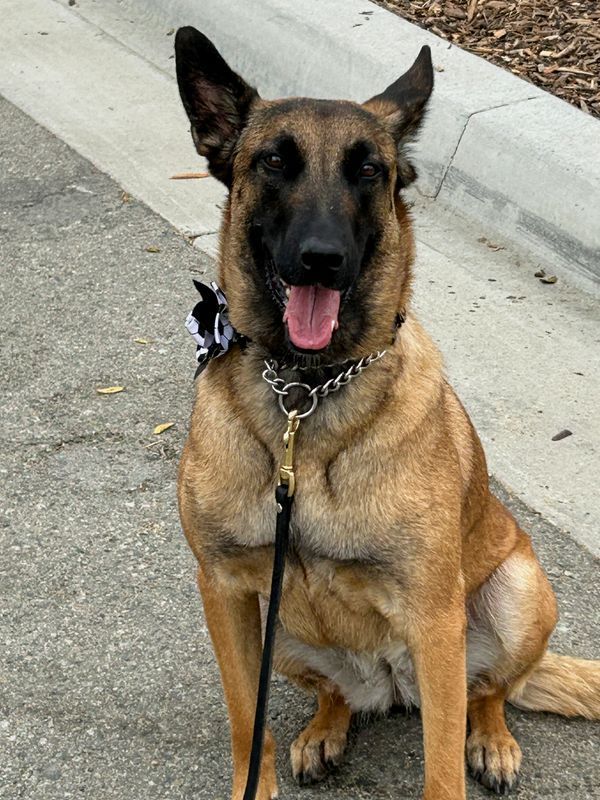
The 2026 FIFA World Cup co-hosted across the United States, Canada and Mexico demonstrated how modern major sporting events demand security infrastructure rivalling that of military operations. Hundreds of detection dogs, stationed at stadium entrances and perimeters, formed the frontline against potential threats ranging from explosives to firearms. Among them was Kali, a five-year-old Labrador Retriever working near the Los Angeles Stadium entrance, exemplifying the friendly but vigilant approach security organisers adopted to balance public safety with visitor comfort.
The deployment of such extensive canine resources reflected the complex geopolitical landscape surrounding the tournament. The United States and Iran, whose team competed in group matches on American soil, maintained hostile diplomatic relations. The Trump administration had similarly strained ties with numerous participating nations, creating scenarios that security planners assessed as presenting elevated risk. Beyond state-level tensions, inter-country rivalries between competing teams and regional instability in Mexico, where cartel violence had intensified months before the tournament, compounded organisers' threat assessments. These overlapping security concerns meant the canine force was not merely ceremonial but operationally essential.
The scale of the operation was unprecedented in sporting security. Allied Universal Enhanced Protection Services, the largest private canine security provider in the United States, deployed approximately 300 of its 1,000 trained dog teams across World Cup venues. These private sector resources supplemented federal agencies including the Federal Bureau of Alcohol, Tobacco, Firearms and Explosives, which contributed detection dogs specialising in explosive compounds, as well as local law enforcement teams like those from the Los Angeles County Sheriff's Department. This multi-layered arrangement, drawing on federal, state and private security apparatus, reflected the tournament's unprecedented scope.
Matches scheduled across 16 cities in three countries created logistical challenges that extended far beyond stadium perimeters. Security preparations encompassed training facilities where teams prepared for matches, hotels housing players and delegations, and the complex network of transportation routes connecting these locations. The geographical dispersion meant security resources could not concentrate in single locations but had to be distributed and dynamically repositioned as the tournament progressed. This stretched America's canine security infrastructure to near capacity, necessitating coordination across multiple agencies and jurisdictions operating under different protocols and command structures.
Iran's participation created singular security complications. Political sensitivities required Iran's team to remain based in Mexico, flying into the United States only immediately before matches and departing shortly after conclusion. This compressed schedule demanded security operations that could rapidly scale up and down, preventing the kind of established patterns that longer residencies would enable. The geopolitical symbolism of Iran's presence manifested in substantial political protests outside Los Angeles Stadium during their matches against New Zealand and Belgium, and again when they faced Egypt in Seattle. These demonstrations amplified organisers' concerns about crowd management and potential security incidents, pushing detection dog operations into more heightened alert status.
The choice to deploy predominantly Labrador Retrievers rather than more traditionally intimidating breeds like German Shepherds reflected sophisticated understanding of security psychology. Glen Kucera, President of Allied Universal Enhanced Protection Services, acknowledged that dogs presented complex optics for international audiences. Visitors from nations where dogs are uncommon as domestic pets often harboured fears rooted in associations between canines and state security apparatus in their home countries. By selecting friendly-appearing breeds, security organisers attempted to maintain credible threat detection while minimising psychological discomfort for international visitors unfamiliar with security dog protocols. This represented a deliberate calibration balancing deterrence with accessibility.
The deterrent function of visible canine presence proved as strategically important as actual detection capabilities. Kucera articulated this principle explicitly, noting that approximately ninety-five percent of security dog effectiveness derived from visual deterrence rather than active interdiction. The knowledge that stadium entrances and perimeters were staffed with attentive detection dogs created psychological barriers against individuals planning disruptive or dangerous activities. For would-be smugglers of prohibited items, the certainty of canine screening presented unacceptable risk of detection. This preventive psychology proved particularly relevant regarding fireworks, which fans in numerous countries casually brought to celebrate goals or victories, viewing such items as benign expressions of enthusiasm rather than dangerous contraband.
Geographical variation in canine security approaches demonstrated how different host cities adapted protocols to their particular circumstances and available resources. Guadalajara, Mexico, incorporated robotic detection dogs into its threat-identification procedures, leveraging emerging technology to augment organic capabilities. Vancouver and other Canadian venues developed multi-layered detection strategies positioning canines as central components within broader security ecosystems. These variations reflected the reality that security planning must accommodate local infrastructure, available trained personnel, and regional threat assessments rather than applying uniform templates across all venues.
The fundamental tension underlying these security arrangements involved reconciling comprehensive threat prevention with the experience expectations of a global sporting audience. Millions of international visitors expected both stringent safety protections and welcoming atmospheres. Security operations that appeared excessively oppressive or militarised risked conveying images antithetical to football's inclusive cultural values. Yet inadequate security preparations could invite incidents with catastrophic consequences. Detection dogs represented a middle path, providing measurable security capabilities while maintaining an appearance substantially less austere than uniformed military personnel or heavily armed security forces would project. Their presence signalled serious threat-consciousness without suggesting siege conditions.
The World Cup's unprecedented scale across three nations, combined with multiple geopolitical complications and dispersed venue geography, created security demands that no prior sporting event had matched. Coordination between American federal agencies, Canadian national security organisations, and Mexican government forces required diplomatic negotiation and interoperability across different national security frameworks. The canine operations represented one visible manifestation of these complex negotiations, translating political agreements into operational reality at stadium gates and checkpoints.
As tournament matches proceeded without major security incidents, the extensive canine operations proved their value through absence of catastrophe. While definitively attributing this to any single security measure remains analytically impossible, the coordinated deployment of hundreds of trained detection dogs clearly contributed to the comprehensive approach that enabled safe tournament execution. The experience established templates for future large-scale international sporting events, particularly those occurring across multiple countries with divergent security cultures and capabilities.

