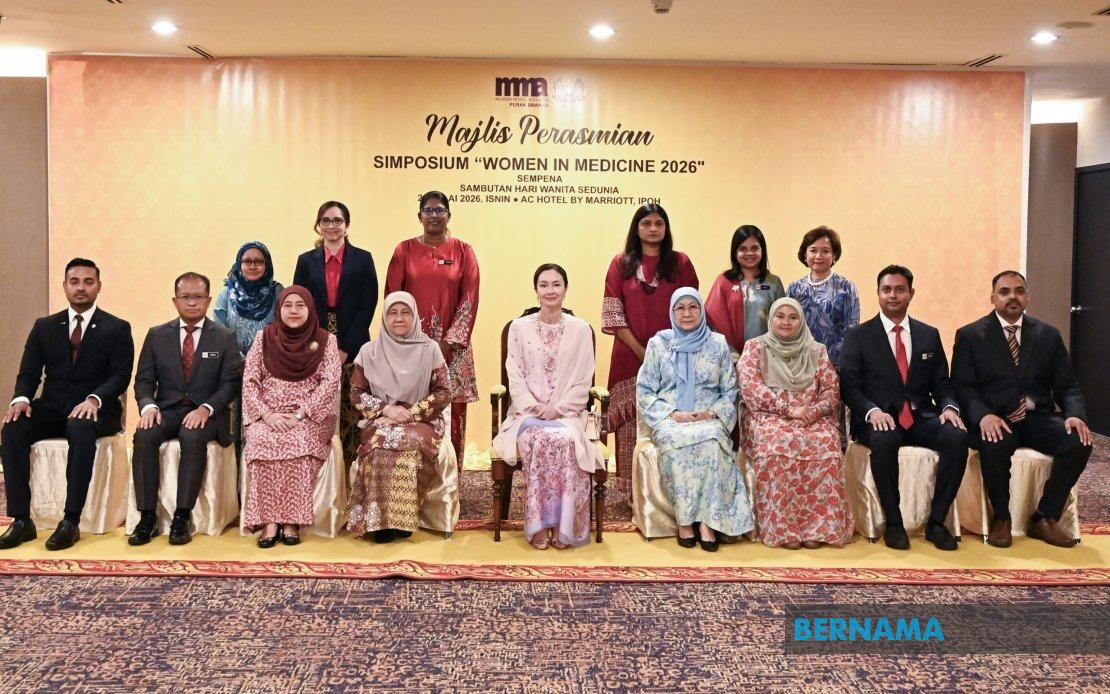
The medical profession in Malaysia must elevate women into leadership positions to effectively tackle the complex health challenges facing the nation, according to senior figures in the healthcare sector speaking at a major symposium in Ipoh. The call reflects growing recognition that female perspectives bring essential qualities—particularly empathy, holistic thinking and community-focused approaches—that strengthen healthcare delivery across all levels.
Dr Monesh Pillai, chairman of the Perak Malaysian Medical Association, articulated this position while addressing the Women in Medicine (WIM) 2026 Symposium, an event held in conjunction with International Women's Day and overseen by the Raja Permaisuri of Perak, Tuanku Zara Salim. The symposium gathered healthcare professionals, policymakers and advocates to examine both the progress made and barriers remaining for women in medical fields.
The healthcare landscape facing Malaysian practitioners has fundamentally shifted, Dr Pillai observed, with contemporary medicine now contending with mental health crises, surging rates of lifestyle diseases, demographic shifts towards an ageing population, and the disruptive potential of artificial intelligence and digital technology. These interconnected pressures demand creative problem-solving and visionary leadership capable of anticipating future needs rather than merely responding to immediate crises. Dr Pillai argued that women's underrepresentation in strategic healthcare roles means Malaysia is forgoing valuable intellectual and managerial capital precisely when innovative thinking matters most.
Critically, his position extends beyond abstract principles of equality. He stressed that substantive progress requires women not simply invited to participate in healthcare governance, but genuinely empowered to author the direction of Malaysia's medical system. This distinction matters considerably—participation can be tokenistic, whereas genuine leadership authority means women shape priorities, allocate resources, and determine strategic direction. For Malaysia's healthcare sector to address 21st-century challenges effectively, Dr Pillai implied, institutional cultures must shift to treat women's leadership as functionally essential rather than morally commendable.
Dr John Emmanuel, organising committee chairman for the WIM 2026 Symposium, reinforced this analysis by connecting female empowerment directly to patient outcomes. When women occupy meaningful positions in healthcare administration, research, clinical practice and policymaking, the quality of care patients receive demonstrably improves, he suggested. This connection acknowledges that healthcare systems reflecting diverse perspectives tend to design services more attentive to varied community needs—a particularly relevant consideration in Malaysia's ethnically and religiously heterogeneous society, where culturally competent, inclusive medicine serves patients more effectively.
Emmanuel elaborated on the symposium's guiding theme, drawn from this year's International Women's Day campaign: 'For All Women and Girls: Rights. Equality. Empowerment.' He emphasised that empowerment extends far beyond merely creating opportunities; it requires establishing institutional environments where women possess genuine autonomy to exercise leadership, contribute distinctive expertise, and fulfil their professional potential. The framing signals that token women in token positions do not constitute meaningful empowerment—rather, systemic change enabling women to influence decisions and set agendas is required.
The scope of women's roles within healthcare has expanded substantially, Emmanuel noted, reflecting broader professional evolution. While historical discourse concentrated on women as clinicians—doctors at the bedside—contemporary medicine recognises women contributing across extensive domains: administration, research, education, nursing, pharmacy, allied health professions, plus roles as caregivers, patient advocates, and activists. This diversification means conversations about women's healthcare leadership cannot remain narrowly clinical but must encompass the full ecosystem through which modern medical systems operate. Malaysia's capacity to optimise its healthcare workforce depends partly on systematically cultivating and elevating female talent throughout this spectrum.
The WIM 2026 Symposium itself demonstrated this commitment through its programming and speaker selection. Monash University Malaysia's president and pro vice-chancellor, Datuk Dr Adeeba Kamarulzaman, delivered a keynote examining how women healthcare leaders transition from clinical frontlines to influencing global health policy—a trajectory that expands understanding of what healthcare leadership encompasses. Simultaneously, Dr Sangeetha Siniah, a specialist in paediatric immunology and infectious disease at Sunway Velocity Medical Centre, presented on allergic and immune health across women and children, highlighting how gender-informed medical knowledge improves clinical practice.
For Malaysian policymakers and hospital administrators, these discussions carry practical implications. Malaysia's healthcare system confronts physician shortages, particularly in rural areas; competition with other nations for medical talent; and pressure to modernise infrastructure and capabilities. Systematically developing and retaining female medical professionals represents both a social imperative and a practical workforce strategy. Women constitute an underutilised talent pool; enabling their advancement addresses talent scarcity while simultaneously improving organisational diversity—a factor research suggests enhances institutional problem-solving and innovation.
The Perak event, supported by the office of the Perak Menteri Besar's family and the state health directorate, signals that advancement of women's healthcare leadership enjoys backing among state-level officials. Such institutional endorsement matters substantially, as barriers to women's advancement often reflect systemic structures and cultural expectations rather than individual capability or qualification. When senior figures publicly commit to elevating women's roles, they create political space for concrete reforms—whether mentorship programmes, targeted leadership development, transparent promotion pathways, or accountability mechanisms ensuring gender equity receives strategic attention.
However, the conversation also implies Malaysia remains in relatively early stages of this transition. The need for dedicated symposia celebrating women's contributions, whilst valuable, suggests their advancement faces ongoing resistance or remains underdeveloped enough to warrant special emphasis. Mature equity typically requires less ceremonial attention precisely because parity has become normalised. Thus the WIM 2026 Symposium, while celebrating real achievements, simultaneously reflects work remaining in establishing women's healthcare leadership as genuinely unremarkable rather than sufficiently novel to merit dedicated advocacy.
Looking forward, Malaysia's healthcare sector stands at an inflection point. The challenges Dr Pillai identified—mental health epidemics, non-communicable disease, demographic ageing, technological disruption—will intensify over coming decades. Addressing these effectively demands not merely larger budgets or new equipment, but fundamentally reimagined approaches to how healthcare systems are organised, led and delivered. Evidence increasingly suggests that inclusive leadership structures, which actively incorporate women's perspectives and authority, generate more adaptive, humane and ultimately effective responses to contemporary health crises. For Malaysian policymakers prioritising healthcare system resilience, advancing women's leadership represents not merely an equity initiative but a strategic investment in institutional capability.

