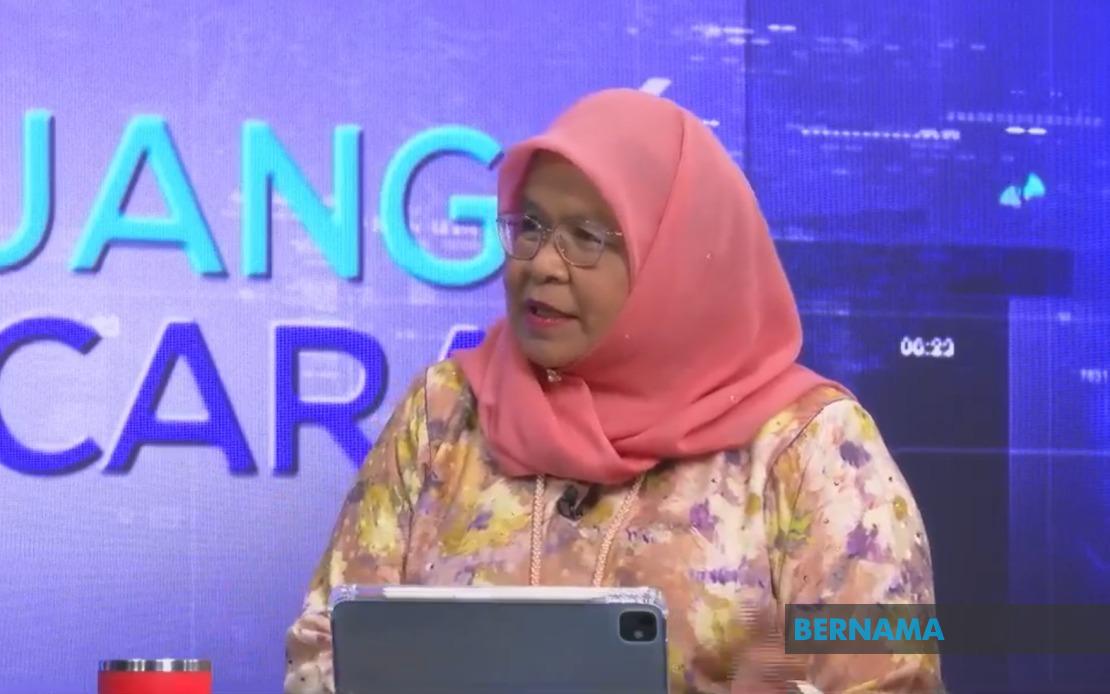
Advancing women into decision-making positions demands far more than simply opening doors. According to Datuk Seri Dr Maimunah Mohd Sharif, Malaysia's former Kuala Lumpur mayor and current Government Sustainable Urban Development advisor, true empowerment requires a comprehensive ecosystem of support systems, professional development, and genuine confidence in women's capabilities. Speaking on these issues, Maimunah underscored that without these foundational elements, opportunities alone will prove insufficient to shift entrenched gender imbalances in Malaysia's leadership structures.
The case for female leadership extends beyond principles of fairness to pragmatic governance outcomes. When women occupy substantive roles in decision-making bodies, their lived experiences and perspectives become embedded in policy formulation and implementation. This translates into more responsive public administration that addresses the needs of the entire population, not merely half of it. Maimunah emphasised this point by highlighting that women's involvement in such positions ensures their concerns and viewpoints shape the trajectory of policies and their execution across government and institutional frameworks.
Yet the numbers paint a sobering picture of the current state of female representation across Malaysian sectors. Despite comprising 56.4 per cent of higher education enrolment according to 2025 data, women occupy just 27 per cent of management positions across the economy. This striking disparity between educational achievement and career advancement reveals a critical bottleneck in the pipeline from classroom to boardroom. The gap widens at the highest levels of government, where women represent 13.5 per cent of Members of Parliament and 16.1 per cent of Cabinet positions. Such figures suggest that even when women acquire the qualifications necessary for leadership, systemic barriers continue to constrain their progression.
Maimunah's message to women themselves carried an element of personal agency within this structural context. She encouraged women to embrace opportunities when presented, whilst simultaneously pursuing continuous learning and skill development. This framing avoids the trap of positioning women as passive beneficiaries of institutional change, instead casting them as active participants responsible for seizing momentum when circumstances permit. Yet her remarks also implicitly acknowledge that individual effort alone cannot compensate for institutional inertia, suggesting the broader system must evolve in tandem with women's ambitions.
The question of whether gender should factor into selection decisions drew a measured but pointed response. If a woman possesses the requisite capability and ability for a role, Maimunah suggested, her gender should prove irrelevant to the hiring calculus. She went further, indicating that achieving rough gender parity at leadership levels would constitute meaningful progress, even if it fell short of perfect representation. This pragmatic approach recognises that transforming institutions requires incremental change rather than waiting for ideal conditions that may never materialise.
Financial services provide an instructive case study in this dynamic. Datuk Mona Suraya Kamarudin, a non-executive independent director at Nomura Asset Management, noted that technical competence in finance transcends gender boundaries. Financial markets care little for the demographics of their managers provided they deliver results. Yet even in this meritocratic sector, women disproportionately concentrate at mid-career levels rather than occupying chief executive or board positions. This pattern suggests that technical proficiency, whilst necessary, proves insufficient for reaching the summit without accompanying support structures.
Mona emphasised that career advancement for women requires deliberate investment in leadership development and structured training programmes. Technical skills alone cannot substitute for the specific capabilities required to navigate executive responsibilities, manage large teams, and influence strategic direction. Organisations serious about elevating female talent must provide pathways for women to develop these higher-order competencies, recognising that such development does not occur automatically through simple seniority or longevity in role.
Family dynamics constitute an often-overlooked dimension of women's professional advancement. Mona highlighted that family support systems play a crucial role in enabling women to discharge their professional obligations effectively. When women bear disproportionate responsibility for household management and childcare—as remains the case across much of Malaysia—career progression becomes infinitely more taxing. This burden falls less heavily on male counterparts in most professional contexts, creating an asymmetry that compounds structural inequalities in the workplace. Addressing women's underrepresentation therefore requires not merely workplace reforms but also societal shifts in how families organise domestic responsibilities.
The interplay between these factors—institutional support, professional development, family structure, and individual initiative—suggests that meaningful change will not emerge from any single intervention. Rather, Malaysian policymakers and institutional leaders must attack the problem from multiple angles simultaneously. This might include establishing mentorship programmes pairing senior women with rising talent, implementing transparent promotion criteria that reduce subjective bias, ensuring equitable parental leave policies for both genders, and fostering workplace cultures that genuinely value diverse perspectives in decision-making.
For Malaysia specifically, the stakes of this conversation extend beyond abstract principles of gender equity. As the region becomes increasingly competitive, nations that fail to mobilise the full talents of their populations risk falling behind counterparts who do. Women represent an enormous reservoir of untapped capability and perspective. Countries that systematically exclude women from leadership positions deprive themselves of talent they can scarcely afford to waste in an era demanding innovation, adaptive thinking, and sophisticated problem-solving across government, business, and civil society.
The progression from recognising women's potential to actualising it through concrete policy and institutional change demands sustained commitment. Maimunah and Mona's remarks reflect growing awareness within Malaysia's leadership class that the status quo is unsustainable. Yet awareness without action merely creates frustration. The next phase requires translating these calls for empowerment into measurable targets, allocated resources, and genuine accountability for outcomes.

