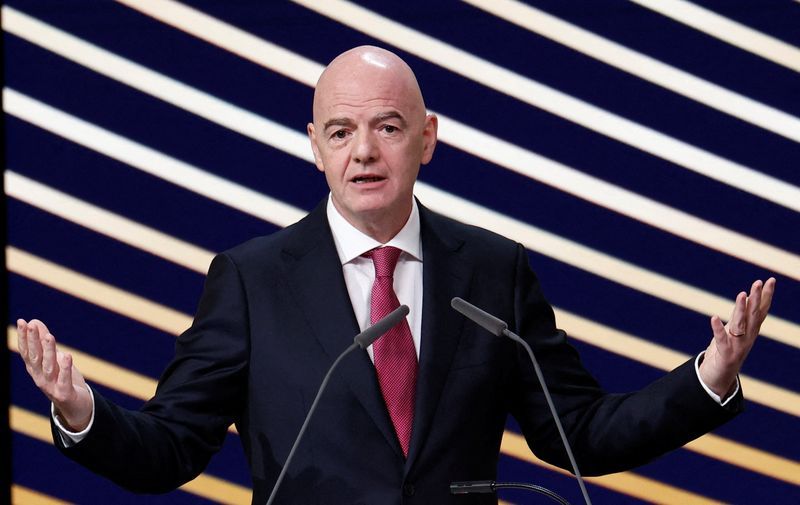
The battle for FIFA's direction has taken an unexpected turn, with women emerging as the most forceful voices challenging President Gianni Infantino's authority during what may be the most serious institutional crisis of his tenure. Laura McAllister, a UEFA vice-president from Wales, and Lise Klaveness from Norway, both serving on UEFA's executive committee, have positioned themselves at the forefront of resistance to Infantino's failed attempt to establish FIFA Football Enterprises (FFE), a private equity-backed venture that sparked unprecedented backlash from European football's governing body and other regional associations.
The uprising against Infantino's plans has triggered broader conversations about football's readiness for female leadership at its highest levels—a question that seemed almost unthinkable just weeks ago. McAllister has stated that she would welcome a female FIFA president, yet she harbours no illusions about the structural barriers that persist within global football's byzantine power structures. As a political scientist by training, she understands that merit alone will not overcome the deeply entrenched male-dominated networks that have controlled football administration for generations. She cautioned that while a woman may eventually lead FIFA, the sport must first undergo significant cultural transformation before such a transition becomes politically viable.
Klaveness and McAllister's emergence as key figures in the anti-Infantino coalition carries particular symbolic weight given their outsider status within traditional football administration. Both are former international players who built substantive careers outside sport before transitioning into governance roles—McAllister as a political scientist and Klaveness as a lawyer. This background appears to have shaped their worldview fundamentally differently from career football administrators steeped in the sport's political customs and informal power arrangements. They have consistently framed their opposition to Infantino in terms of protecting football's foundational principles rather than personal ambition or factional positioning.
The collapse of Infantino's FFE scheme began when Wales became the first national association to withdraw its endorsement of his re-election, with dissent quickly spreading to other FIFA member associations and gaining momentum within UEFA itself. The episode exposed deep fractures in the way Infantino has managed his authority, with McAllister pointing to numerous controversies that have undermined confidence in his leadership. These include FIFA's involvement with the failed European Super League project, the contentious political decisions surrounding recent World Cup tournaments, and the controversial decision to overturn a red card against American player Folarin Balogun following intervention from United States President Donald Trump.
For McAllister and Klaveness, resistance to Infantino's agenda represents something more profound than internal political maneuvering. They argue that the FFE scheme fundamentally violated football's core values by allowing private capital to exercise control over the sport's central mechanisms. They contend that football belongs equally to grassroots players and elite professionals, to girls and boys, to communities in wealthy nations and impoverished corners of the globe. The introduction of private equity investors fundamentally transforms football from a sport governed by democratic principles into a commercial asset controlled by financial interests—a boundary they believe should never be crossed.
McAllister expressed her conviction that football has reached a genuine crisis point in its governance structures. The combination of failed institutional oversight, political interference, commercial overreach, and leadership that lacks broad legitimacy creates conditions where the sport risks losing not merely efficiency but its essential character. She emphasised that women involved in football, particularly those with experience in women's football development, often bring perspectives less clouded by the business pressures that have historically corrupted male-dominated football administration.
The question of female FIFA leadership has gained unexpected salience through these events. Former FIFA President Sepp Blatter, whose own tenure was marked by serious corruption allegations, recently endorsed the notion that football should elect a woman as president. Yet the pathway to such a transition remains uncertain and fraught with obstacles that extend far beyond questions of individual capability. Of FIFA's 211 member associations, only 10 are led by female presidents, and any serious presidential challenge would require building support across multiple continents and diverse football cultures—a task considerably more complex than winning backing from Europe's relative progressive coalition.
McAllister has counselled against attempting to force the issue of female leadership through revolutionary tactics. Instead, she advocates for a patient strategy of building momentum and expanding opportunities for women in football governance roles incrementally. This pragmatic approach reflects her understanding that lasting institutional change rarely arrives through dramatic confrontation with entrenched power structures. Rather, sustained progress requires demonstrating competence, building credibility across sceptical constituencies, and gradually shifting cultural norms about who belongs in positions of authority.
Comparative analysis with other international sports organisations reveals FIFA's significant lag in promoting gender equity. Michael Payne, a former International Olympic Committee marketing director, highlighted that the IOC has pioneered gender equity initiatives for more than two decades, with the Olympic Games now approaching gender balance between male and female competitors. The FIFA World Cup remains far from such parity, with women's tournaments receiving substantially fewer resources, smaller prize pools, and less media attention than men's competitions. This disparity in resource allocation and visibility reinforces FIFA's male-dominated administrative culture.
The governance crisis triggered by Infantino's FFE proposal has inadvertently created space for conversations about FIFA's institutional future that extends beyond the immediate political battle. McAllister and Klaveness have framed their resistance not as a factional power play but as a principled defence of football's democratic foundations. Whether this moral positioning translates into lasting institutional reform or merely provokes a temporary reassessment of Infantino's authority remains to be seen. What appears clear is that football's governance structures are increasingly unsustainable in their current form, and women administrators are positioning themselves as architects of alternative approaches rather than passive participants in male-dominated decision-making.
For Malaysian readers and Southeast Asian football communities, these developments at FIFA's highest levels carry significant implications. How global football governance evolves will influence how the sport is administered regionally and locally, affecting everything from World Cup qualification processes to youth development programmes. If FIFA undergoes genuine reform toward more inclusive and values-driven governance, such changes would likely ripple through continental and national associations. Conversely, if Infantino retains power despite the current backlash, it would signal that even coordinated resistance from powerful European associations cannot fundamentally challenge FIFA's existing power structures—a sobering prospect for smaller football associations with far less leverage than Europe possesses.

