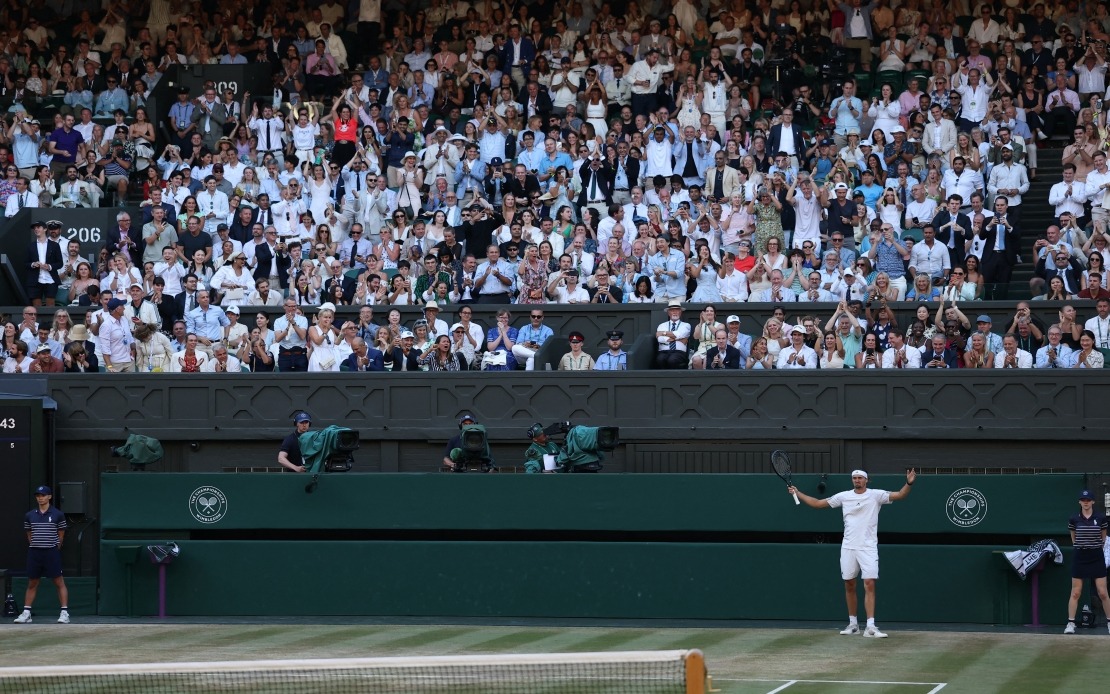
Jannik Sinner's four-set conquest of Alexander Zverev in the men's singles final delivered a memorable conclusion to an enthralling fortnight at the All England Club, cementing what many observers have described as a vintage edition of tennis's most prestigious grass-court championship. The Italian's composed performance underscored the changing dynamics of elite men's tennis, where emerging European talent continues to reshape the sport's hierarchy. For Malaysian tennis enthusiasts following the global circuit, Sinner's ascendancy represents the broader generational shift occurring in professional tennis, with younger players increasingly dominating competitions that once seemed the exclusive domain of established champions.
The women's singles final showcased Marketa Noskova's remarkable composure in adversity, though the 21-year-old first-time grand slam finalist came perilously close to replicating one of Wimbledon's most heartbreaking moments. Facing what appeared to be a commanding position at 5-2 in the second set, Noskova squandered five separate championship points in a stunning reversal of fortune that sent the match to a decisive third set. This collapse inevitably invoked memories of Jana Novotna's anguished 1993 loss to Steffi Graf, when the Czech champion's tears on the shoulder of the Duchess of Kent became emblematic of grand slam disappointment. Yet unlike Novotna, who endured five additional years before claiming her own Wimbledon title in 1998, Noskova seized her opportunity with steely determination, pausing during the match to walk past the championship trophies and declare her intention to claim the trophy.
The semi-final between Karolina Muchova and Coco Gauff distilled the unpredictability of elite tennis into a single mesmerizing tie-break that consumed eighteen pulsating minutes. With the set level at eight points, Muchova received a time violation before sending a return long, gifting Gauff a match point that the American inexplicably squandered by netting a drop-shot that appeared well within her grasp. The subsequent momentum shift proved decisive; though Muchova briefly appeared poised to convert her own match point, a dramatic slip during her volley attempt allowed Gauff's cross-court forehand to find the line. The Czech ninth seed ultimately prevailed through superior court movement and composure under extreme pressure, advancing to face Noskova in a final that ultimately vindicated the tournament's thrilling unpredictability.
British wild card Jack Fery became the defining narrative of the 2026 championships, his improbable semi-final run capturing the imagination of both home supporters and neutral observers across the global tennis community. The 23-year-old Wimbledon resident, ranked 114 in the world and competing on a wild card, produced a remarkable performance against Belgian Zizou Bergs—a player ranked 77 positions higher—on the brutally exposed Court 18 during sweltering heat conditions. Fery's ordeal encompassed three separate nosebleeds while trailing comprehensively in both the fourth and fifth sets, yet he summoned extraordinary reserves of mental fortitude to force a tie-break in the fourth set and subsequently prevail in the ten-point decider as his higher-ranked opponent's composure visibly crumbled. This triumph made Fery only the fifth British man in the present century to advance beyond the opening week at the All England Club, a statistical reality that underscores the challenges facing British players in consistently competing at tennis's elite levels.
Fery's remarkable journey had already established him as the last British representative in what transpired to be a disappointing tournament for the host nation's singles contingent. His progression to the semi-finals transcended mere sporting achievement; it represented a narrative of resilience and determination that resonated beyond the sporting calendar. For Malaysian audiences, Fery's story carries particular resonance in demonstrating how an underdog player, armed with home-court support and unwavering self-belief, can navigate seemingly insurmountable obstacles in professional sport. The implications for nurturing local tennis talent in Southeast Asia remain evident—consistent exposure, domestic tournament infrastructure, and psychological fortitude can compensate for ranking disparities.
Novak Djokovic's quarter-final encounter with Felix Auger-Aliassime provided a masterclass in age-defying athleticism, yet simultaneously illustrated the accumulated toll of competing at the sport's highest level whilst approaching the twilight of a remarkable career. The five-hour and fifteen-minute marathon became the longest quarter-final in Wimbledon's recorded history, concluding just eight minutes before the evening curfew imposed to respect local regulations. Djokovic's performance encompassed the familiar drama that has punctuated his Wimbledon campaigns throughout his career—a calf injury requiring medical intervention following the opening set, an acrimonious dispute with tournament referee Denise Parnell regarding roof closure procedures before the third set, and ultimately, a hard-fought triumph over the third seed. However, the expenditure of such enormous physical and emotional reserves left the 24-time grand slam champion substantially depleted, contributing directly to his semi-final defeat against Sinner.
Djokovic's performance against Auger-Aliassime illustrated a persistent dilemma confronting veteran players competing in modern professional tennis. The Serbian champion's capacity to extract victory from seemingly adverse circumstances remains undimmed, yet the recovery period required following extended contests has become increasingly consequential as tournament progression demands further matches against similarly elite opponents. For observers in Malaysia and across Southeast Asia, where younger players are beginning to establish themselves within professional circuits, Djokovic's trajectory offers instructive lessons regarding the management of athletic longevity and the strategic assessment of when continued participation in major championships becomes counterproductive.
Serena Williams' return to competitive tennis at age 44, nearly four years after departing the professional circuit, commanded the opening week's attention and captured global imagination in ways that extended far beyond conventional sporting interest. The American legend entered Centre Court to a standing ovation and, against Australian opponent Diane Joint—a player twenty-four years her junior—appeared positioned to secure victory when she established an early break in the deciding set. However, Williams' physical condition deteriorated visibly as the match progressed, with Joint demonstrating commendable resilience in managing both her formidable opponent and the considerable pressure inherent in facing one of tennis's most decorated champions. Post-match medical examination subsequently revealed that Williams had sustained a knee injury during the opening set, an affliction that progressively undermined her movement and ultimately precluded her planned doubles partnership with her sister Venus.
Williams' comeback represented far more than a tennis narrative; it functioned as a cultural moment that transcended sport itself. Her decision to return following a self-described period of "evolving away" from competitive tennis demonstrated the enduring appeal of grand slam competition and the psychological draw that Wimbledon maintains for even the sport's greatest champions. The Malaysian perspective on Williams' return reflects broader admiration for athletes who demonstrate longevity, resilience, and commitment to excellence across extended periods. Her dignified approach to a ultimately unsuccessful campaign provided instructive counterpoint to younger competitors' more aggressive pursuit of immediate success.
The 2026 Wimbledon championship ultimately delivered a fortnight of compelling narratives, from emerging champions claiming maiden grand slam titles to established legends confronting the inevitable consequences of athletic aging and younger talents challenging established hierarchies. For Malaysian tennis followers and Southeast Asian enthusiasts, these championships offered multiple points of engagement—the triumph of youth in Sinner's title claim, the unpredictability of elite competition exemplified through Noskova's comeback and Muchova's nerve-wracking final, the fairytale possibilities illustrated through Fery's wild card progression, and the poignancy of Williams' return and ultimate defeat. These diverse narratives collectively affirm why Wimbledon retains its position as tennis's premier championship and why the All England Club's fortnight continues to generate sporting narratives that captivate global audiences.

