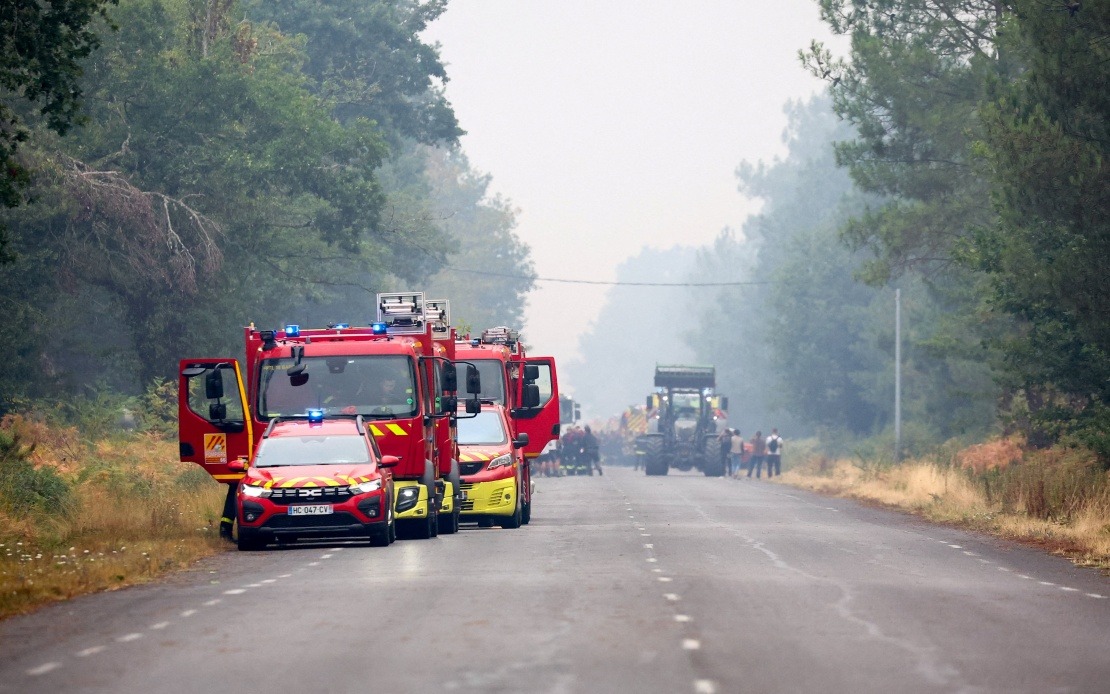
The massive wildfires that have swept through southwestern France and central Spain for the past week have begun showing signs of containment, though emergency crews remain on high alert as weather forecasters caution that fresh heat waves pose renewed danger to the exhausted region. After burning vast stretches of forest, destroying homes, and forcing tens of thousands to flee their communities, the situation appears to have reached a fragile turning point that offers cautious optimism even as climate conditions threaten to reverse hard-won progress.
In the French department of Gironde, which has emerged as one of the fiercest battlegrounds against the flames, local authorities reported that the primary fire had stabilised by Wednesday morning despite isolated flare-ups that crews extinguished overnight. The prefecture, managing response efforts on the ground, characterised the overnight period as relatively calm—a marked improvement from earlier days when conditions deteriorated rapidly. However, the scale of the ongoing response underscores the gravity of the situation: more than 2,000 firefighters remained positioned along the active fire perimeter throughout Wednesday, methodically working to eliminate remaining hotspots and prevent reignition. The human toll of this operation has also become evident, with 126 firefighters suffering injuries since flames first emerged in Gironde, reflecting the dangerous working conditions and intensity of suppression efforts.
Other major fires in French territory have similarly shown improvement, though each demanded substantial resources and coordination. The southeastern Var department managed to contain its blaze by Tuesday after the flames had consumed nearly 4,800 hectares of forest—an area equivalent to approximately 6,700 football fields. In the Landes department to the southwest, approximately 350 firefighters brought a 3,600-hectare fire under control by Monday, though personnel remained deployed to ensure stability. These successes, while welcome, remain threatened by conditions beyond firefighters' control: the French meteorological service Meteo-France designated 65 departments across the country for orange alert status Wednesday due to persistently high wildfire risk, while 16 additional departments received similar warnings as another heatwave approached the continent.
Spain's experience mirrors France's ongoing struggle with simultaneous, widespread blazes that have stretched emergency services to their limits. The Sierra Oeste region in Madrid saw its fire stabilise overnight without additional flare-ups, according to Spanish daily El Pais, yet this represented merely one front in a much broader conflagration. Active firefighting operations continued simultaneously across multiple regions—Madrid, Avila, Toledo, Castellon, and Almeria—demonstrating how climate conditions have created a cascade of simultaneous emergencies that prevent authorities from concentrating their full strength on any single location. The nation, like France, braced itself for yet another heatwave arrival, aware that rising temperatures invariably trigger fresh fire starts and accelerate existing blazes.
Evacuation orders that had displaced thousands began reversing as conditions stabilised, offering residents their first opportunity to return home and assess damage. Residents from 15 municipalities across Madrid and Avila returned late Tuesday, marking the first phase of a gradual repopulation. In Castellon province, 9,000 evacuees received permission to leave shelters, while 6,000 people from eleven Toledo municipalities were similarly cleared to return. However, one significant exception underscored the fragility of the current situation: the Vall d'Uixo wildfire in Castellon, which had burned since Saturday, remained essentially uncontrolled despite days of suppression efforts. This fire had already scorched 10,000 hectares and forced 10,000 people from their homes, representing a contained disaster that continued smouldering and posed ongoing threat to surrounding communities.
The physical landscape of destruction across both nations remains substantial despite incremental progress. Across Spanish territory, 30 major roads spanning Avila, Castellon, Madrid, Toledo, and Leon remained closed Wednesday, isolating communities and complicating both emergency response logistics and residents' ability to return home and assess property damage. This network of closures reflects how thoroughly the flames had disrupted normal functioning across entire regions, transforming multiple provinces into disaster zones where basic transportation infrastructure lay compromised. The cumulative effect of simultaneous fires across dispersed locations stretched not merely firefighting resources but also coordination systems, evacuation logistics, and recovery infrastructure.
For Malaysian and Southeast Asian observers, these European events carry particular relevance as climate change intensifies wildfire seasons globally and demonstrates how rapidly modern societies can be overwhelmed by cascading environmental disasters. Southeast Asia, with its own history of severe transboundary haze from Indonesian forest fires, faces comparable risks as rising temperatures extend dry seasons and increase fuel availability in vulnerable forest regions. The European response—mobilising thousands of firefighters, issuing regional heat alerts, and coordinating across multiple administrative boundaries—illustrates both the resource intensity required to manage modern megafires and the limitations of purely reactive emergency management when climate conditions fundamentally shift fire dynamics.
The looming heatwaves represent perhaps the most ominous element of this unfolding crisis, as meteorological forecasts suggest that respite from dangerous heat will be brief. Both Meteo-France and Spanish weather agencies specifically highlighted incoming temperature spikes, aware that heatwaves have historically triggered explosive fire growth and compromised firefighter safety through heat exhaustion and reduced visibility. The cycle of evacuation, partial containment, and renewed threat appears likely to repeat unless temperatures drop substantially and precipitation arrives—neither outcome certain in summer forecasts. This pattern suggests that suppressing current fires addresses only the immediate symptom while underlying climatic conditions that enabled such widespread simultaneous ignitions remain fundamentally unaddressed.
The broader context involves understanding how simultaneous megafires have become regular features of Mediterranean and temperate European summers, representing a qualitative shift from historical fire regimes. Decades of fire suppression policy, combined with climate warming that extends fire seasons and increases fuel aridity, have created conditions where single heatwaves can trigger dozens of major incidents across wide geographic areas simultaneously. Firefighting systems designed for managing occasional large fires struggle when confronted with numerous concurrent emergencies in different jurisdictions, each demanding crews, equipment, and coordination capacity. Recovery from such events extends far beyond extinguishing flames, requiring infrastructure repair, ecosystem rehabilitation, and addressing displacement of populations whose homes and livelihoods have literally been consumed by fire.
As France and Spain continue managing their immediate firefighting emergency, the deeper challenge of adapting to a climate regime that produces regular severe wildfire seasons remains unresolved. The apparent stabilisation reported Wednesday offers breathing room but not permanent solution. Communities across both nations now face the prospect of annual or bi-annual fire seasons of comparable intensity, a reality that will demand sustained investment in prevention infrastructure, early warning systems, landscape management, and firefighting capacity far exceeding historical norms. The incoming heatwave serves as unwelcome reminder that this particular crisis has not truly concluded—it has merely entered a temporary pause.

