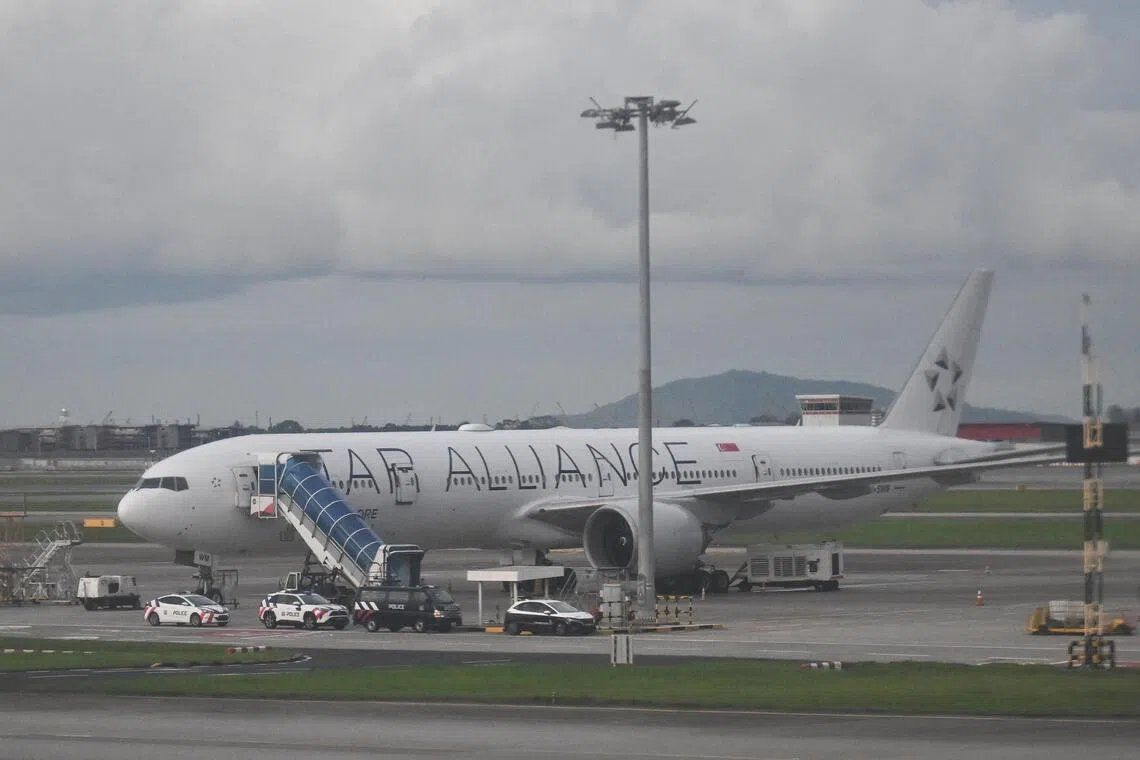
The widow of Geoffrey Kitchen, a British theatre director who perished during a catastrophic turbulence event aboard Singapore Airlines Flight SQ321 in May 2024, has initiated legal proceedings against the airline at Britain's High Court. Linda Kitchen, 74, is seeking damages to fund specialist medical care for a broken back sustained when the aircraft experienced a dramatic mid-air plunge. The lawsuit represents a significant escalation in the aftermath of an incident that left 79 people injured and raised serious questions about aviation safety protocols, weather detection systems, and airline accountability across the region.
The incident unfolded on May 21, 2024, as Flight SQ321 traversed the airspace above Myanmar while travelling from London to Singapore with 211 passengers and 18 crew members aboard. Without warning, the Boeing 777 plummeted more than 54 metres in just five seconds during what should have been a routine breakfast service. The sudden descent flung passengers and objects violently around the cabin, creating scenes of chaos and terror. Geoffrey Kitchen, who was seated beside his wife during their planned six-week holiday to Southeast Asia and Australia, fell directly onto Linda, crushing her against the armrest with force that fractured her spine in multiple places.
Following the initial impact, fellow passengers assisted in moving Geoffrey away from his wife, and a physician travelling on the flight immediately initiated emergency cardiopulmonary resuscitation efforts. However, these interventions proved unsuccessful. The aircraft was diverted to Suvarnabhumi Airport in Bangkok, Thailand, for an emergency landing, where medical teams rushed to attend to the injured. Linda was hospitalised for ten days before being airlifted back to Bristol, England, where she spent an additional week undergoing intensive medical treatment. The emotional trauma compounded her physical suffering when she learned, two days after the incident, that her husband of 52 years had not survived the ordeal.
Linda Kitchen's testimony reveals the profound impact of the incident on her daily life and psychological wellbeing. "When I got separated from Geoff, I knew he was in a bad way, but nothing prepared me for hearing he had died. It was absolutely devastating," she recounted in statements to British media. The journey back to the United Kingdom proved excruciating, with her severe injuries making even the most basic movements agonising. Upon returning home, she required substantial in-home assistance and continues to grapple with both physical rehabilitation and grief following the loss of her life partner.
Anthe Korelidou, the aviation specialist lawyer representing Kitchen's case, emphasised that the legal action serves a purpose extending beyond financial compensation. "While it's more than two years since Geoff's death, Linda and the rest of her family continue to have a number of questions and concerns about what happened and if more could have been done to prevent their injuries. All Linda wants is for the most thorough investigations to be conducted," Korelidou stated. The solicitor characterised the High Court proceedings as a critical stepping stone in securing answers and accountability that the family believes they deserve, particularly regarding whether preventative measures could have mitigated the severity of the disaster.
Kitchen's legal action is not isolated within the broader fallout from Flight SQ321. Court records indicate that at least six other passengers or families have simultaneously launched their own proceedings against Singapore Airlines: Bradley Richards, Jack Jenkins, Hannah Fullerton, Andrew Dawood, Bryan Matthews, and Pauline and Michael Rainey. This coordinated legal response underscores the widespread nature of injuries and damage claims emerging from the incident, suggesting systemic concerns that extend beyond individual cases and point to broader questions about airline operations and safety standards within the industry.
Singapore Airlines responded to inquiries from The Straits Times on August 29 by declining to comment on matters currently before the courts, a standard legal position for organisations facing active litigation. However, the airline had previously extended compensation offers to affected passengers in 2024, with survivors suffering minor injuries receiving US$10,000 and those sustaining serious injuries requiring long-term medical intervention offered advance payments of US$25,000. Additionally, SIA provided complete fare refunds to all passengers aboard the flight and issued a formal apology acknowledging "the traumatic experience" of those involved, while reaffirming that "the safety and well-being of SIA's passengers and staff are our top priority."
The underlying technical cause of the incident has been partially illuminated by Singapore's Transport Safety Investigation Bureau, which determined that the storm clouds responsible for the severe turbulence evaded detection by the aircraft's onboard weather radar system, thereby catching the captain unaware. This finding raises critical questions about modern aviation safety infrastructure and the reliability of weather detection technologies that pilots depend upon to navigate hazardous atmospheric conditions. The TSIB, operating as a department under Singapore's Ministry of Transport, noted that whether the weather radar system itself experienced technical malfunctions remains inconclusive, leaving open the possibility of either equipment failure or radar limitations in detecting certain weather phenomena.
The ambiguity surrounding the radar system's performance has become central to Kitchen's legal argument regarding airline culpability. If technical deficiencies contributed to the failure to detect the storm cells, the airline could face liability for not ensuring proper equipment maintenance or upgrading systems to current technological standards. Conversely, if the radar simply proved inadequate to the task of detecting this particular weather pattern, the question shifts to whether the captain possessed alternative information sources or decision-making protocols that might have prevented the aircraft from encountering the turbulence. These technical and procedural questions will likely become focal points of the High Court proceedings.
For Malaysian and Southeast Asian readers, the Flight SQ321 case carries particular resonance given the region's exposure to sudden severe weather systems and the significant volume of international air traffic traversing Southeast Asian airspace. The incident has prompted broader reflection within the aviation community regarding weather detection capabilities, crew training protocols for emergency situations, and the adequacy of compensation frameworks for passengers injured through operational failures. The legal outcomes of Kitchen's case and related proceedings may establish important precedents affecting how airlines throughout the region address safety concerns and passenger claims, potentially influencing operational practices across multiple carriers serving Malaysian routes and airports.
The case also highlights the emotional and financial toll that aviation disasters inflict on survivors and bereaved families, particularly when complicated by questions of preventability. Linda Kitchen's pursuit of accountability through the courts represents not merely a financial settlement but an attempt to extract meaningful answers about systemic failures that cost her husband his life. As the proceedings advance through Britain's legal system, they will likely generate scrutiny of Singapore Airlines' maintenance records, pilot training standards, and adherence to safety protocols that could affect public perception of the airline's operations and set expectations for safety performance across the aviation industry operating within and around Southeast Asia.

