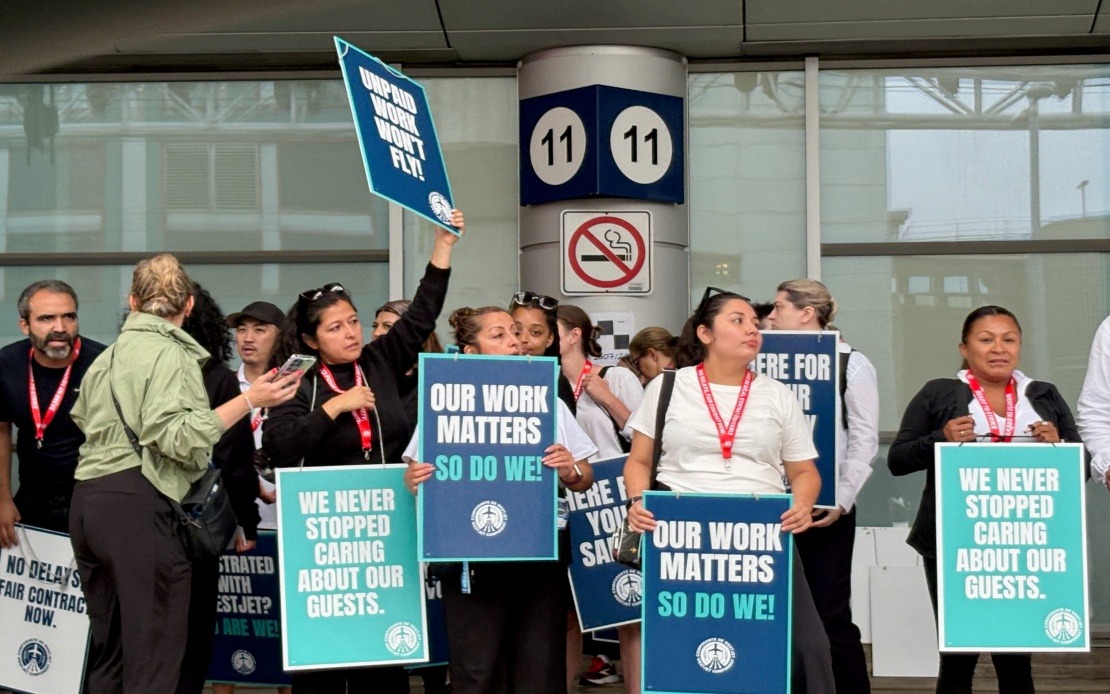
The labour dispute at WestJet, Canada's second-largest carrier, escalated dramatically on Sunday when more than 4,000 flight attendants initiated strike action, effectively halting around 600 flights per day and leaving approximately 250,000 passengers stranded or facing severe travel disruptions. The timing could hardly be worse for the airline and its customers, as the action coincides with Monday being a civic holiday across Canada, transforming what would normally be a standard summer weekend into one of the year's most critical travel periods when families and holiday-makers flood airports.
The financial implications for WestJet are substantial. The company faces losses reaching millions of dollars as aircraft remain grounded and its network capabilities are severely compromised during what should be a peak revenue-generating period. Beyond the immediate monetary damage, the reputational impact of displacing a quarter-million travellers during a national holiday weekend could inflict longer-term consequences on customer loyalty and market confidence in the airline's operational reliability.
At the heart of this confrontation lies a compensation issue that has gained increasing prominence across the North American aviation industry. Flight attendants employed by WestJet are demanding recognition and payment for work performed on the ground both before departure and after landing, activities that currently fall outside their compensated hours. This ground work encompasses essential safety preparations, passenger assistance, equipment checks, and other duties that constitute legitimate labour but have historically been treated as unpaid responsibilities.
The compensation question is not entirely new to Canadian aviation. Delta Air Lines pioneered the practice of recognising ground work as paid labour in 2022, establishing a precedent that challenged traditional industry practices. Air Canada, Canada's largest carrier, followed suit in February this year when it reached a fresh labour agreement that provides flight attendants with compensation equal to as much as 70 per cent of their hourly rate for the hour immediately preceding takeoff. This development clearly emboldened WestJet's workforce, who recognised that competitor recognition of ground work compensation represented a viable bargaining position.
Currently, WestJet flight attendants operate under compensation scales ranging from $28.88 to $53.61 per credit hour, depending on seniority and experience. While these figures may appear reasonable on the surface, they mask the reality that attendants invest substantial unpaid time before and after each flight performing duties essential to safe and efficient operations. The union's argument gains further weight when industry comparisons are considered, particularly Air Canada's more generous framework that explicitly quantifies and compensates for pre-flight preparation.
The Canadian Union of Public Employees, which represents WestJet's flight attendants, has positioned the strike as a consequence of the airline's intransigence rather than as a first resort. Union representative Alia Hussain articulated this perspective forcefully, noting that nearly eleven months of contract negotiations had failed to move the airline toward meaningful concessions. The union's framing emphasises that WestJet management simply declined to take workers' concerns seriously, implying that the company had multiple opportunities to avert this disruption through good-faith negotiation.
Federal Jobs Minister Patty Hajdu publicly registered disappointment at the failure of both parties to reach an agreement despite extended negotiation periods, indicating government frustration at the breakdown in talks. Such ministerial commentary reflects broader concerns about labour unrest disrupting the Canadian economy during a crucial travel period, though it notably stops short of intervening directly in the dispute or favouring either party's position explicitly.
WestJet management, represented by CEO Alexis von Hoensbroech, struck a conciliatory tone while acknowledging the serious consequences of the action. The airline committed to providing refunds to affected passengers, a standard practice in such circumstances but one that does little to address the inconvenience, frustration, and logistical challenges facing hundreds of thousands of travellers. Von Hoensbroech's statement emphasised WestJet's disappointment and its recognition of the impact on guests, employees, and the broader communities and business ecosystem dependent on its services. This language, while diplomatic, underscores the severity of the situation without indicating any movement toward the union's core demands.
For Malaysian and Southeast Asian observers, this dispute offers several instructive lessons. The increasing sophistication of aviation union strategy across North America demonstrates how workers in this sector are systematically addressing compensation gaps, particularly for uncompensated labour. Regional carriers in Malaysia and neighbouring countries may anticipate similar demands from their own flight attendant populations as global standards and practices become more transparent and widely known. The successful precedent set by Delta and Air Canada may embolden union representatives across Asia-Pacific aviation to pursue comparable arrangements.
Moreover, the incident highlights the vulnerability of airline operations to labour disruptions during peak travel periods, a lesson particularly relevant to Malaysian aviation given the rapid growth of travel demand within Southeast Asia. Airlines operating in the region should consider whether their compensation structures adequately reflect all work performed by employees, and whether addressing such structural issues proactively might prevent more costly disruptions later.
The broader context of this Canadian labour action reflects global trends in aviation worker advocacy. Flight attendants worldwide are increasingly vocal about fair compensation, safety standards, and working conditions. The WestJet strike demonstrates that even major carriers cannot simply impose compensation frameworks without considering workforce demands, particularly when competitors have already conceded similar points.
As negotiations presumably continue or resume, observers will watch closely to see whether WestJet ultimately moves toward the ground work compensation model embraced by its competitors, or whether it attempts to resist this emerging industry standard. The resolution of this dispute may establish important precedents affecting negotiations throughout North American aviation, with potential ripple effects extending to carriers throughout the Pacific region.

