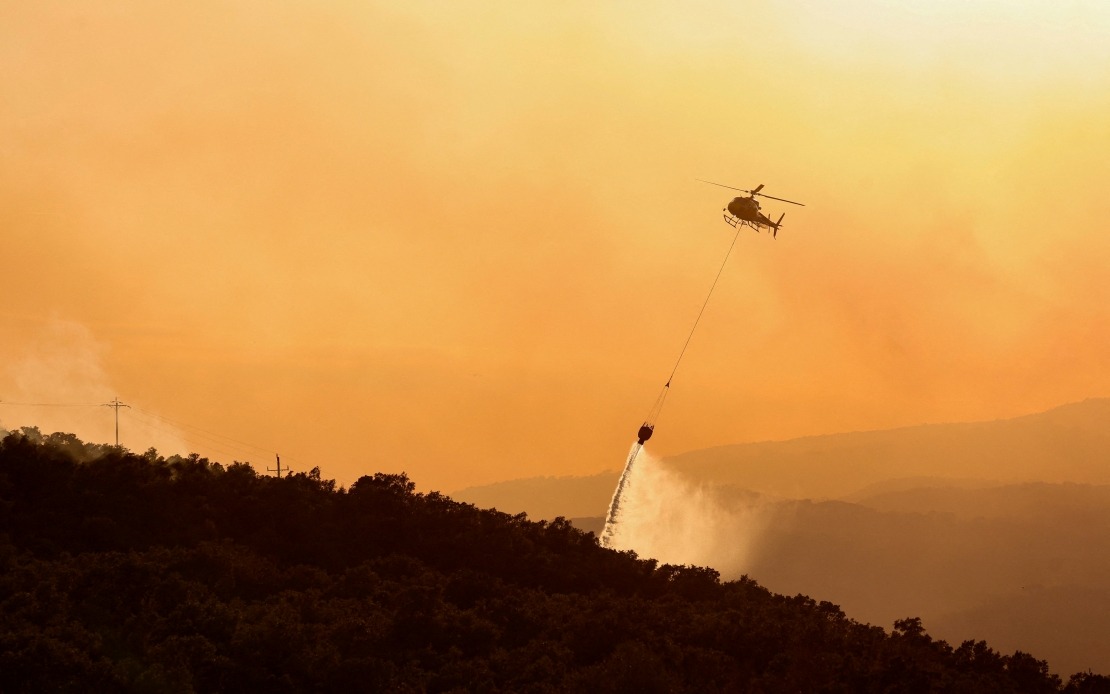
As the United States marked the 250th anniversary of its founding on Independence Day, vast swathes of the western states faced an unusual constraint on traditional celebrations. Drought conditions and active wildfires spreading with alarming speed prompted dozens of municipalities to abandon or scale back their Fourth of July fireworks displays, reflecting the severity of environmental pressures gripping the region. The decision underscored how climate-related crises are reshaping even the most iconic American holidays, with public safety concerns overriding festive tradition.
The scale of the wildfire threat was documented in a national incident report released on Friday, which identified 41 large fires still burning without containment across the country. More significantly, the United States had reached its second-highest level on the national wildfire preparedness scale, indicating that fire-fighting resources were stretched thin and conditions remained volatile. This backdrop of widespread fire activity set the tone for administrative decisions across multiple western states to prioritize caution over celebration.
Utah experienced some of the most severe conditions, with state data revealing that 94 percent of the state was classified as experiencing severe or extreme drought. In response to these conditions, Governor Spencer Cox issued a temporary statewide restriction on fireworks, allowing local governments discretion to designate limited zones where fireworks could still be used through July 5. The restriction reflected a calculated approach balancing community wishes with fire risk management. According to Utah State Forester Jamie Barnes, the wildfire situation had become exceptional, with fires spreading at velocities unprecedented in recent experience. State officials noted a particularly alarming statistic: Utah had already burned more land in the year to date than during the entire previous four years combined, demonstrating the accelerating intensity of the fire season.
Colorado faced similarly dire circumstances with more than a dozen wildfires active throughout the state during the holiday week. Multiple communities, including Durango, Vail, and Pueblo, cancelled their Independence Day fireworks celebrations entirely. Colorado Springs, the state's second-largest city, took the additional step of cancelling all Fourth of July fireworks events, with the city's fire department citing extreme fire danger comparable to conditions preceding the catastrophic 2012 wildfire that destroyed over 300 homes. The cancellation in Colorado Springs carried particular symbolism, as Mayor Yemi Mobolade acknowledged in a statement that abandoning celebrations during the nation's 250th anniversary was disappointing but necessary.
Vail's situation illustrated how recurring these decisions have become for some communities. The mountain town has now cancelled its Fourth of July fireworks six times since 1998, with the most recent cancellation occurring in 2021. This year's decision reflected an assessment that wildfire activity across Colorado was unusually dispersed and threatening compared to previous problematic years. The frequency of cancellations suggests that climate-driven fire seasons are becoming a structural feature of summer planning in certain regions rather than exceptional events.
Restrictions extended beyond Colorado and Utah into adjacent states. Wyoming, Nebraska, and New Mexico all implemented limitations on fireworks use, citing either drought conditions or wildfire hazards as justification. However, the implementation remained nuanced, as most professional fireworks displays operated by municipalities or sponsoring organizations proceeded as scheduled. This distinction reflected a recognition that professional displays, typically conducted with safety protocols and professional operators, presented lower risk than unregulated consumer fireworks in high-danger zones.
Meteorological conditions intensified the fire risk substantially. The national incident report warned that strong winds coupled with extremely low humidity would elevate fire danger across the southwestern region. Simultaneously, much of the eastern and central United States contended with dangerously elevated temperatures, with the National Weather Service recording heat indexes exceeding 46 degrees Celsius in some locations. These compound weather stressors created a continental environment primed for rapid fire spread and extreme fire behavior.
Scientific research has increasingly documented the connection between celebratory fireworks and wildfire ignition. Philip Higuera, a fire ecology professor at the University of Montana, emphasized to the Durango Herald that Fourth of July fireworks directly contribute to increased wildfire activity each year. He noted that a single holiday generates numerous ignition sources across the landscape simultaneously. Historical data compiled by Lauren Lowman, an associate professor at Wake Forest University, found that approximately 15,000 wildfires were recorded on July 4 across the United States during the period from 1992 to 2020, averaging nearly 600 fires annually on that single date alone. This statistical reality underpins the logic behind state restrictions.
Broader climate patterns compound the immediate holiday-related fire risk. Research cited by Lowman demonstrated that nearly half of all land burned across the western United States since 2001 occurred during or immediately following heat wave periods. This finding suggests that timing matters critically: fireworks igniting during extreme heat events encounter vastly more favorable conditions for fire spread than the same ignitions during moderate temperatures. Additionally, national statistics on consumer fireworks underscore the magnitude of the hazard: fireworks caused an estimated 32,000 fires nationwide in 2023 according to Lowman's analysis, representing a substantial contribution to total annual fire activity.
For Malaysian and Southeast Asian readers, these American developments carry instructive parallels despite geographical and climatic differences. Many Southeast Asian nations face increasingly severe drought and fire seasons, particularly during El Niño phases affecting the region. The American experience demonstrates how environmental degradation can disrupt even entrenched cultural practices and how governments must make difficult trade-offs between tradition and public safety. The scientific evidence linking specific human activities to wildfire initiation, and the willingness of local authorities to restrict those activities despite cultural opposition, offers a model for regional policymakers considering similar restrictions on agricultural burning, fireworks, or other fire-prone activities during high-danger periods.
The cancellations and restrictions across the American West ultimately reflect an evolving understanding that climate change and environmental stress are reshaping the practical possibilities of customary celebrations. Rather than symbolic capitulation, these decisions represent adaptive governance responding to measurable threats. As fire seasons extend and intensify across multiple continents, including Southeast Asia, such precedents will likely influence policy discussions regarding public safety during culturally significant events. The American precedent demonstrates both the feasibility and the public acceptance of such restrictions when clearly justified by scientific evidence and official authority.

