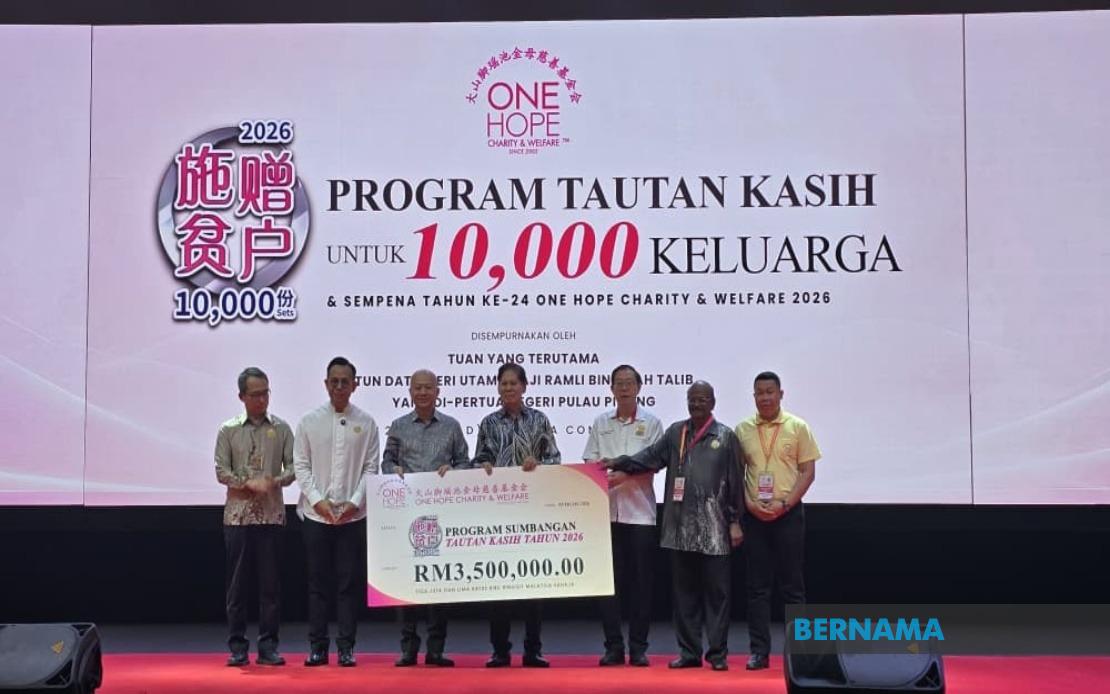
Minister of Entrepreneur Development and Cooperatives Steven Sim Chee Keong has emphasised that welfare policies require continuous reinforcement to guarantee adequate support and protection for communities experiencing hardship, misfortune, or financial distress. Speaking at an event in Butterworth, Sim articulated a vision where state progress and economic advancement remain intrinsically linked to prioritising the well-being and security of ordinary citizens, recognising that socioeconomic circumstances vary significantly across society.
The minister's remarks underscored a fundamental principle of governance: that prosperity divorced from social care mechanisms creates a hollow form of development. In his view, Penang and Malaysia more broadly must establish safety nets capable of catching those facing setbacks, arguing that the natural fluctuations of life—its inevitable rises and falls—necessitate institutional frameworks designed to cushion vulnerable populations against devastating consequences. This perspective aligns with broader regional discourse about equitable growth models that factor human dignity and social stability alongside economic metrics.
Sim highlighted the connection between robust welfare systems and national cohesion, arguing that such initiatives serve as binding forces across Malaysia's diverse communities. When welfare programmes transcend ethnic, religious, and political boundaries, they create shared experiences of mutual care that fortify social fabric. The minister pointed to One Hope Charity as a demonstrable example of this principle in action, an organisation that has evolved beyond simple charitable impulses into a structured mechanism for systematic poverty alleviation.
One Hope Charity, which originated as a modest community project in Bukit Mertajam, has expanded into one of Penang and Malaysia's most substantial welfare organisations. The scale of its operations tells an instructive story about growing social need and the capacity of civil society to respond where it perceives government frameworks might have gaps. Annual distribution of at least RM20 million in assistance reflects the immense financial resources required to meaningfully address poverty and hardship across a state the size of Penang.
Founder and chairman Datuk Chua Sui Hau revealed that during the current year, the organisation has extended assistance to more than 10,000 families, a figure that speaks to the breadth of vulnerability within seemingly developed communities. Each beneficiary family received a carefully calibrated assistance package worth approximately RM320, comprising two components: essential goods and daily necessities addressing immediate survival needs, alongside RM200 in cash providing recipients flexibility to allocate resources according to their particular circumstances. This dual approach—combining in-kind aid with cash transfers—reflects contemporary welfare thinking that respects recipient agency while ensuring targeted support.
The depth of One Hope Charity's commitment becomes apparent when examining its historical trajectory. Between 2021 and 2025, the organisation channelled more than RM100 million into multiple welfare domains, including direct patient medical treatment support, hospital equipment provision, and comprehensive welfare programming. This five-year concentration of resources demonstrates a long-term strategic approach to poverty reduction rather than episodic charity, suggesting that meaningful welfare work requires sustained institutional commitment and substantial financial capacity.
Looking forward, One Hope Charity has ambitious expansion plans coinciding with its 25th anniversary next year. The organisation intends to mobilise approximately RM30 million in new welfare initiatives, with particular emphasis on broadening its Medical Assistance Programme. This forward trajectory indicates confidence in the organisation's sustainability model and recognition that medical expenses represent a critical poverty driver for Malaysian households. Healthcare costs frequently precipitate financial catastrophe for middle and lower-income families, making medical assistance programmes particularly consequential for preserving both health and economic stability.
The presence of Penang Governor Tun Ramli Ngah Talib and his wife, Toh Puan Raja Noora Ashikin Raja Abdullah, at the event underscored official state endorsement of welfare initiatives, signalling alignment between government and civil society actors on social protection priorities. Such visible backing matters for organisations seeking to mobilise resources and maintain community confidence in welfare programming.
For Malaysian policymakers and regional observers, the One Hope Charity model presents instructive lessons about welfare system design. The organisation demonstrates that channelling support through multiple pathways—direct cash assistance, medical aid, essential goods provision, and equipment donation—creates resilience and addresses interconnected dimensions of poverty. Rather than treating welfare as a single policy domain, effective systems require integration across health, food security, and income support.
The minister's advocacy for strengthened welfare policies carries particular resonance given Malaysia's evolving demographic and economic challenges. While the country has achieved middle-income status, income inequality remains pronounced, and access to adequate social protection remains uneven across regions and demographic groups. Penang, despite its relative economic dynamism, hosts significant populations vulnerable to economic shocks, as evidenced by the scale of One Hope Charity's operations.
The conversation about welfare policy also intersects with Malaysia's position within Southeast Asia's development context. Neighbouring countries grapple with similar tensions between economic growth imperatives and social protection needs, making policy innovations in the Malaysian context potentially relevant for regional peers. One Hope Charity's evolution from grassroots initiative to major welfare actor suggests potential scalability of models that combine business network mobilisation with structured beneficiary identification and assistance delivery.
Ultimately, Sim's emphasis on welfare policy strengthening reflects recognition that sustainable development requires attending to human dimensions of progress. As Malaysia navigates post-pandemic recovery and confronts persistent structural inequalities, the integration of robust, well-resourced welfare mechanisms into broader governance frameworks becomes increasingly critical. Whether through government programmes, civil society organisations, or hybrid models leveraging both sectors, ensuring that economic progress translates into genuine security and dignity for all communities remains a defining challenge for Malaysian governance.

