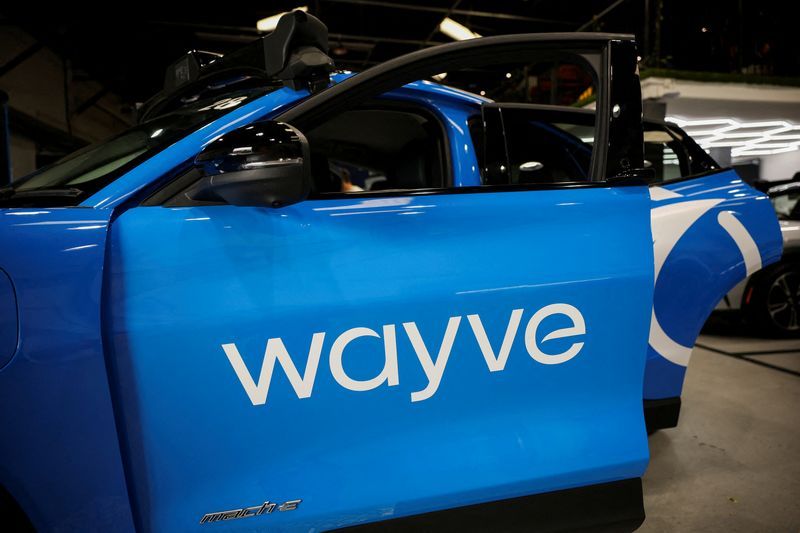
Wayve, a London-headquartered autonomous-driving company, is capitalising on surging investor appetite in the self-driving sector after securing $2.8 billion from a diverse coalition of technology giants and automotive manufacturers. The funding consortium includes Nvidia, Mercedes-Benz, and Nissan, underscoring confidence in the startup's distinctive technological approach. The company recently announced a significant commercial milestone, committing to integrate its driving system into Stellantis-manufactured Jeep vehicles destined for Uber's ride-hailing platform, marking a substantial step towards real-world deployment across a global mobility network.
The fundamental distinction separating Wayve from many competitors lies in its adoption of end-to-end machine learning, a form of artificial intelligence that processes sensor data and translates it directly into driving decisions without intermediary computational layers. This methodology mirrors human driving cognition, where visual and spatial information flows instantaneously into navigational actions. The company's technological architecture deliberately diverges from more conventional approaches, which blend algorithmic rule-sets with high-definition mapping to establish predetermined responses for anticipated driving scenarios. By eliminating the requirement for exhaustive pre-programmed instructions, Wayve positions itself to adapt more dynamically to unpredictable traffic environments.
Although Tesla pioneered the end-to-end learning model in autonomous driving several years ago, Wayve has engineered its system with a crucial architectural difference: rather than relying exclusively on camera-based sensors like Tesla, Wayve's platform accommodates diverse sensor configurations and multiple AI chip varieties. This sensor-agnostic design philosophy fundamentally alters the commercial landscape, enabling the company to license its technology to virtually any vehicle manufacturer or autonomous-driving developer, regardless of their existing hardware infrastructure. Chief Executive Officer Alex Kendall, a 33-year-old New Zealander who established the company in 2017 following his doctoral research in AI deep learning at Cambridge University, articulates an ambitious global vision. "We want to make full self-driving possible for any vehicle, any brand, and anywhere around the world," Kendall stated during an interview conducted earlier this year while observing a Ford Mustang Mach-E equipped with Wayve's autonomous technology navigating neighbourhoods near San Francisco Bay Area, where the company maintains significant research operations.
The autonomous-driving sector has experienced a pronounced resurgence in investor confidence following Alphabet's Waymo expansion trajectory. Over the past two years, Waymo has transitioned from theoretical development to commercial reality, now offering paid autonomous rides across approximately twelve cities worldwide after investing more than a decade in research and validation. This tangible progress has rekindled capital enthusiasm throughout the industry, attracting substantial funding rounds for competing developers. Notably, end-to-end AI learning itself has undergone a dramatic transformation in perceptions; a decade ago, researchers considered this approach largely experimental and niche, pursued primarily by academic pioneers such as Kendall himself. Contemporary autonomous-driving companies increasingly incorporate end-to-end learning elements, recognising its potential advantages for rapid deployment and adaptability.
However, the embrace of AI-centric navigation methodologies introduces a significant technical and safety challenge: the interpretability problem, colloquially termed the "black box" dilemma. Unlike conventional rule-based systems where engineers can readily trace logical pathways explaining specific driving decisions, end-to-end neural networks operate through opaque mathematical transformations that resist straightforward human comprehension. This opacity creates regulatory and commercial complications for manufacturers seeking to justify autonomous vehicle safety to regulators, insurers, and consumers. Wayve addresses this concern through generating what the company terms a "safety map," a computational layer that identifies secure driving trajectories within evolving traffic scenarios. Vijay Badrinarayanan, Wayve's vice president of artificial intelligence, articulates the philosophical foundation underlying this approach: conventional rule-based safety frameworks become increasingly brittle when encountering statistically rare or genuinely novel driving situations, precisely because programmers cannot anticipate and code responses for every conceivable edge case. Conversely, human drivers maintain safety through adaptive conservatism when encountering uncertainty, a capability that end-to-end learning systems can theoretically replicate.
Waymo, despite pioneering end-to-end AI applications, maintains concurrent reliance upon traditional rules-based architecture and mapping-intensive methodologies, reflecting institutional caution regarding safety guarantees. The company explicitly communicates this hybrid approach to stakeholders, stating that "end-to-end models aren't enough to guarantee safety at scale." This conservative positioning underscores the lingering uncertainty surrounding purely neural network-dependent navigation at commercial scale. Nissan, one of Wayve's key customers, exemplifies this measured scepticism. The Japanese automaker's technology chief, Eiichi Akashi, acknowledges that Wayve's system represents the "most advanced" available, yet expresses considerable reservations about its interpretability. Nissan's scheduled deployment of Wayve technology in its Elgrand people-mover van throughout Japan during the fiscal year concluding March 2028 remains contingent upon comprehensive safety validation. Akashi's candid observation—that it is "difficult to peer into it and see how it makes decisions"—encapsulates the industry-wide challenge of reconciling cutting-edge AI capabilities with traditional safety-assurance methodologies.
Wayve's operational structure strategically positions the company for accelerated international expansion. With significant research and development hubs in Tokyo, Stuttgart, and Vancouver, the organisation possesses geographic proximity to major automotive markets and manufacturing concentrations. Critically, Kendall contends that Wayve's technological approach eliminates the necessity for time-consuming road-mapping and localised code customisation that traditionally consumed months during market entry. The company reports successful autonomous testing across hundreds of municipalities globally without requiring preliminary infrastructure development or market-specific programming adaptations. This potential efficiency advantage could fundamentally compress deployment timelines and reduce market-entry costs, providing substantial commercial leverage against more traditional competitors still ensnared in localisation complexity.
Academic perspectives on end-to-end learning technologies reveal nuanced assessments. Siddartha Khastgir, Professor of Safe Autonomy at the University of Warwick in England, acknowledges that end-to-end models may facilitate faster commercial development and deployment cycles relative to labour-intensive conventional methodologies. However, Khastgir declines to pronounce either approach inherently safer, recognising that safety emerges from system-level implementation quality rather than architectural philosophy alone. Phil Koopman, an autonomous-vehicle systems expert and computer-engineering professor at Carnegie Mellon University, positions Wayve's adaptation strategy as merely one viable approach among several potentially promising pathways forward. Yet Koopman maintains realistic expectations regarding deployment timelines, estimating that comprehensive, geographically distributed safe autonomous-driving systems will require minimally another decade of development, potentially demanding technological innovations that current researchers have not yet conceptualised.
For Malaysian and Southeast Asian stakeholders, Wayve's licensing-focused business model presents distinctive implications. Unlike Waymo's vertically integrated approach or Tesla's proprietary ecosystem, Wayve's technology-agnostic platform could facilitate autonomous-vehicle adoption among regional manufacturers lacking existing autonomous-driving expertise or research infrastructure. Malaysia's automotive sector, dominated by established manufacturers and emerging EV producers, could potentially accelerate autonomous capability integration without requiring parallel internal AI research investments. The Southeast Asian region's diverse road conditions, traffic patterns, and regulatory environments might paradoxically favour Wayve's adaptive learning approach over rigid rule-based systems calibrated exclusively to Western driving contexts. However, the persistent interpretability challenges and regulatory uncertainty demand careful assessment before substantial regional deployment commitments emerge.

