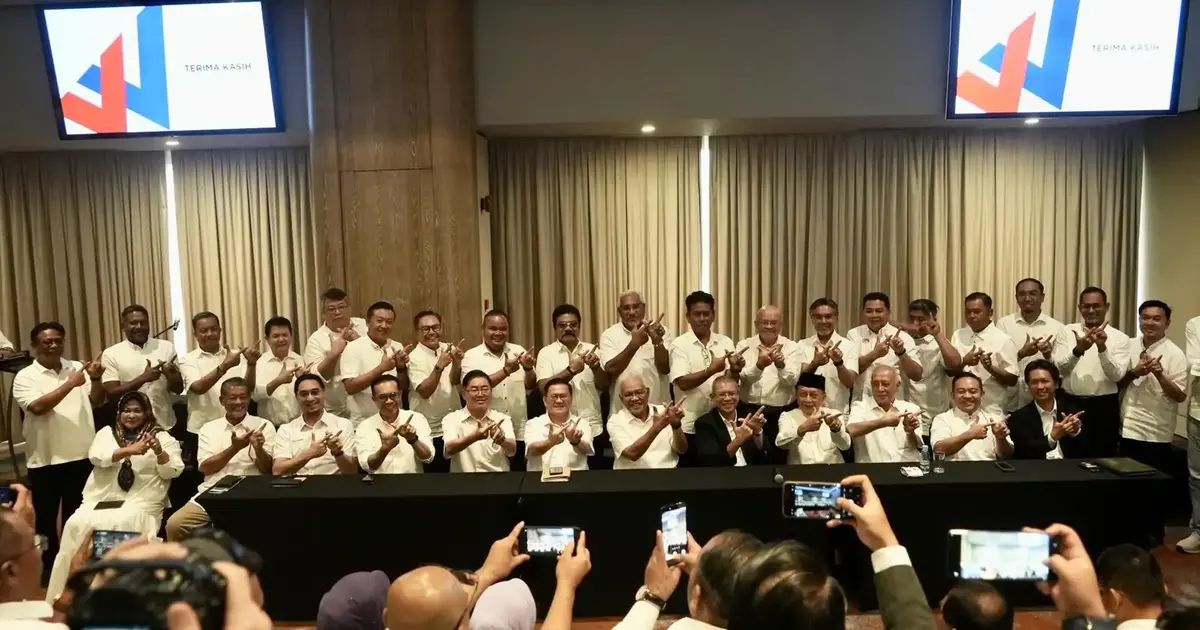
Perak Menteri Besar Sanusi Lamaljam, serving as the election director of Perikatan Nasional, has moved to clarify the contentious matter surrounding Wawasan's admission into the opposition coalition, emphasising that the decision emerged from a democratic process within the party's highest decision-making body. The clarification comes amid ongoing tensions within the alliance structure as it seeks to solidify its position ahead of the Dewan Rakyat election scheduled for next year.
According to Sanusi's statement, whilst Bersatu leadership has made its objections to Wawasan's membership known and these concerns have been formally registered, the Supreme Council proceeded to vote on the matter and approved the entry based on the will of the majority. This framing seeks to legitimise the decision as internally coherent, even where consensus did not prevail among all coalition partners. The approach underscores a fundamental tension within opposition alliances in Malaysia, where partners with differing strategic calculations must navigate integration of new entities.
Wawasan, as an emerging political vehicle, represents a notable consolidation effort among certain segments of the Malaysian political landscape. Its entry into PN signals the coalition's intent to broaden its appeal and incorporate diverse constituencies, yet the manner of admission has evidently created friction that warrants careful management. For observers tracking the health of opposition political blocs, such internal disagreements over membership and strategic direction often foreshadow deeper structural challenges during campaign periods and in coalition governance.
Bersatu's objections likely stem from concerns about electoral mathematics and representation within a growing alliance. When coalitions expand without full consensus, smaller or earlier-joining members may fear dilution of their influence and bargaining power in seat allocation negotiations—a perennially sensitive matter in Malaysian politics. The fact that Bersatu's concerns were noted but not determinative suggests that other coalition members, possibly UMNO or PAS, weighted the benefits of Wawasan's inclusion more heavily than reservations about internal cohesion.
The Supreme Council structure itself reflects the federalised nature of PN, wherein major component parties retain significant autonomy whilst coordinating through a central body. Sanusi's invocation of majority voting legitimacy indicates that the coalition has functional mechanisms for resolving disagreements, yet such reliance on voting procedures rather than consensus-building can leave residual resentment among dissenting parties. This dynamic is particularly consequential in Malaysian politics, where coalition stability often determines electoral outcomes and government formation viability.
For Malaysian voters and political analysts, the episode illustrates the inherent complexity of managing multi-party coalitions with distinct organisational cultures and strategic priorities. Unlike governing coalitions, opposition alliances face the additional challenge of maintaining unity whilst competing fiercely for media attention and public confidence. Wawasan's precise platform and electoral footprint remain subjects of scrutiny, as does its capacity to strengthen PN's overall prospects without compromising the coherence of constituent parties' messaging.
The timing of this admission also carries significance within Malaysia's electoral calendar. With the federal election looming within the next twelve months, coalitions must resolve internal disputes swiftly to allow adequate preparation time for coordinated campaigning. Unresolved tensions over membership decisions can fester and resurface during critical junctures, potentially undermining the unified front that opposition blocs require to challenge the incumbent Barisan Nasional coalition effectively.
Bersatu's position within PN remains complex given its historical trajectory. As a party that has oscillated between government and opposition, its members may view coalition expansion with a mixture of pragmatism and caution. The party's leadership has consistently emphasised the importance of internal democracy and transparent decision-making, so the framing of the Wawasan decision through Supreme Council voting aligns with these declared values. However, whether rank-and-file Bersatu members will accept the outcome as legitimate remains an open question.
Regionally, this development in Malaysian opposition politics carries implications for broader Southeast Asian political trends. Coalition management challenges similar to PN's experience have affected opposition movements across the region, from Thailand to Indonesia. How Malaysian coalitions navigate internal diversity whilst maintaining electoral competitiveness may offer instructive lessons, particularly regarding the viability of consensus-based versus majoritarian decision-making in multi-party alliances operating in competitive electoral systems.
Looking forward, Sanusi's clarification appears designed to close the chapter on the Wawasan admission controversy whilst reaffirming PN's commitment to internal democratic processes. Whether this messaging proves sufficient to mollify Bersatu's concerns and maintain coalition unity throughout the campaign period will become clearer as election preparations intensify. The coalition's ability to convert its structural complexity into strategic advantage will ultimately depend on how effectively its leadership can translate Supreme Council decisions into coordinated electoral performance.