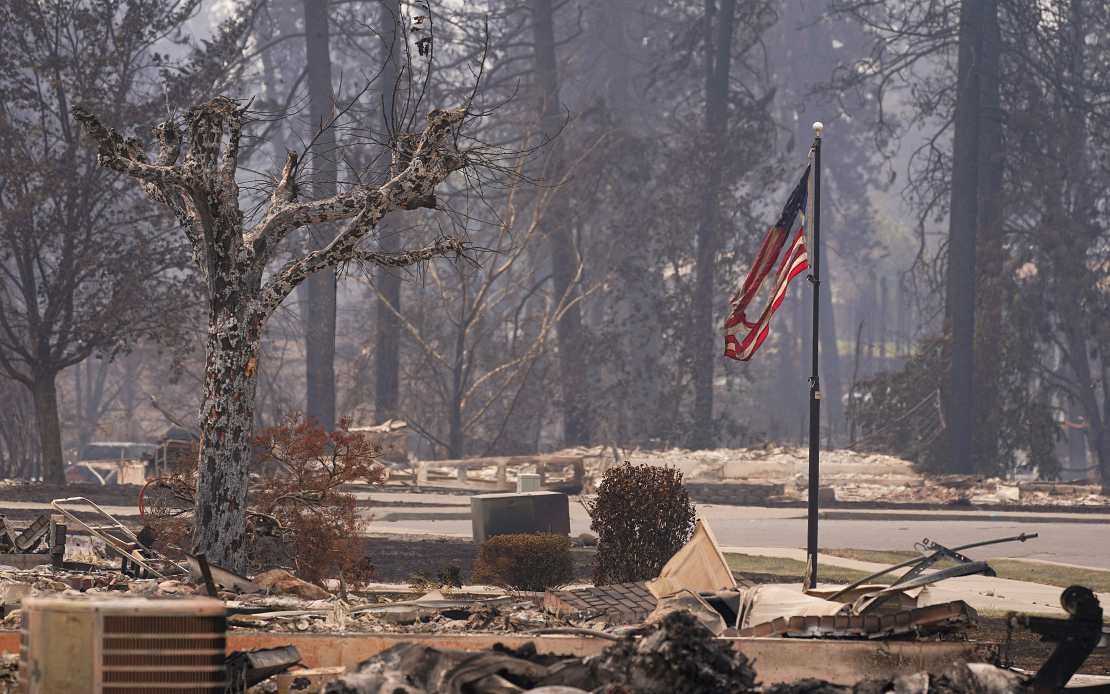
Authorities in the US state of Washington are grappling with a crisis of unprecedented scale as surging wildfires have displaced more than 65,000 residents from their homes, with preliminary estimates indicating that the flames have already destroyed at least 700 structures. The American Red Cross confirmed the evacuation figures on Monday, painting a stark picture of the disaster unfolding across multiple counties in the state, where entire communities have been forced to flee as fire crews battle to contain rapidly spreading blazes.
The situation took a significant turn when Spokane County Sheriff John Nowels announced that authorities had apprehended a suspect in connection with at least one of the major fires. Aaron F. Farinacci, 37, was taken into custody on Monday afternoon and faces a first-degree arson charge, with his bail set at one million dollars. Investigators have linked the suspect to the Old Trails Fire, one of several active blazes currently threatening the region, raising serious questions about the origins of what appeared to be a natural disaster.
The fires sweeping through Spokane and Stevens counties have consumed approximately 8,026 acres since Saturday, according to data from the interagency coordination system InciWeb. Despite the efforts of firefighting teams, these particular fires remain at zero percent containment, a grim indicator of how rapidly the situation continues to deteriorate. The Spokane Complex Fire Incident Management Team noted that improving weather conditions have provided some relief, allowing crews to gain modest ground on the fire lines, though the overall situation remains dire.
The scale of the wildfire crisis extends well beyond the Spokane area, with other parts of Washington facing even more severe threats. The Sinlahekin fire has expanded to a staggering 85,000 acres, making it one of the largest active blazes in the state. This fire was initially sparked by lightning on July 26 and has since swallowed vast tracts of forest with over 820 personnel committed to fighting it, yet it remains completely uncontained. The Little Giant Fire, located northwest of Leavenworth in the Okanogan-Wenatchee National Forest, has independently burned more than 51,000 acres, further straining the state's firefighting resources and infrastructure.
Governor Bob Ferguson has been closely monitoring the humanitarian response, with officials making significant efforts to account for the safety of all residents in affected areas. The governor's office confirmed that authorities have established contact with nearly everyone who initially called for emergency assistance. However, officials remain concerned about 14 people they have not yet been able to verify. Ferguson clarified that these individuals are not technically classified as missing, but authorities are actively attempting to make contact to confirm their wellbeing and ensure no one has fallen through the cracks of the response effort.
The absence of confirmed fatalities at this stage represents a measure of success in an otherwise catastrophic situation, suggesting that evacuation procedures, though executed under extreme pressure, have functioned effectively in preventing loss of life. This outcome reflects the lessons learned from previous wildfire disasters across the western United States, where improved early warning systems and coordinated evacuation protocols have become essential. Nevertheless, the displacement of tens of thousands of people has created massive logistical challenges, with the American Red Cross and other humanitarian organizations now managing multiple emergency shelters across the state.
For Southeast Asian observers, the Washington wildfire crisis offers a sobering reminder of the growing wildfire threat facing the broader Pacific region. Neighbouring British Columbia has experienced unprecedented fire seasons in recent years, and climate scientists have consistently warned that warming temperatures and changing precipitation patterns are extending the fire season across western North America. Malaysia and other Southeast Asian nations, which face their own dry season fire risks particularly in Kalimantan and Sumatra, can draw important lessons from how Washington state has coordinated its emergency response across multiple jurisdictions and agency boundaries.
The arrest of Farinacci on arson charges introduces a human element to what many initially perceived as a purely environmental crisis. If the allegations prove substantiated, it would underscore the reality that not all wildfire disasters emerge exclusively from natural causes or climate factors. Authorities will now need to investigate whether the suspect acted with deliberate intent to cause widespread destruction or whether other motivations were at play. The investigation into Farinacci's activities may yield important insights into fire safety protocols and security measures that could be relevant for communities throughout the Pacific Northwest and beyond.
The recovery process facing Washington will be prolonged and expensive, extending far beyond the immediate firefighting effort. Damaged infrastructure, compromised water supplies affected by ash, air quality degradation spanning multiple states, and the psychological trauma experienced by evacuated families will all require sustained attention. Property reconstruction will strain local governments and private insurance markets, with costs easily climbing into the hundreds of millions of dollars. The long-term economic implications will ripple through regional supply chains and affect neighbouring jurisdictions that depend on Washington for resources and services.

