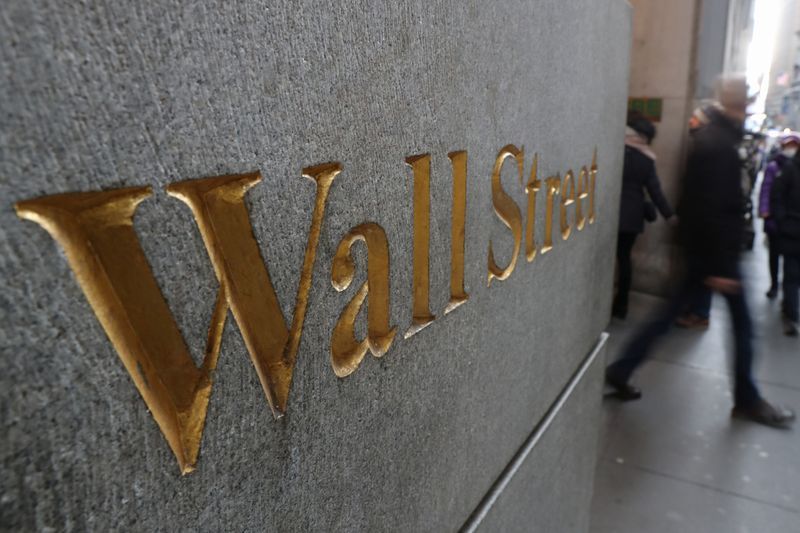
NEW YORK — American equity markets opened August with considerable momentum, propelling the Dow Jones Industrial Average to a fresh closing record as optimism surrounding potential United States-Iran negotiations tempered energy prices and calmed long-term borrowing costs. The benchmark index climbed 693.38 points, representing a 1.32% advance to close at 53,178.41, whilst the broader S&P 500 gained 110.78 points or 1.48% to 7,600.50 and the tech-heavy Nasdaq Composite surged 540.04 points or 2.13% to finish at 25,913.90. The rally underscores how commodity-driven geopolitical developments continue to exert outsized influence over investor sentiment at a moment when traditional fundamentals like corporate profitability would normally dominate trading activity.
The catalyst for the market's optimism stemmed from pronouncements by U.S. President Donald Trump regarding imminent negotiations intended to resolve the status of the Strait of Hormuz, a critical global chokepoint through which roughly one-fifth of the world's seaborne oil passes. Following Trump's Sunday declaration that talks would commence on Monday, crude prices retreated approximately 5% from prior levels, though Iran subsequently disputed the assertion that formal discussions had been scheduled. Notwithstanding these conflicting statements, the mere perception of de-escalation proved sufficient to unlock significant buying interest, suggesting that market participants view geopolitical uncertainty as the primary headwind preventing further price discovery in equities. For Southeast Asian economies dependent on stable oil supplies and global trade flows through regional straits, any sustained reduction in Middle Eastern tensions carries profound implications for inflation trajectories and shipping costs throughout 2025.
The commodity price movement cascaded through fixed-income markets with Treasury yields declining as investors repriced expectations for economic disruption. Art Hogan, chief market strategist at B. Riley Wealth in Boston, encapsulated the precarious balance governing current market dynamics by noting that each trading day begins with a collective assessment of crude prices and ten-year Treasury yields as the primary barometers of market health. When both indicators move lower, he observed, equity markets respond favorably; conversely, upward movement generates acute anxiety. This framework reveals how thoroughly tactical risk management has displaced fundamental analysis as the governing principle of price formation, a concerning dynamic that renders markets vulnerable to sudden reversals should the Iran situation deteriorate or economic data surprise negatively.
Yet beneath the surface volatility, corporate earnings continued demonstrating resilience that initially suggested the underlying economy remained robust. Through Friday, 304 companies constituting the S&P 500 had reported second-quarter results exhibiting aggregate earnings growth of 29.3%, with 85.2% of reporting firms exceeding consensus analyst expectations according to LSEG data. This breadth of positive surprises typically provides foundational support for equity valuations, though the present earnings cycle has been characterised by what market observers describe as unusual macroeconomic distraction. Investors and analysts alike have struggled to maintain focus on company-specific performance amid competing concerns regarding artificial intelligence trajectories, geopolitical conflicts, and prospective Federal Reserve monetary policy adjustments. The disconnect between solid earnings fundamentals and persistent market anxiety points toward a potentially unstable equilibrium where catalysts for rapid repricing remain abundant.
Technology and communications platforms led the session's gains, with the communications services sector advancing 4.3% driven by substantial rallies in Meta Platforms and Alphabet. Amazon ascended 4.6% following robust quarterly results that pushed the company's market capitalisation beyond US$3 trillion for the first time in corporate history, whilst SpaceX surged 5.6% in anticipation of its initial quarterly earnings disclosure since commencing public trading. The aerospace-focused venture has traded below its US$135 initial public offering price throughout most of the three weeks following its mid-June debut, suggesting that institutional investors remained unconvinced regarding valuation following the euphoria surrounding its market entry. Advanced Micro Devices, SanDisk, and Western Digital were slated to report earnings later in the week, each possessing significant exposure to artificial intelligence infrastructure buildout that continues commanding outsized investor attention despite earlier concerns about overextension in the sector.
The energy sector proved the sole major industry grouping to decline materially, dropping 1.2% as crude oil's weakness translated directly into compressed valuations for petroleum extraction and refining companies. This inverse relationship highlights how commodity-dependent sectors remain structurally vulnerable to external shocks beyond management control, a dynamic particularly relevant for investors monitoring Southeast Asian energy companies with significant exposure to oil price volatility. Merger and acquisition activity continued generating headlines as preliminary discussions between Bristol Myers Squibb and AstraZeneca surfaced, with analysts suggesting a consummated transaction could establish a pharmaceutical colossus valued near US$400 billion and ranking among the global pharmaceutical industry's largest entities by revenue and pipeline depth.
Contrastingly, Marriott International stumbled 7% following management guidance indicating third-quarter profitability would underperform analyst consensus estimates, demonstrating that earnings disappointments continue to exact swift punishment regardless of broader market sentiment. The hospitality operator's cautious outlook potentially signals that consumer spending dynamics are softening in response to persistent inflation pressures and elevated borrowing costs, though a single company's guidance requires corroboration through broader economic datasets before drawing definitive conclusions. Federal Reserve officials struck slightly more optimistic tones regarding inflation trajectories, with New York Federal Reserve President John Williams suggesting that price pressures would gradually recede, though recent reporting that Fed Chair Kevin Warsh had proposed reducing the frequency of monetary policy meetings generated fresh uncertainty regarding the central bank's future direction and decision-making transparency.
Interest rate futures markets were pricing in approximately a 64.5% probability that the Federal Reserve would implement a rate increase of at least 25 basis points during its September gathering, according to CME FedWatch data. This substantially elevated probability contrasts with market conditions mere weeks prior when rate cut expectations had dominated pricing, illustrating the remarkable volatility in forward guidance and the difficulty policymakers encounter when attempting to calibrate messaging. Incoming data scheduled for the coming week would provide critical signals regarding labour market momentum, culminating in Friday's government employment report that traditionally commands outsized influence over near-term monetary policy expectations and equity valuations. The combination of stronger-than-expected jobs data alongside persistent inflation could force a recalibration of rate cut expectations and potentially disrupt the equity market rally.
Breadth metrics indicated robust participation across the broader market, with advancing issues outpacing decliners by 2.62-to-1 on the New York Stock Exchange and 3.01-to-1 on the Nasdaq exchange. The S&P 500 established 15 new 52-week highs against a single new low, whilst the Nasdaq Composite generated 121 new highs alongside 96 new lows, suggesting continued bifurcation between momentum-driven mega-cap technology equities and broader market segments. Trading volume totaled 19.36 billion shares across U.S. exchanges, modestly exceeding the 17.66 billion average for full sessions over the preceding 20 trading days, indicating that the rally commanded meaningful institutional participation rather than thin-volume enthusiasm. For Malaysian investors monitoring international exposures, the current environment underscores the necessity of diversification across geographies and asset classes given the outsized influence of geopolitical variables and monetary policy uncertainty on near-term market dynamics.

