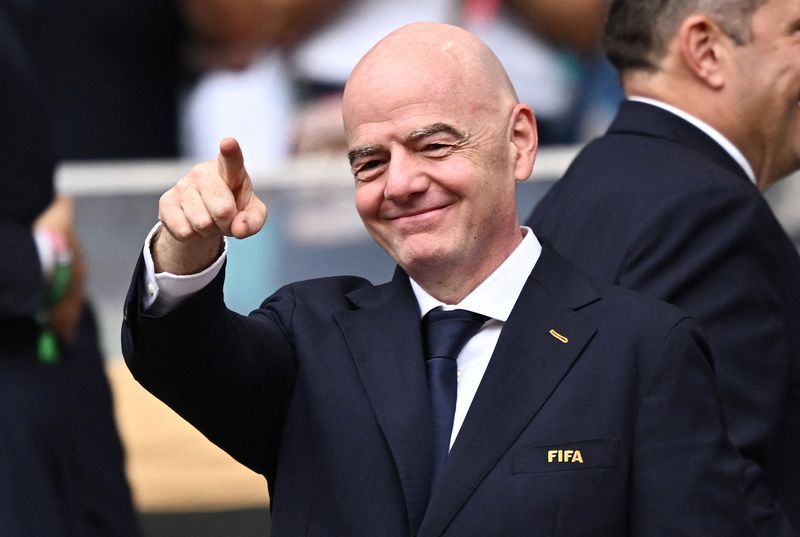
The Football Association of Wales has withdrawn its backing for FIFA President Gianni Infantino's bid to secure another term leading world football from 2027 to 2031, marking a significant political setback for the incumbent leader. The Welsh federation's decision follows the spectacular collapse of Infantino's bold attempt to unlock approximately $4.2 billion from private investors by ceding roughly 20% ownership of a newly created entity responsible for overseeing major competitions, particularly the FIFA World Cup.
Infantino's ambitious commercial venture faced mounting resistance from multiple stakeholder groups across the global football establishment. After days of intense pressure, FIFA formally abandoned the privatisation scheme on Friday, retreating from what had been positioned as a transformative financial initiative for the organisation. The plan's failure has triggered immediate consequences for the FIFA president's carefully orchestrated path toward re-election, a process that had previously appeared virtually assured given his complete control of the organisation since 2016.
In a formal statement, the Welsh FA laid bare its reasoning for this dramatic reversal of support. "The Football Association of Wales hereby confirms its withdrawal of support for the candidature of Mr. Gianni Infantino, for re-election as FIFA President for the 2027–2031 term," the federation declared. The organisation went further in articulating its grievances, citing "failures in good governance, processes, leadership, values, stakeholder management, communications and sound judgement" as contributing factors to losing confidence in Infantino's continued stewardship of the sport.
Wales's withdrawal carries particular symbolic weight as the first national football federation to formally break ranks with the FIFA president. This precedent-setting action appears likely to embolden other confederations and member associations to reconsider their own positions. For Malaysian football stakeholders and Southeast Asian confederations, Wales's move signals that even traditionally cautious football administrators are willing to challenge Infantino's authority when governance concerns accumulate sufficiently.
Infantino now faces an unprecedented level of institutional hostility from football's regional power structures. Both UEFA, European football's governing body, and CONCACAF, which oversees North and Central American football, have publicly announced they have lost confidence in his leadership. UEFA, which spearheaded the resistance to the commercial rights proposal, welcomed its abandonment but stopped short of confirming media reports suggesting it was preparing formal legal action against FIFA regarding the initiative. The confederation did issue a document preservation order, effectively freezing electronic records to prevent destruction of emails, files, and data that may prove relevant to future investigations.
The trajectory of Infantino's tenure presents a striking contrast to his early years in office. After assuming the presidency in 2016 following Sepp Blatter's resignation under scandal, Infantino secured two consecutive re-elections entirely unopposed, consolidating what appeared to be an unassailable grip on FIFA's leadership structure. His apparent control over the organisation's voting mechanisms and member support had made his candidacy for the 2027-2031 term seem almost mechanical in its inevitability. Many observers believed the formal re-election vote would constitute merely procedural confirmation of an outcome predetermined through FIFA's internal political machinery.
Infantino had declared his intention to pursue a fourth term as FIFA chief in April, seemingly confident in his command of sufficient support across FIFA's membership. His strategy had centred on rebranding FIFA's financial architecture through the failed privatisation scheme, which proponents argued would modernise the organisation's revenue model while creating new opportunities for member associations. However, this same proposal ultimately became the vehicle through which underlying dissatisfaction with his leadership surfaced and crystallised into organised opposition.
The failed commercial rights initiative exposed fundamental fractures within FIFA's governance structure that Infantino's previous managerial dominance had obscured rather than resolved. Analysis by football administration experts suggests that the backlash revealed considerably deeper reservoirs of unhappiness among FIFA members than Infantino's apparent control had indicated. These frustrations encompass governance transparency, stakeholder consultation processes, and strategic decision-making approaches that many member federations found unilaterally imposed rather than collaboratively developed.
Looking ahead to FIFA's Congress scheduled for March in Morocco, observers expect considerably more contentious proceedings than might have been anticipated merely weeks earlier. The combination of Wales's formal withdrawal, UEFA's public loss of confidence, CONCACAF's institutional distancing, and mounting scrutiny of the abandoned proposal appears likely to transform what Infantino anticipated as a coronation into a genuinely contested election. This development carries implications throughout Southeast Asia, where Malaysian football leaders and other regional administrators may need to reassess their own positioning regarding FIFA's leadership structures and governance trajectory during this volatile period.

