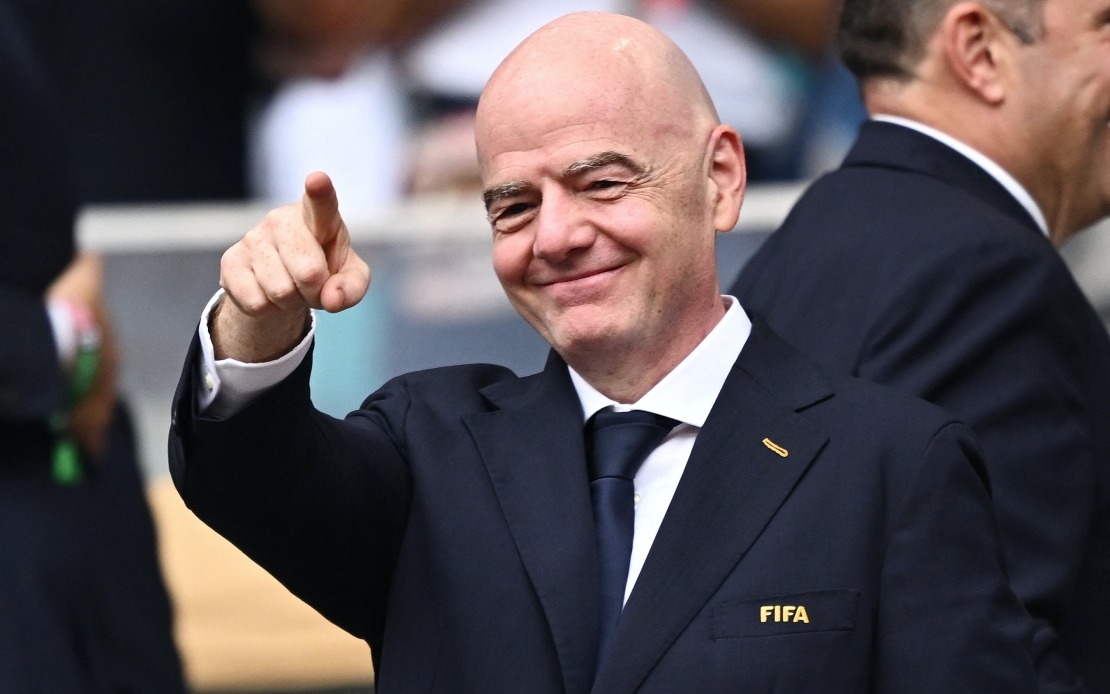
The Football Association of Wales has formally withdrawn its backing for FIFA president Gianni Infantino ahead of his anticipated re-election bid next year, marking a significant blow to his leadership in world football. The governing body cited deteriorating confidence stemming from Infantino's discredited effort to sell off stakes in the World Cup to private investors through a vehicle known as FIFA Forward Enterprise (FFE), a scheme he abandoned only after facing widespread condemnation from multiple continental federations.
Infantino's decade-long tenure atop world football's governing body has increasingly come under scrutiny as several major football associations reassess their positions. The FAW's decision represents a notable shift from its earlier inclination to support the Swiss-Italian administrator's candidacy, underscoring just how damaging the FFE episode has proven to his standing among member nations. The organisation's statement emphasised that Infantino had fundamentally compromised his credibility through lapses in governance, institutional processes, leadership judgment, and stakeholder communication, declaring that he no longer commanded its confidence to oversee international football.
The withdrawal of backing from Wales arrives amid a broader momentum of discontent emerging across European and North American confederations. England's Football Association has similarly communicated to FIFA that it no longer endorses Infantino's continued leadership, while Union of European Football Associations (UEFA) issued a formal statement reinforcing that confidence in the president had eroded following the FFE proposal. This European front represents a formidable challenge to Infantino's re-election prospects, particularly given that UEFA commands substantial voting influence through its 55 member associations within FIFA's broader membership of 211 nations.
The mechanics of FIFA's leadership structure mean that triggering a formal challenge to Infantino's position remains technically achievable. UEFA's public statement notably left open the possibility that member associations could initiate a vote of no confidence, which would necessitate the convening of an Extraordinary FIFA Congress. Such a motion requires support from merely 43 associations among FIFA's total membership, a threshold that appears increasingly within reach given current sentiment. However, organisers of such a challenge would likely require substantial confidence that a majority among all 211 members would actually vote to remove Infantino before formally initiating proceedings, given the potential embarrassment of a failed removal attempt.
North American confederations have added their voices to mounting criticism of the FIFA president's stewardship. CONCACAF, the governing body representing associations across North America, Central America and the Caribbean, similarly demanded a comprehensive review of Infantino's leadership. The confederation, alongside UEFA, commands considerable collective voting power, with the two continental bodies representing approximately 96 member associations combined. Notably, CONCACAF president Victor Montagliani, who currently serves as FIFA vice-president, has indicated to news organisations that he would be willing to contest for football's highest office should circumstances warrant such a challenge.
Yet the situation remains complicated by significant geographic divisions in backing for Infantino, particularly from associations in Africa and Asia. Several major footballing nations, including Morocco, Egypt and Qatar, have publicly expressed their continued support for the FIFA president despite the governance scandals. This regional split reflects deeper fault lines within world football between established European powers and emerging football nations who view FIFA leadership through different political and economic lenses. Infantino has cultivated relationships with associations in these regions through various FIFA initiatives and financial mechanisms, establishing a reservoir of support that may prove essential to his survival.
The FFE proposal itself represented an extraordinary departure from FIFA's traditional operational model, effectively seeking to commoditise the World Cup tournament by enabling private capital investment in exchange for equity stakes and future revenue sharing. The scheme encountered categorical rejection from three continental confederations and sparked unprecedented scrutiny into FIFA's strategic direction. Beyond the immediate corporate governance concerns, the proposal raised fundamental questions about whether FIFA should remain a membership-based organisation or evolve into a profit-sharing venture where private investors would hold stakes in world football's most prestigious tournament. Infantino's decision to shelve the initiative, made less than a week before the FAW's withdrawal announcement, came too late to salvage damaged relationships with key stakeholders.
Prime Minister Andy Burnham of the United Kingdom additionally characterised Infantino as unsuitable for continued FIFA leadership, framing the governance crisis in explicitly political terms. England's Football Association subsequently called for a thorough and rigorous examination into Infantino's conduct and decision-making throughout his presidency. This intervention by political figures demonstrates how deeply the FIFA controversy has penetrated beyond sporting circles into governmental spheres, particularly in nations where football commands substantial public attention and investment.
For Malaysian and Southeast Asian football stakeholders, these developments carry tangible implications regarding FIFA's future direction and governance standards. Asian associations, particularly those with aspirations for major tournament hosting rights or developmental assistance from FIFA, must navigate an increasingly fractious global football governance environment. The potential removal of Infantino would reshape FIFA's priorities, resource allocation and relationships with member confederations, particularly if his replacement represents a different geographical or ideological orientation. The Asian Football Confederation's positioning during any future vote of no confidence could prove decisive, lending significant negotiating leverage to the region's football administrators and potentially influencing FIFA's future engagement with Southeast Asian development initiatives.
The timeline toward FIFA's next presidential election remains relatively compressed, affording limited opportunity for Infantino to rehabilitate his standing through demonstrable governance reforms. The withdrawal of support from traditionally moderate associations like Wales suggests that enthusiasm for his continued leadership has metastasised into active opposition. Should additional major associations follow Wales and England in formally rescinding support, the threshold for triggering an extraordinary congress becomes increasingly plausible, potentially forcing a leadership contest far sooner than FIFA's formal electoral calendar might otherwise dictate. The coming weeks will prove critical in determining whether scattered withdrawals of support crystallise into a coordinated challenge or whether Infantino can stabilise his position through strategic diplomatic engagement with undecided members.

