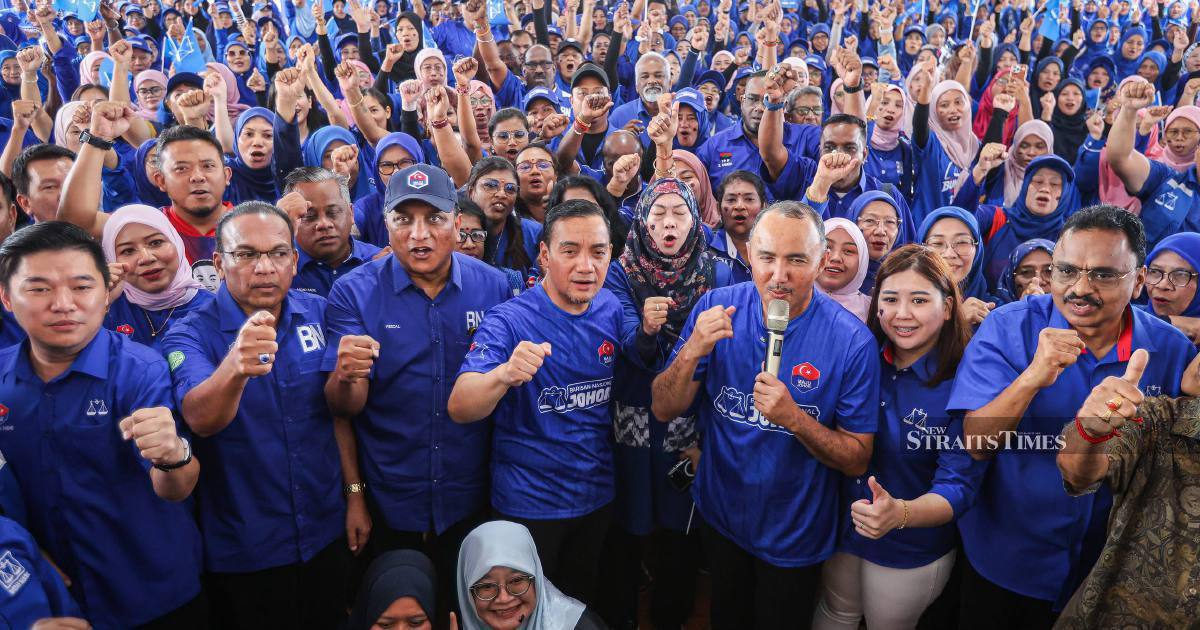
With the Johor state election entering its decisive final stretch, Caretaker Menteri Besar Datuk Onn Hafiz Ghazi has issued a direct appeal to voters in Kluang, cautioning them against what he views as deliberate attempts by opposition parties to exploit electoral sentiment through unsubstantiated attacks, inflammatory rhetoric, and pledges disconnected from fiscal reality. His remarks underscore the intensifying competition as the voting deadline approaches, reflecting broader patterns seen across Malaysian state-level contests where character assassination and unfounded allegations have increasingly featured in campaign narratives.
The caretaker leader's intervention highlights a persistent challenge in Malaysian electoral discourse: the distinction between legitimate policy critique and what political operatives on both sides characterise as personal vilification. Onn Hafiz frames opposition messaging as relying heavily on slander rather than substantive engagement with governance records or policy platforms. His emphasis on rejecting empty promises speaks to voter fatigue with grandiose campaign commitments that prove impossible to fulfil once governments assume office, a phenomenon that has eroded public trust in political pronouncements across the peninsula.
Johor's position as Malaysia's second-largest state by population makes its electoral outcomes significant for national political trajectories. The state serves as both a stronghold and a battleground where different political coalitions test messaging, organisational capacity, and voter mobilisation strategies. Developments in Johor frequently signal shifting sentiment in other parts of the country, making this contest more than a purely state-level affair. For the Barisan Nasional administration defending its hold on the state, the final campaign week becomes critical in consolidating support and neutralising opposition momentum.
The opposition's resort to what Onn Hafiz characterises as provocative tactics may reflect strategic calculations about their competitive position. Facing entrenched incumbency advantages and established administrative machinery, opposition parties often attempt to disrupt the narrative space by raising questions about the government's integrity and competence. However, this approach carries reputational risks if voters perceive campaigns as excessively negative without offering compelling alternative visions for governance and development.
Onn Hafiz's appeal for voters to demand realism in policy commitments addresses a genuine governance issue. State governments operate within constrained budgets, federal allocation frameworks, and constitutional limits on revenue-raising authority. Promises to dramatically expand welfare programmes, eliminate taxes entirely, or undertake massive infrastructure projects without credible funding mechanisms ultimately damage the credibility of whichever party makes them. Voters who witness unfulfilled pledges become more cynical about all political commitments, creating a cycle of declining trust.
The Johor campaign dynamics reflect Malaysia's evolving political landscape, where traditionally dominant parties face renewed competitive pressures from coalition formations offering different policy combinations and leadership styles. The final campaign week typically witnesses intensified voter contact efforts, social media saturation, and rhetorical escalation as parties attempt to influence decision-making among undecided and persuadable voters. Caretaker leaders such as Onn Hafiz operate under specific constraints, unable to deploy state resources for campaign purposes but retaining the ability to communicate directly with constituents and frame electoral stakes.
Voters across Johor's diverse urban, semi-urban, and rural constituencies face choices reflecting competing visions of governance priorities. Some areas prioritise economic development and business-friendly policies, others emphasise social welfare provisions and cost-of-living relief, and others focus on infrastructure investment and urban planning. How effectively each political coalition articulates positions addressing these differentiated priorities while maintaining overall coherence determines their persuasiveness with specific voter segments. Opposition attempts to present unified alternatives to the incumbent administration must overcome fragmentation within their own ranks and coordinate messaging across multiple parties with sometimes divergent interests.
The emphasis on rejecting slander also touches on concerning trends in Malaysian political culture, where baseless allegations about officials' personal conduct, financial dealings, and moral standing circulate through social media and messaging platforms with limited accountability or fact-checking. Such dynamics potentially coarsen political discourse and distract from substantive policy discussion. Voters confronting competing narratives about the same events or proposals must develop their own mechanisms for verifying claims and distinguishing between legitimate criticism rooted in evidence and partisan allegations designed purely to damage reputations.
As the campaign moves toward polling day, Onn Hafiz's message serves multiple purposes: rallying his own coalition's supporters by framing the contest as a choice between responsible governance and irresponsible opposition tactics, appealing to undecided voters by positioning his side as more principled and serious, and attempting to demoralise opposition supporters by delegitimising their campaign approaches. The effectiveness of this messaging depends substantially on whether voters perceive the claims about opposition tactics as credible and whether they accept the implicit argument that the incumbent administration has governed responsibly and made realistic promises.
The final week of campaigning often proves crucial in determining which messages penetrate voter consciousness and which arguments prove persuasive to those still undecided. Campaigns become exercises in managing perceptions, controlling narratives, and influencing the frames through which voters evaluate competing options. Onn Hafiz's call for voters to scrutinise opposition claims and demand realism from all political actors ultimately appeals to electoral maturity and discernment, suggesting that voters possess the capacity to distinguish between substantive governance questions and mere political theatre.

