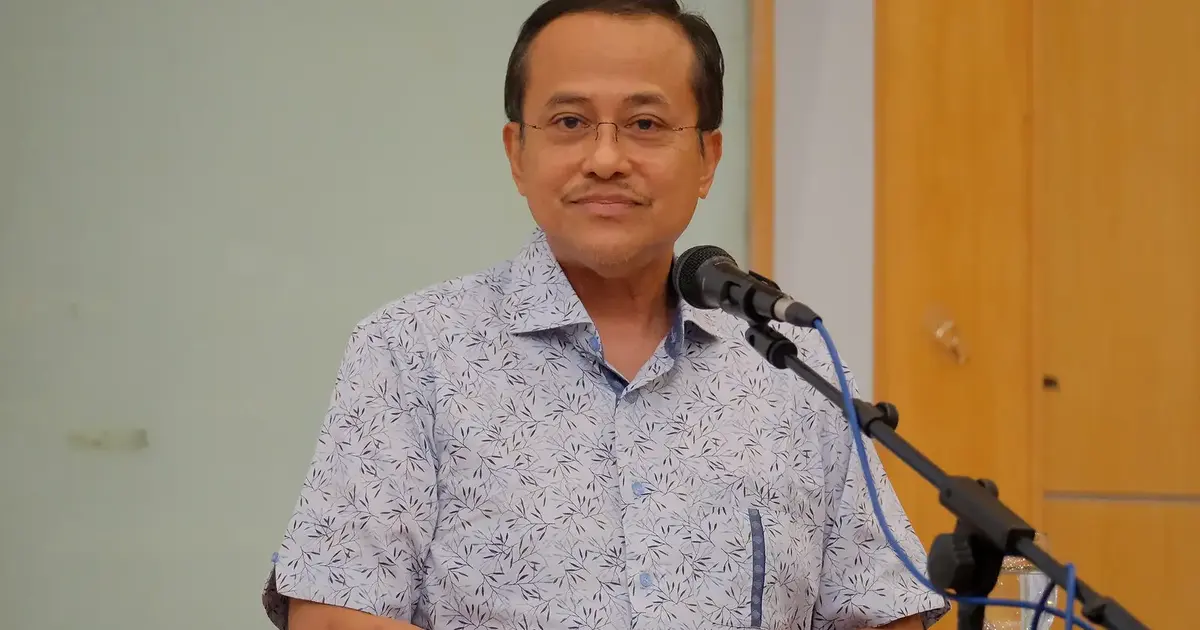
The Malaysian political landscape is undergoing a subtle but significant realignment in what voters value from their leaders, according to Shahril Hamdan, the former Umno information chief. In his assessment of the current political climate, Shahril suggests that electors have grown weary of the theatricality and hyperbole that once dominated electoral discourse, signalling instead a hunger for leaders who embody composure and measured governance. This observation carries weight given Shahril's long proximity to Umno's machinery and his vantage point observing shifts in voter sentiment across Malaysia's political spectrum.
The apparent shift towards favouring steady, unflappable leadership reflects deeper currents running through Malaysian society. After successive waves of political upheaval, institutional instability, and polarising campaigns over the past decade, there is palpable fatigue with the constant drama and inflammatory posturing that characterised earlier electoral contests. Voters appear to be rewarding individuals who project an air of equilibrium and responsibility rather than those prone to sensationalism or grandiose proclamations about what they will deliver once elected. This preference signals a maturation in how segments of the electorate evaluate candidates, moving beyond personality cults and emotional appeals towards a focus on steadiness under pressure.
The invocation of figures like Samsuri—presumably referring to individuals known for their calm demeanour and restrained public personas—reflects this broader inclination. Leaders who maintain composure during crises, who speak with precision rather than passion, and who avoid needless confrontation tend to resonate more strongly with voters tired of combustible political atmospheres. This preference has practical implications for how politicians should calibrate their public messaging and personal brands if they wish to gain traction with an increasingly sceptical electorate.
For Umno and the broader Barisan Nasional coalition, this observation presents both opportunity and challenge. The party has traditionally relied on commanding personalities and stirring rhetoric to mobilise support, but if Shahril's reading of voter sentiment is accurate, such tactics may be losing their efficacy. Politicians willing to adapt their communication style—speaking to genuine concerns with restraint rather than overwrought promises—may find themselves better positioned to build constituencies. This could shift campaign strategies significantly across Malaysia's political parties.
The context for this shift cannot be divorced from Malaysia's recent political history. The 2018 general election saw a spectacular rejection of the incumbent government, driven partly by voter revulsion at entrenched corruption and perceived arrogance. The subsequent Sheraton Move and political manoeuvres that followed, culminating in repeated changes of government, reinforced public cynicism about politicians motivated by self-interest and theatrical displays of power. In this environment, sobriety and apparent integrity become scarce commodities that command premium political value.
Regionally, this trend may have broader resonance. Across Southeast Asia, voters in mature democracies and competitive electoral systems appear to be gravitating towards leaders perceived as competent administrators rather than charismatic showmen. This suggests a pattern where initial democratic enthusiasm for strong, visionary personalities gradually yields to preferences for steady, technocratic governance. Malaysian voters may be following this trajectory, having experienced the limitations of drama-driven politics firsthand.
The observation also touches on a generational divide within the electorate. Younger voters, who came of political age during tumultuous periods, may be particularly sceptical of inflated rhetoric and personality-driven campaigns. They have grown up consuming information rapidly across multiple platforms and are adept at detecting inconsistency between what politicians promise and what they deliver. Such voters reward clarity, consistency, and a refusal to engage in hyperbole. Politicians who acknowledge this reality stand to gain ground with demographic cohorts that will define electoral contests in coming years.
For opposition parties and challengers to the ruling coalition, Shahril's assessment offers strategic guidance. Rather than attempting to out-shout government figures or offer increasingly unrealistic pledges, opposition leaders might gain greater traction by positioning themselves as stabilising forces capable of honest governance. This approach requires discipline, substantive policy development, and resistance to the temptation of inflammatory rhetoric—demanding qualities in a competitive political environment.
The shift towards valuing calm leadership does not signal the end of political passion or principled advocacy. Rather, it reflects a preference for channelling such passion through measured rhetoric and concrete policy positions rather than through incendiary speeches and grandiose gestures. Leaders can remain principled and committed to their vision whilst communicating that commitment with restraint. The electorate increasingly recognises and rewards this combination.
Ultimately, Shahril's reading of voter sentiment suggests that Malaysian politics may be entering a phase where substance and steady temperament outweigh spectacle. If this trend gains momentum, it could reshape how candidates present themselves, how parties craft their campaigns, and what qualities voters privilege when assessing political leaders. The implications extend beyond individual elections to how governance itself is conceived—with emphasis shifting from the dramatic gesture towards the unglamorous work of competent administration. For Malaysia's political establishment, adapting to this reality may prove essential to electoral success.
%22%2F%3E%3C%2Fpattern%3E%3C%2Fdefs%3E%3Crect%20width%3D%22100%25%22%20height%3D%22100%25%22%20fill%3D%22url(%23ph2dfp0g)%22%2F%3E%3Crect%20width%3D%22100%25%22%20height%3D%22100%25%22%20fill%3D%22url(%23ph2dfp0p)%22%2F%3E%3Ctext%20x%3D%2250%25%22%20y%3D%2250%25%22%20text-anchor%3D%22middle%22%20dominant-baseline%3D%22central%22%20fill%3D%22rgba(255%2C255%2C255%2C0.95)%22%20font-family%3D%22Georgia%2C%20'Times%20New%20Roman'%2C%20serif%22%20font-weight%3D%22700%22%20font-size%3D%22272%22%20letter-spacing%3D%22-0.02em%22%3EPerak%3C%2Ftext%3E%3C%2Fsvg%3E)