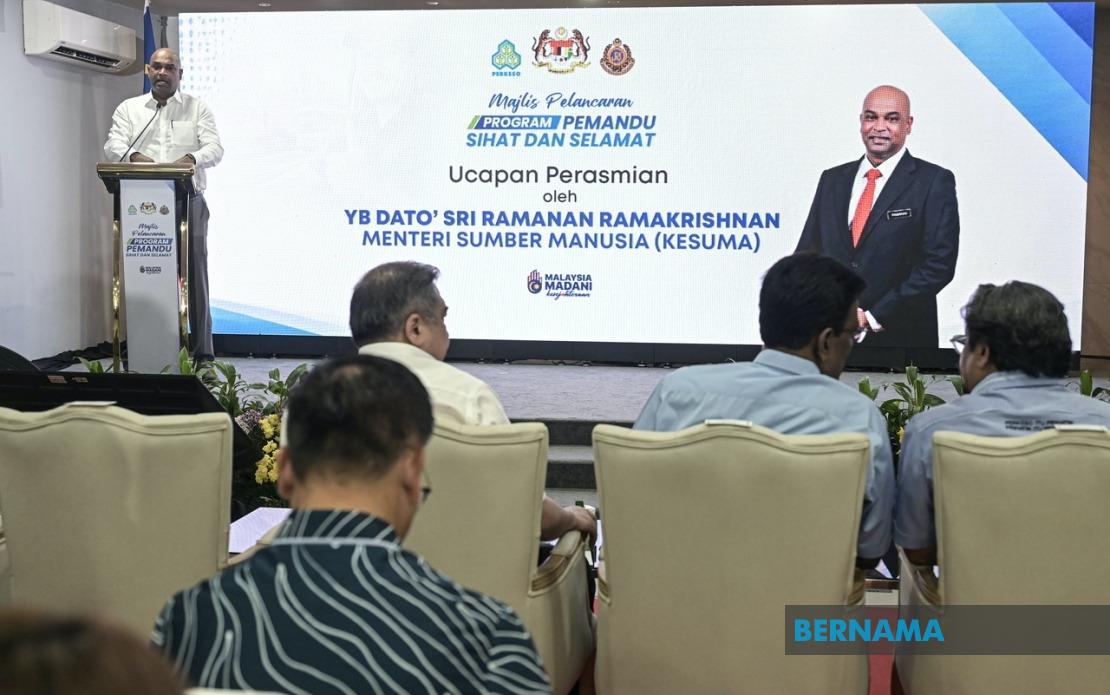
The Malaysian government has introduced a mandatory health screening requirement for all drivers renewing their vocational licences, marking a significant shift in road safety regulation. Announced by Human Resources Minister Datuk Seri R. Ramanan, the Healthy and Safe Driver Programme (PSS) will be administered through 500 panel clinics spread across the country, with the initiative designed to identify and address health conditions that could compromise road safety before they become fatal.
The comprehensive health assessment framework encompasses multiple dimensions of driver wellness, examining not only basic physical fitness but also sensory capabilities and metabolic conditions. Participants undergo conventional physical examinations alongside vision and hearing evaluations, while the programme specifically targets sleep-related disorders including obstructive sleep apnea—a condition frequently overlooked despite its profound impact on driver alertness and reaction times. Additional assessments extend to cardiovascular, respiratory, and neurological system functionality, with blood tests measuring glycated haemoglobin levels for drivers meeting specified criteria.
Ramanan emphasised that the initiative aims to support rather than burden drivers, framing the mandatory screening as a preventive health measure rather than bureaucratic obstruction. The screening process identifies emerging health issues during early stages when intervention and medical treatment can be most effective, potentially preventing serious incidents before they occur. This proactive approach reflects a strategic shift from reactive accident management to preventive health intervention in the transport sector.
The financial structure demonstrates government commitment to accessibility. Drivers bear only RM30 of the screening cost, with the remaining RM55 subsidy absorbed by the MADANI Government through the Social Security Organisation (Socso). This cost-sharing arrangement removes potential barriers to participation while maintaining individual responsibility for basic health maintenance. The low out-of-pocket expense positions the programme as inclusive rather than regressive.
The ministry intends to substantially expand programme reach beyond the current network. Plans are underway to increase panel clinic participation to 3,000 facilities nationwide, representing a sixfold expansion that would position screening services within accessible proximity for most Malaysian drivers. This geographical expansion addresses logistics challenges in reaching vocational drivers across diverse regions, from urban centres to remote areas where transportation employment is concentrated.
The initiative represents coordinated policy action between two critical government portfolios. Both the Ministry of Human Resources and the Ministry of Transport have jointly committed to strengthening Malaysia's road safety framework while simultaneously protecting the welfare of professional drivers who form the operational backbone of the nation's transport and logistics infrastructure. This inter-ministerial cooperation signals serious intent to address systemic road safety challenges through integrated solutions.
Recent fatality statistics underscore the urgency driving programme implementation. In 2025, road accidents claimed 115 workers' lives, representing an 22 percent increase from 94 fatalities recorded the previous year. This concerning upward trajectory spans diverse occupational categories including long-distance lorry operators, bus drivers, van operators, personal car drivers, and motorcycle couriers—all groups whose livelihoods depend on sustained road presence and driving performance.
Within this broader context, lorry drivers face disproportionate risk. The category recorded 62 fatalities in 2025, comprising 21 percent of total work-related road deaths. These drivers typically accumulate the longest hours behind the wheel, navigate heavy vehicle dynamics requiring heightened physical and cognitive capacity, and operate commercial schedules that can incentivise sustained driving despite fatigue or health deterioration. Health conditions including undiagnosed sleep disorders, uncontrolled hypertension, and vision impairment become particularly consequential when compounded by extended driving durations and cargo-related operational pressures.
The PSS programme directly addresses the occupational health vulnerabilities that emerge across long-haul and intensive driving employment. By requiring periodic comprehensive health evaluation tied to licence renewal cycles, the system creates structured opportunities to detect conditions before they manifest as accidents. For drivers accustomed to managing occupational hazards through experience rather than medical intervention, the formalised screening process introduces systematic health accountability.
Malaysian implementation follows international recognition that driver health represents a critical yet frequently underestimated safety variable. Countries across Asia, Europe, and North America have progressively tightened medical requirements for professional drivers, with evidence suggesting that health-based screening programmes reduce accident rates by identifying at-risk individuals who can then receive targeted medical management or be directed toward safer roles. Malaysia's adoption of similar frameworks positions the country within established international best practice for occupational road safety.
The programme's success will depend substantially on driver acceptance and clinic capacity. Transport operators, vehicle associations, and professional driver unions will likely influence implementation effectiveness through their cooperation in communicating requirements and managing scheduling. Clinic infrastructure must develop capacity to process the anticipated volume of screenings without creating bottlenecks that undermine licence renewal accessibility.
For Malaysian drivers, the PSS initiative represents a fundamental expectation shift regarding health responsibility in professional transport employment. Rather than viewing health as a private matter until emergency intervention becomes necessary, the programme embeds regular health assessment into the professional licensing framework. This normalisation of preventive health screening in transport employment could generate broader cultural effects, potentially influencing how health maintenance is perceived across other occupational sectors.
The government's financial commitment through Socso subsidies reflects a calculation that the cost of prevention—approximately RM85 per driver through the programme structure—is substantially outweighed by savings from prevented accidents, medical treatments, lost productivity, and human suffering. By removing cost barriers while maintaining participant engagement through modest personal contributions, the programme balances fiscal responsibility with public health objectives. As implementation proceeds and the network expands toward 3,000 clinics, the initiative will generate substantial data regarding health conditions prevalent among professional drivers and correlation patterns between specific health indicators and accident outcomes.

