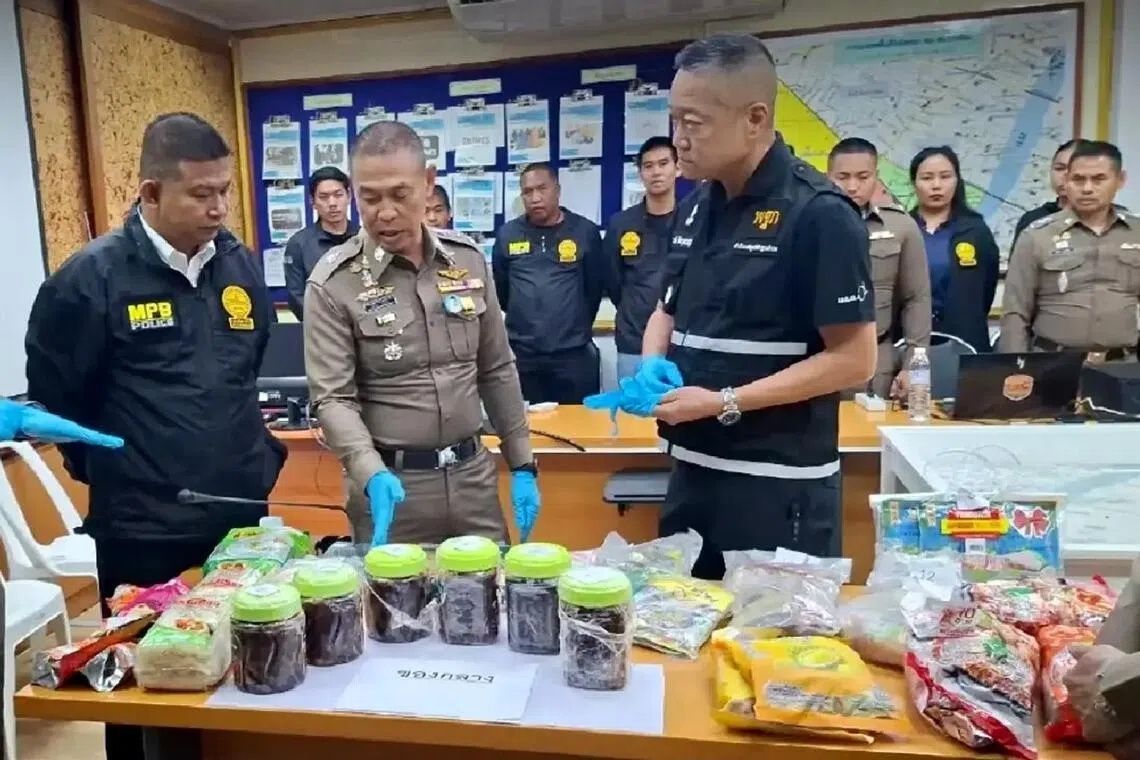
Bangkok's Metropolitan Police announced a significant narcotics bust on July 17, exposing a transnational methamphetamine trafficking scheme that leveraged Thailand as a critical smuggling corridor. The operation, controlled by Vietnamese nationals and allegedly directed from Hanoi, had concealed more than two kilograms of crystal methamphetamine—street slang "ice"—inside jars of tamarind paste destined for delivery in Tokyo. The discovery represents the evolving sophistication of drug networks operating across Southeast Asia, which increasingly exploit legitimate cargo routes and innocent intermediaries to move contraband across borders.
The investigation commenced when a courier hired to transport goods overseas contacted Bangkok police on July 13 after growing suspicious about shipments of tamarind paste bound for the Japanese capital. The containers weighed considerably more than expected for their stated contents, triggering the courier's decision to report the matter rather than proceed. Investigators subsequently located six foil-wrapped packages nestled within the jars, and laboratory analysis confirmed the presence of crystal methamphetamine totalling more than two kilograms. This discovery followed the arrest of Sompong, a Thai national whose involvement with the network became the critical entry point for authorities to unravel the broader operation.
The network's structure reveals the deliberate compartmentalisation typical of modern drug trafficking enterprises seeking to insulate leadership from law enforcement exposure. Vietnamese organisers employed anonymous Facebook accounts to recruit motorcycle delivery riders, who collected packages from properties occupied by Vietnamese nationals scattered throughout Thailand. These riders then transferred the parcels to different Thai couriers responsible for transporting them internationally, creating multiple layers of separation between the network's controllers and the contraband itself. This geographical and operational fragmentation served a crucial purpose: preventing investigators from establishing direct links between the packages and the individuals orchestrating the scheme. The methodology mirrors patterns observed in other regional cases where unwitting or semi-aware intermediaries become isolated nodes in a larger supply chain.
Financial investigations uncovered the operational infrastructure supporting the smuggling network. A bank account registered to Sompong served as the financial hub through which payments, expenses, and compensation flowed. Vietnamese nationals connected to the operation periodically withdrew between 20,000 and 50,000 baht in cash from the account before promptly returning to Vietnam. This rotating pattern of withdrawals and departures appeared deliberately designed to minimise the risk of any single individual developing significant financial traces within Thailand. By distributing the cash transactions across multiple people and ensuring regular departure from Thai territory, the network operators attempted to obscure the financial architecture supporting their smuggling activities—a tactic that complicates the ability of authorities to map the full extent of involvement or identify additional participants.
The case highlights the vulnerabilities in how legitimate shipping networks intersect with smuggling operations. Thailand's position as Southeast Asia's transportation hub, combined with its extensive cross-border commerce with Japan and other developed economies, makes it an attractive staging ground for transnational drug organisations. The use of common food products like tamarind paste reflects the practical reality that authorities cannot feasibly inspect every shipment, and couriers carrying such items face relatively low suspicion compared to other cargo types. For Japanese law enforcement and customs agencies, this discovery underscores the challenge of interdicting drugs at their destination when the concealment methods are sufficiently creative and the shipments arrive through ostensibly routine commercial channels.
Authorities have widened their investigation based on evidence suggesting at least four additional individuals beyond those already identified warrant arrest. Formal arrest warrants have been issued for Sompong and three Vietnamese nationals allegedly involved in money withdrawal, social media account management, or operational direction. Sompong has maintained his innocence regarding the allegations. Investigators have also identified Sompong's girlfriend as a potential person of interest, believing she possessed knowledge of the operation despite not appearing on the initial warrant list. This pattern of investigation—expanding outward from a single arrestee to document co-conspirators and associates—typically characterises transnational drug cases where networks extend across multiple countries and involve dozens of peripheral participants.
The bust illuminates broader Southeast Asian drug trafficking trends that threaten regional stability and public health. Methamphetamine production in clandestine laboratories throughout the region, particularly in areas bordering Myanmar and Laos, has surged dramatically over the past decade. Thailand and Malaysia have become primary transshipment points for drugs destined for more affluent markets in Japan, South Korea, Australia, and New Zealand, where street prices for crystal methamphetamine remain exceptionally high. The profit margins justify elaborate smuggling infrastructure and the employment of numerous intermediaries, many of whom operate with incomplete awareness of the ultimate destination or contents of shipments they handle.
For Malaysian readers and policymakers, this case carries particular significance given Malaysia's own role in regional drug trafficking networks. Malaysian ports, especially Kuala Lumpur and Port Klang, function as critical transit hubs for contraband moving between Southeast Asia and international markets. Malaysian couriers and logistics networks have featured prominently in previous methamphetamine busts, indicating that organised groups view Malaysian territory and transportation infrastructure as integral to their distribution strategies. The Vietnamese network's methodology—using anonymous recruitment, compartmentalised operations, and rotating personnel—reflects tactics increasingly observed within organisations operating through Malaysian territory.
The investigation also underscores the limitations of purely bilateral enforcement efforts in addressing transnational drug crime. The Vietnamese-Thai-Japan trafficking chain required cooperation across multiple jurisdictions, with each country contributing investigative resources and intelligence. Malaysia's position as a regional logistics centre means that strengthening Malaysia's own intelligence-sharing protocols with Thai and Japanese authorities becomes essential for disrupting similar networks before they utilise Malaysian infrastructure. Enhanced coordination regarding suspicious cargo movements, courier recruitment patterns, and financial transfers through Malaysian banking systems could identify emerging threats earlier in their operational development.
Looking forward, the case suggests that Southeast Asian countries must invest more substantially in supply-chain security, training customs personnel to recognise concealment methods, and developing intelligence capacity focused on identifying recruitment networks. The fact that a courier's instinct about suspicious weight ultimately triggered the investigation indicates that enhanced awareness among logistics workers and transportation professionals remains valuable. However, systematic improvements in detection technology, financial monitoring, and cross-border intelligence sharing will ultimately prove more decisive in dismantling the regional infrastructure supporting transnational drug operations like the Vietnamese network exposed in this investigation.

