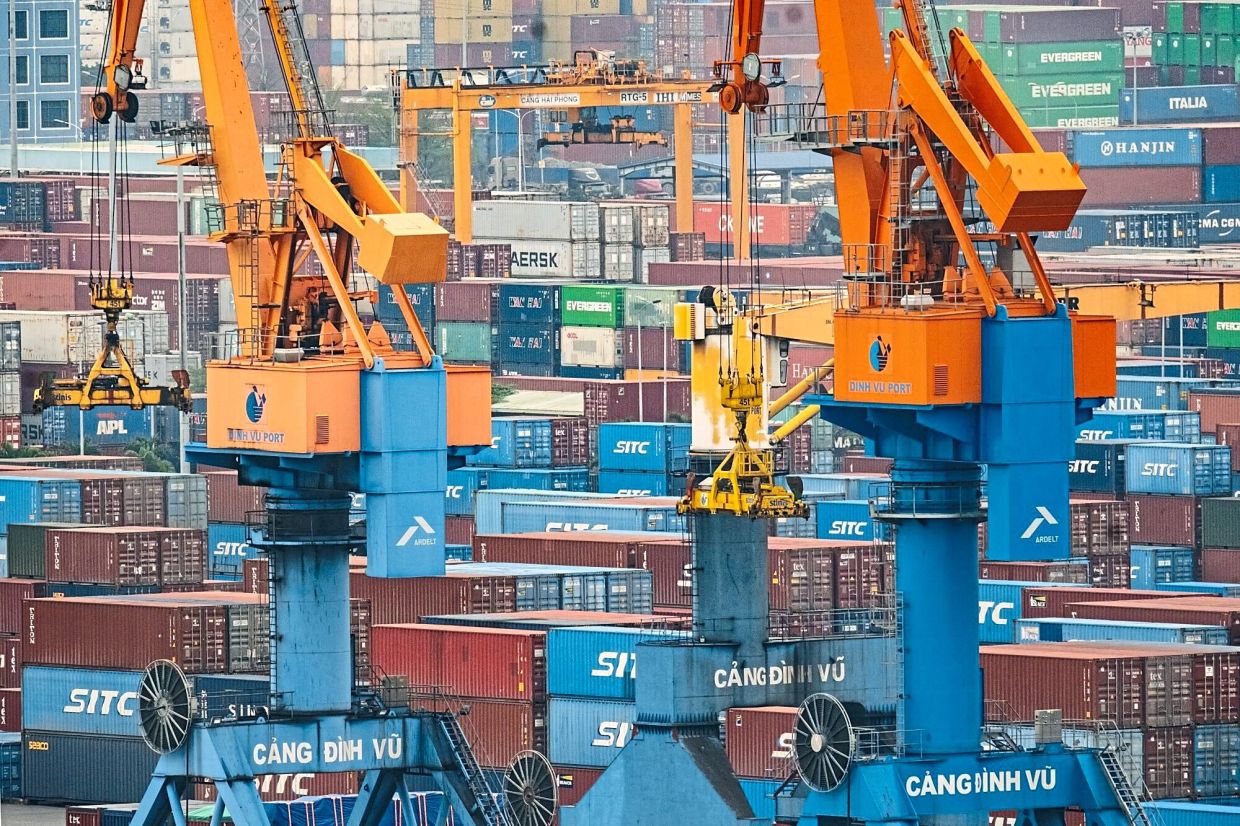
Vietnam is making fresh diplomatic overtures to unlock a stalled trade agreement with the United States, with Deputy Prime Minister Nguyen Van Thang meeting US Trade Representative Jamieson Greer in Washington to stress Hanoi's commitment to "open, constructive" negotiations. The encounter represents an attempt to revive discussions that have languished for months despite the two governments reaching a preliminary framework agreement last October. Thang's visit underscores Vietnam's anxiety about the trajectory of bilateral trade relations and the economic consequences if negotiations collapse.
The South-East Asian nation faces mounting pressure from American trade authorities who have grown frustrated with the pace of talks and the complexity of outstanding issues. The US administration has launched three concurrent Section 301 investigations targeting Vietnam's trade practices, examining persistent problems including transshipment—the illegal routing of goods through Vietnam to circumvent tariffs—and various non-tariff trade barriers that American officials argue distort commerce. Thang's willingness to engage constructively on these contentious matters signals Hanoi recognizes it must make meaningful concessions to prevent the situation from deteriorating further.
The core concern animating Washington's scrutiny is the flow of counterfeit and illicit merchandise, particularly goods originating from China, that transit through Vietnam before reaching American consumers. US trade officials view this as a form of trade evasion that undermines both tariff collection and intellectual property protections. Greer's office formally designated Vietnam a "priority foreign country" in an April report, citing the country's inadequate efforts to suppress online piracy, combat counterfeit manufacturing, and maintain sufficient border controls. The gravity of this designation cannot be overstated—it places Vietnam among the world's most egregious intellectual property violators in American eyes.
The stakes have intensified because findings from the Section 301 investigations are due in November, and those determinations could trigger retaliatory tariffs or other punitive trade measures. The threat carries real weight given that the Trump administration has demonstrated willingness to weaponize tariffs against trading partners deemed insufficiently cooperative. For Vietnam, which depends heavily on export revenues and foreign investment, the prospect of American tariff increases poses an existential economic challenge. This temporal pressure has likely motivated Thang's mission to convince Greer that Hanoi is serious about reform and willing to address American grievances substantively rather than rhetorically.
The numbers illustrate why Vietnam cannot afford to see relations deteriorate. In the first half of 2026, Vietnam registered the largest bilateral trade surplus with the United States among all countries, posting a staggering US$114 billion gap ahead of traditional trade surplus holders China, Mexico, and Taiwan. This outsized imbalance has inevitably attracted scrutiny from American policymakers, including those sceptical of free trade. Beyond the headline figures, the composition of Vietnamese exports reveals why transshipment concerns loom so large. Manufactured goods destined for American consumers—particularly electronics—flood out of Vietnamese factories, many of which rely on imported Chinese components that may themselves be subject to tariffs or intellectual property disputes.
This dynamic creates a perverse incentive structure. Vietnamese manufacturers import materials and components from China, assemble finished products, and export them to the United States, potentially allowing Chinese producers to evade American trade restrictions by laundering goods through Vietnamese supply chains. The surge in Vietnamese imports from China has accelerated as manufacturers scale production capacity to meet American demand. For American trade officials, this pattern suggests Vietnam functions as a conduit facilitating Chinese export evasion, a politically untenable situation that demands resolution.
Thang's visit extended beyond government-to-government diplomacy. He conducted separate meetings with representatives from major American technology and manufacturing companies including Qualcomm, Visa, Axon Enterprise, and Caterpillar. These engagements served dual purposes: demonstrating Vietnam's commitment to deepening business relationships with American firms while simultaneously lobbying corporate stakeholders to advocate for continued market access and against punitive tariffs. Foreign investors in Vietnam have significant influence over trade policy discussions, and their testimonies about operational challenges and investment climate concerns often sway policymakers concerned about competitiveness and job creation.
The broader geopolitical context shapes this bilateral trade friction. Vietnam's role as an alternative manufacturing hub to China has grown substantially as American and Western companies seek to diversify supply chains away from the world's second-largest economy. However, this diversification strategy only functions effectively if Vietnam itself becomes a transparent, rule-based trading partner that American authorities trust to prevent transhipment abuses and intellectual property violations. The current situation threatens to undermine the very premise upon which Vietnam's appeal as an investment destination rests.
For Southeast Asian observers, Vietnam's predicament carries important implications. The region collectively benefits when manufacturing investment flows in from global companies seeking alternatives to China, yet those investments remain viable only if countries maintain sufficient governance standards and trade practice transparency. Vietnam's experience demonstrates that rapid economic growth and export expansion can attract unwanted regulatory scrutiny if not accompanied by institutional capacity to prevent trade fraud and protect intellectual property. Other ASEAN members facing their own trade frictions with Washington should note how Vietnam is deploying high-level diplomacy and signals of policy flexibility to manage the situation.
Greer's statement that the US administration wants to conclude negotiations "soon" provides both timeline pressure and potential opening. The November deadline for investigation findings creates urgency but also a window for negotiated settlement. If Vietnam can convincingly demonstrate progress on transshipment controls and counterfeit suppression, the US may moderate its stance and move toward finalizing the reciprocal trade agreement. Success would benefit both economies—Vietnam would secure continued preferential market access while the US would gain assurances about supply chain integrity and intellectual property protection.
The trajectory of these negotiations will influence not only bilateral trade flows but also Vietnam's broader strategic positioning. A successful resolution would validate Hanoi's strategy of maintaining diverse partnerships and avoiding excessive dependence on any single power. Conversely, punitive tariffs would force Vietnam toward closer economic alignment with China, undermining American efforts to build Southeast Asian alternatives to Chinese supply chains. The coming weeks will prove crucial in determining whether constructive engagement yields concrete results or whether the two trading partners slip further into dispute.

