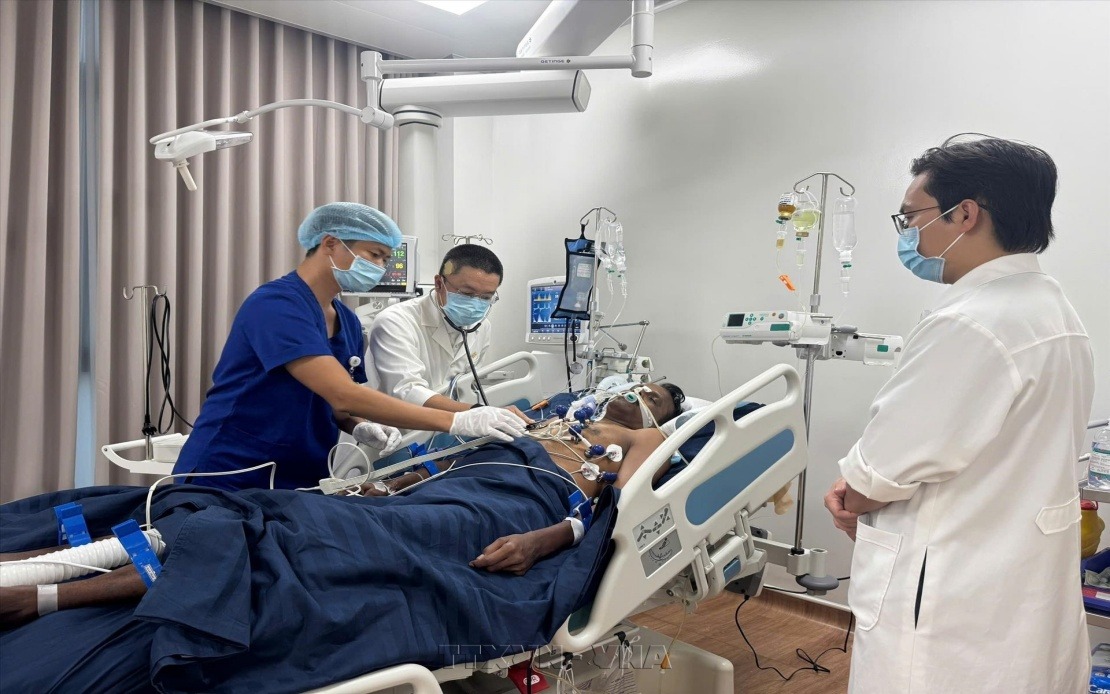
On July 11, a speedboat accident in Phu Quoc, the special economic zone located within An Giang province in Vietnam's Mekong Delta region, triggered an immediate and comprehensive emergency response from multiple government and private sector agencies. The Phu Quoc Special Zone administration, working alongside provincial and national authorities, rapidly coordinated search-and-rescue operations and emergency medical interventions to assist Indian nationals caught in the disaster. Vietnam News Agency confirmed that rescue teams deployed personnel and medical equipment to the incident site while initiating contact with diplomatic channels to address the international dimensions of the accident.
Sun Group International Hospital, the major private healthcare facility serving the Phu Quoc area, declared a hospital-wide "code red" alert the moment news of the accident reached its emergency department. This emergency protocol resulted in the immediate dispatch of multiple ambulances and specialist medical teams to the accident location. The hospital's entire medical staff was mobilised for the crisis, representing the type of coordinated response required when dealing with mass casualty incidents. This swift activation of emergency procedures proved critical in the initial hours following the speedboat collision, as every minute of delay in providing treatment could have proven fatal for the most severely injured passengers.
The hospital's intensive resuscitation efforts focused on stabilising the most critically injured victims. After nearly two hours of continuous emergency medical intervention, two patients who had suffered severe trauma were successfully stabilised. These two individuals were then transferred to the hospital's intensive care unit, where they regained consciousness within a short period and maintained stable vital signs throughout their recovery. This positive outcome underscores the importance of rapid, coordinated medical response in scenarios involving multiple trauma victims with life-threatening injuries.
By the evening of July 11, the hospital had received a total of 15 additional victims, all of whom were conscious and alert upon admission. These patients underwent comprehensive medical examinations, systematic trauma screening protocols, and specialised treatment aimed at supporting their physical recovery. The hospital's systematic approach to patient assessment and triage enabled medical staff to identify those requiring urgent intervention while providing appropriate care for others with less severe injuries. The admission of these 15 conscious victims, combined with the two previously stabilised critical cases, demonstrated the scale of the accident's impact on the passenger contingent.
Dr. Nguyen Quang Thang, who serves as Director of Sun Group International Hospital, provided clinical details regarding two particularly serious cases. Both patients had experienced severe respiratory failure requiring intensive medical support. Of these two, one patient showed significant improvement and recovered sufficiently to be considered for discharge pending further monitoring. However, the other patient required continued hospitalisation due to pre-existing underlying medical conditions that complicated recovery. Dr. Thang indicated that Sun Group International Hospital had established a coordination mechanism with Cho Ray Hospital, a leading medical facility in Ho Chi Minh City, to provide advanced treatment capabilities. Medical professionals anticipated that the remaining critical patient's condition would improve as treatment continued.
Beyond emergency medical response, Vietnamese authorities at multiple levels moved swiftly to provide financial assistance and support services to the victims and bereaved families. Tran Minh Khoa, Chairman of the People's Committee of the Phu Quoc Special Zone, emphasised that local administration had prioritised victim support as a central component of the disaster response. The vessel's operator agreed to provide immediate financial compensation: 1,000 USD for each family that had lost a member in the accident, and 500 USD for each injured passenger requiring medical treatment. This private sector contribution represented an important first step in addressing the economic consequences of the disaster for affected individuals and families.
The local administration of Phu Quoc Special Zone supplemented private compensation with government financial assistance. Each fatality resulted in an additional payment of 26 million Vietnamese dong, equivalent to approximately 1,000 USD, provided by the local administration. This dual compensation structure—combining private operator payments with government support—aimed to provide meaningful financial relief while authorities addressed longer-term recovery needs. The coordination of these payments required administrative coordination across multiple agencies, demonstrating the integrated nature of Vietnam's disaster response framework.
Simultaneously, Vietnamese authorities initiated formal investigations into the circumstances surrounding the speedboat accident. Civil registration procedures were expedited to ensure accurate documentation of affected individuals, while legal formalities proceeded according to Vietnamese law. These administrative processes, though potentially lengthy in normal circumstances, were accelerated given the international nature of the incident and the need to facilitate repatriation of victims. Authorities worked directly with diplomatic channels to ensure that Indian nationals received appropriate consular support and that the process of returning deceased individuals to their families proceeded smoothly and respectfully.
The Phu Quoc incident carries particular significance for Southeast Asian tourism and maritime safety. Phu Quoc, as a major tourist destination within Vietnam's developing special economic zone, attracts significant numbers of international visitors seeking beach recreation and water-based activities. The speedboat accident highlights the importance of maintaining rigorous safety standards across maritime transportation operations in the region. For Malaysia, which shares similar tourism patterns and maritime industries, the incident serves as a reminder of the necessity for comprehensive safety protocols, regular vessel inspections, and operator training standards.
The coordinated response by Vietnamese authorities—combining emergency medical care, financial assistance, administrative processing, and diplomatic engagement—demonstrates an integrated approach to managing international incidents with casualty impacts. This multi-agency coordination model, involving the Phu Quoc Special Zone administration, hospitals, local authorities, and national government bodies, reflects established disaster response protocols refined through previous emergencies. For other Southeast Asian nations managing similar tourism and maritime sectors, Vietnam's comprehensive response provides instructive examples of how coordination mechanisms can address both immediate humanitarian needs and longer-term recovery requirements when accidents involve international victims.

