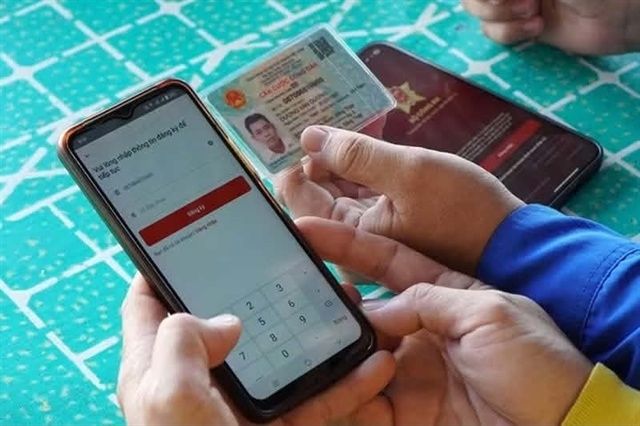
Vietnam has significantly broadened its digital identity framework by issuing a new government decree that extends electronic identification account eligibility to foreign nationals living lawfully within its borders. The policy, set to take effect on September 28, 2026, represents a substantial shift in how Southeast Asia's second-most populous nation approaches digital inclusion and administrative accessibility for non-citizens. Rather than restricting these accounts to Vietnamese citizens alone, the decree now permits any foreign national who has legally entered or established residence in Vietnam to request electronic identification at any classification level, marking a notable modernisation of the country's digital governance infrastructure.
The decree also introduces significant procedural efficiencies by eliminating redundant documentation requirements. Under the revised framework, individuals and organisations no longer need to submit supporting documents when the relevant information has already been consolidated within integrated government systems. This streamlining directly addresses a persistent frustration in Vietnam's administrative environment, where citizens and foreign residents have historically faced lengthy application processes complicated by overlapping data held across multiple agencies. By leveraging existing integrated records, the government aims to reduce bureaucratic friction and accelerate service delivery across both digital and physical channels.
For Vietnamese citizens, the tiered approach provides differentiated access based on age and documentation status. Those aged six years and older who possess a valid citizen identity card or identity document are eligible to request either a Level 1 or Level 2 electronic identification account. Meanwhile, Vietnamese children under six who have received an identity card may apply for a Level 1 account. This segmented structure acknowledges both security considerations and the practical reality that younger children typically require parental oversight of digital accounts, while still ensuring comprehensive population coverage across age demographics.
Businesses and organisations registered to operate within Vietnam also gain explicit eligibility under the new decree, enabling them to obtain electronic identification accounts across all security classifications. This provision has particular relevance for multinational corporations, international development organisations, and foreign-invested enterprises that operate throughout Southeast Asia, many of which maintain substantial operations in Vietnam. The ability for such entities to maintain verified digital identities streamlines contract execution, regulatory compliance, and interagency communications, reducing friction in Vietnam's business environment and potentially attracting additional foreign investment.
A particularly significant innovation in the decree involves the consolidation of 206 distinct document types into Vietnam's national identification application. For individuals, this comprehensive list encompasses 66 document categories, including birth certificates, residence verification certificates, standard passports, visa documentation, vehicle registration papers, driver's licenses, and investment certificates. The integration of such diverse credentials into a single digital platform eliminates the need for citizens to maintain and present multiple physical documents for routine transactions, fundamentally transforming how Vietnamese interact with government services and private sector entities.
The inclusion of 140 document categories issued to registered organisations and agencies further demonstrates the decree's ambition to create a unified digital ecosystem. These encompass official seals, identification certificates, business licenses, and trade permits—documentation that typically governs corporate operations and regulatory compliance. By centralising these records within the national identification infrastructure, Vietnamese authorities are establishing conditions for seamless digital verification between government bodies and the private sector, potentially reducing fraud and accelerating commercial transactions across sectors ranging from manufacturing to telecommunications.
For Malaysia and other ASEAN nations monitoring Vietnam's digital governance trajectory, this decree holds several important implications. Vietnam's development of a comprehensive electronic identification system with explicit provisions for foreign residents creates a template that regional governments may evaluate for their own digital infrastructure investments. As ASEAN members increasingly pursue digital integration and cross-border mobility initiatives, Vietnam's approach—particularly its explicit inclusion of foreigners—signals a commitment to facilitating intra-regional movement and commerce at the administrative level. This aligns with broader ASEAN aspirations for the ASEAN Economic Community and reflects recognition that modern digital infrastructure must accommodate workforce mobility and business connectivity.
The decree also underscores Vietnam's strategic positioning within emerging trends around digital sovereignty and data consolidation. By bringing diverse documentation categories under one integrated platform, Vietnam is establishing centralized control over identity verification and reducing reliance on potentially fragmented or duplicative systems. This consolidation carries implications for data security and privacy, concerns that remain paramount across Southeast Asia given increasing cybersecurity threats and growing public awareness of data governance issues. How Vietnam implements privacy protections and access controls for this centralised system will likely influence regional confidence in similar initiatives.
From a practical standpoint, the September 28, 2026 implementation date provides Vietnamese government agencies and private sector partners a substantial transition window to prepare technical systems, train personnel, and communicate updated procedures to affected populations. The lead time also allows foreign residents and international businesses to anticipate these changes and adjust their administrative workflows accordingly, reducing disruption when the system officially launches. For Malaysian companies operating in Vietnam—a significant investment partner for Malaysian conglomerates in sectors including finance, manufacturing, and technology—this advance notice enables meaningful planning around digital transformation strategies that will intersect with Vietnamese requirements.
The decree's emphasis on reducing documentation requirements through data integration also reflects evolving global standards around digital government services, placing Vietnam alongside more mature digital economies in recognition that modern administration requires seamless data sharing between agencies. This modernisation effort positions Vietnam competitively within Southeast Asia, where competing for foreign talent and investment increasingly hinges on the quality of administrative infrastructure and the ease with which professionals and businesses can navigate regulatory environments. By extending digital identification to foreign residents and streamlining access through integrated data systems, Vietnam signals its intention to maintain momentum in becoming a destination of choice for regional and international stakeholders.

