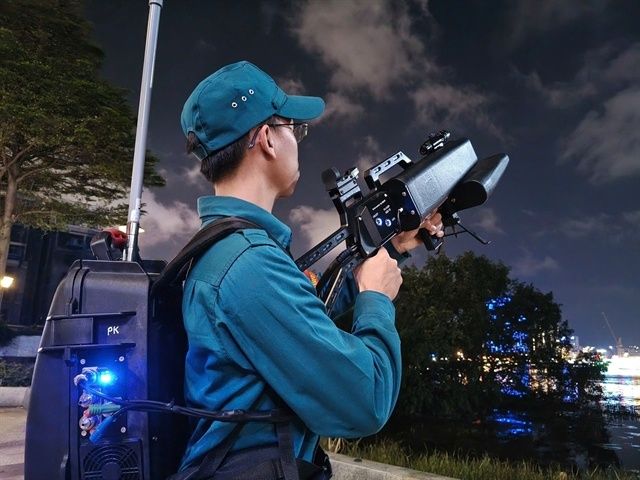
Vietnam is intensifying efforts to stamp out illegal drone operations at its airports, with immigration authorities issuing a public warning after a documented surge in unauthorised airspace incursions that have wreaked havoc on flight schedules and airline finances. The crackdown reflects growing concerns across Southeast Asia about aviation safety as consumer drone ownership expands and enforcement mechanisms struggle to keep pace with the technology's proliferation.
The Immigration Department, operating under the Ministry of Public Security, has documented a troubling escalation in drone-related incidents at Vietnamese airports. In 2025 alone, authorities recorded 34 cases of drones or other unidentified aircraft entering restricted airspace, a baseline that nearly doubled in the first half of 2026 when 17 additional incursions occurred. These figures underscore how rapidly the problem is developing and suggest that existing deterrents have so far failed to discourage irresponsible operators from risking catastrophic accidents.
Each intrusion forces air traffic controllers into emergency response protocols that cascade disruptions throughout the aviation system. Controllers must immediately halt aircraft departures, suspend incoming landings, or redirect planes to alternate airports—actions that ripple through flight networks and create substantial delays. The operational burden falls not only on the airports themselves but equally on airlines scrambling to accommodate stranded passengers and revise schedules, making every incident a potential domino effect of cancellations and reroutes.
The financial consequences have proven staggering. Vietnam Airlines quantified the damage from just eight days of incidents between mid-to-late February, calculating losses of approximately VNĐ5.6 billion (US$215,000) while 9,200 passengers endured disruptions through delays and route changes. Separately, Danang International Airport estimated direct losses exceeding VNĐ10 billion ($384,000) from drone-related incidents, figures that dramatically understate the true economic impact when indirect costs to supply chains, tourism operators, and passenger inconvenience are factored in. For a region where air connectivity is increasingly vital to economic integration, such recurring losses accumulate rapidly.
Beyond mere disruption and expense, aviation authorities emphasise the catastrophic potential of drone-aircraft collisions. A strike during the vulnerable phases of takeoff or landing could result in aircraft damage, loss of control, or structural failure—scenarios carrying lethal consequences for passengers and crew. Unlike birds, which occasionally collide with aircraft at manageable speeds, larger commercial drones can cause severe damage. The regulatory framework reflects this existential threat, treating drone incursions not as minor infractions but as potential precursors to tragedy.
Vietnamese law requires drone owners to complete a multi-step authorisation process before operating any aircraft. Registration is merely the first hurdle; operators must subsequently obtain flight permits that explicitly define the geographic boundaries, altitude ceilings, temporal windows, and operational scope within which they may fly. This distinction is crucial—registration alone confers no right to operate. The regulatory regime recognises that blanket authorisation would be unworkable; instead, permits function as precision instruments tailored to specific, supervised activities.
Violators face a graduated penalty structure that escalates with severity. Under a government decree issued in 2025, administrative penalties include financial fines, confiscation of drone equipment, and revocation of flight privileges. However, cases involving obstruction of air traffic or serious endangerment to aviation safety cross into criminal territory, where penalties range substantially higher. Those convicted of flying drones into aircraft approach, takeoff, or landing paths—a conduct category that criminalises the creation of real collision risk without requiring an actual accident to have transpired—face fines between VNĐ10 million and VNĐ50 million ($384–$1,920), supplemented by non-custodial reform periods extending up to two years or imprisonment ranging from three months to two years. Particularly egregious offenders can receive prison sentences stretching to 15 years in the most severe scenarios.
Convicted individuals also face collateral consequences extending into employment and professional spheres. Sentencing can include bars from holding specified jobs or positions for periods of one to five years, effectively imposing economic penalties on top of direct legal sanctions. This multifaceted approach reflects policymakers' judgment that drone safety violations warrant comprehensive deterrence beyond monetary fines alone.
The authorities have explicitly framed airport safety as a collective societal responsibility rather than a problem for aviation professionals alone. The Immigration Department's public appeal urges drone operators to strictly observe the parameters of their permits and calls on citizens to report unauthorised drone activity to police, military authorities, or airport officials. This community-based enforcement model recognises that authorities cannot monitor airspace continuously and rely partly on public vigilance to identify violations. For Malaysia and other Southeast Asian nations grappling with similar challenges, Vietnam's experience suggests that public education and community reporting mechanisms may prove as essential as regulatory penalties.
The warnings carry particular relevance for the broader region, where rapid drone adoption has outpaced regulatory maturity. Many countries are still establishing comprehensive frameworks, and Vietnam's approach—combining strict registration requirements, permit-based operation, graduated penalties, and community engagement—offers a template that other Southeast Asian governments may consider adapting. The economic stakes are high, aviation safety is non-negotiable, and the window for establishing norms before illegal drone use becomes entrenched is rapidly closing. Vietnam's current crackdown may prove pivotal in shaping whether Southeast Asian airspace remains secure and efficient or becomes increasingly vulnerable to the disruptive and dangerous consequences of uncontrolled drone proliferation.

