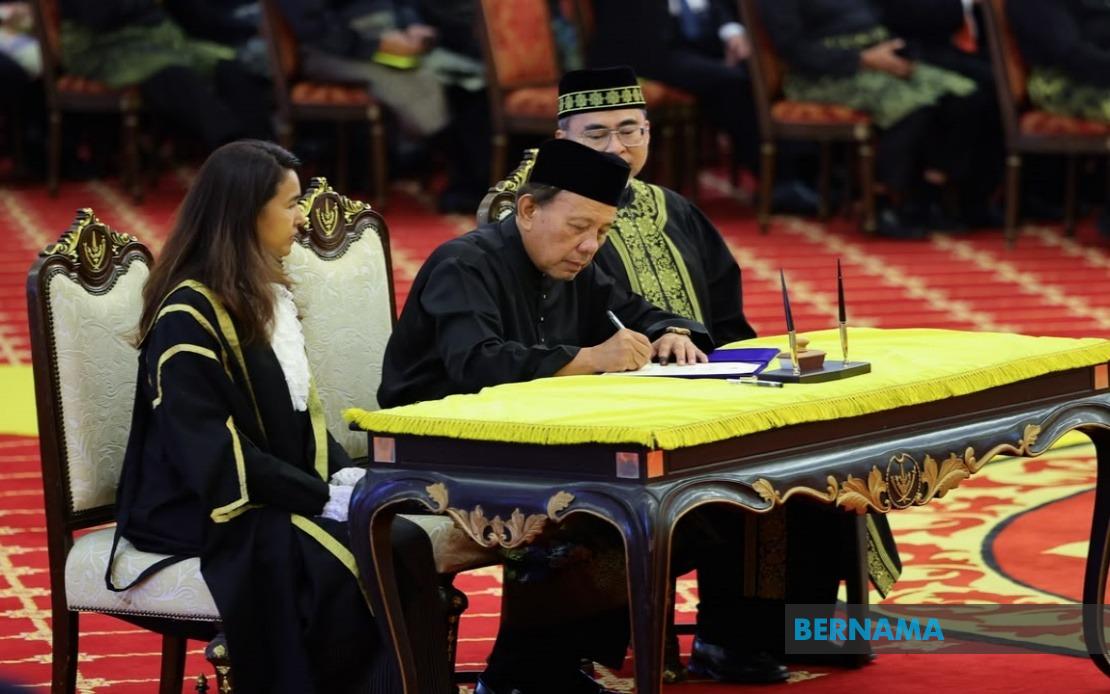
Datuk Ismail Lasim has officially assumed office as Negeri Sembilan's Menteri Besar following a ceremony held at Balairong Seri, Istana Besar Seri Menanti, where he took his oath before Yang Dipertuan Besar Tuanku Muhriz Tuanku Munawir. The appointment caps a distinguished career spanning nearly three decades in state politics and administration, positioning the 67-year-old as a significant figure in the state's governance structure moving forward.
Ismail's entry into the political arena dates to 1999, when he first secured election to the Negeri Sembilan State Legislative Assembly. This quarter-century engagement with state politics has given him deep institutional knowledge of both the legislative process and administrative machinery. His early career established patterns of public service that would define his trajectory, culminating in this apex position within state government.
Prior to his elevation as Menteri Besar, Ismail served on the State Executive Council across three consecutive terms ending in 2018, during which he wielded considerable influence over education policy. His tenure in the education portfolio proved formative, as he shaped human capital development strategies for the state during a critical period of institutional reform. The scope of his responsibilities during these years provided him with hands-on experience managing government functions at the operational level, a background highly relevant to his current executive responsibilities.
The appointment reflects the political realignment that emerged from Negeri Sembilan's recent state election. Under the Unity Government framework established after the 16th state election, Barisan Nasional and Perikatan Nasional together command a commanding two-thirds majority in the assembly. Barisan Nasional's performance, securing 18 of the state seats against Perikatan Nasional's seven, underscores the coalition's dominant position and justified claim to lead state administration.
Ismail's most recent political assignment involved leading the Education and Human Capital Action Committee following the Unity Government's formation, placing him once again at the forefront of the state's development agenda. This role maintained his visibility and demonstrated continued confidence in his leadership capabilities among coalition partners. His appointment to the top executive position therefore represents not an abrupt transition but rather a natural progression reflecting institutional trust and perceived competence.
Beyond his political credentials, Ismail brings substantial professional qualifications to the role. His legal training, acquired through a Bachelor of Laws (LL.B Hons) degree from the University of Malaya, provides the analytical and institutional frameworks essential for navigating complex governance questions. His career as a practicing lawyer exposed him to commercial and civil law matters affecting both individuals and businesses, knowledge relevant to state-level policymaking. Additionally, his experience at board director level within corporate environments equips him with private-sector perspectives often valuable in government management.
Within UMNO's organizational structure, Ismail has accumulated significant standing. Currently serving as Negeri Sembilan UMNO Information Chief, his various leadership roles throughout his party membership have built networks and credibility among party cadres and supporters. These networks extend across local divisions, with his position as Kuala Pilah UMNO Division chief reinforcing his roots in the state's political consciousness. Such standing within the dominant party apparatus enhances his ability to implement coalition policies and maintain political cohesion.
Ismail's electoral victory in the recent election—securing the Juasseh seat with a majority of 4,091 votes against Pakatan Harapan and Parti Pribumi Bersatu Malaysia candidates—demonstrates continued voter confidence at the constituency level. His transition from the Senaling seat won in 1999 to the Juasseh seat reflects demographic shifts and electoral redistributions over time, yet his consistent electoral success suggests genuine community support rather than merely organizational advantage. For Malaysian readers assessing leadership transitions, such demonstrated public endorsement carries weight in legitimizing administrative authority.
The appointment has implications extending beyond Seremban. As Menteri Besar of a state positioned geographically and economically between the federal capital and the southern manufacturing corridor, Ismail's administration will significantly influence regional development patterns. Negeri Sembilan's diversified economy—encompassing manufacturing, agriculture, services, and emerging technology sectors—requires leadership capable of balancing multiple stakeholder interests. His experience navigating education and human capital policy suggests comfort with long-term strategic planning rather than short-term expedience.
For Southeast Asian political observers, Ismail's assumption of office exemplifies how Malaysia's system produces executive leaders through legislative routes. Unlike direct executive elections, his path involved assembly election, coalition positioning, and consensus among elected representatives. This model, shared across several regional democracies, distributes power differently than presidential systems, creating different leadership incentives and organizational dynamics.
Moving forward, Ismail faces the conventional challenges confronting any new state chief minister: managing fiscal resources amid competing demands, maintaining coalition stability with partner parties holding seven seats, and delivering on election promises while managing inherited administrative structures. His education background and human capital committee chairmanship suggest particular attention to skills development and institutional capacity-building, areas critical for Negeri Sembilan's long-term competitiveness. Whether he can translate nearly three decades of political experience into effective executive leadership will determine his tenure's success.

