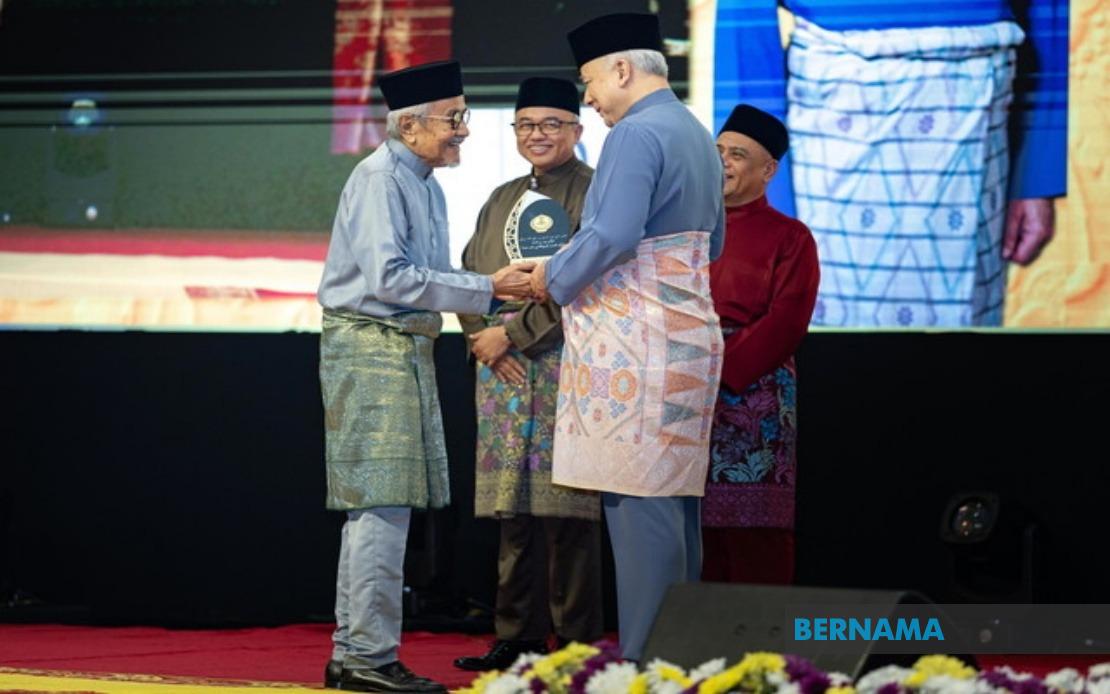
The storied career of Datuk Rahim Razali reached a new milestone when the 87-year-old filmmaker received recognition as a Media and Communications Practitioner Icon at Perak's state-level Maulidur Rasul celebration in Ipoh on August 25. Presented by Sultan Nazrin Shah, the accolade—formally known as the 'Tokoh Zaid Bin Thabit' award—came with a cash prize of RM5,000 and a commemorative plaque, underscoring the enduring significance of Razali's artistic legacy in Malaysian culture and media.
Born Abdul Rahim Mohd Razali in Batu Gajah, Perak, Razali has become one of the nation's most accomplished creative figures, blending careers across drama, film, and sports commentary into a coherent vision of Malaysian cultural expression. His trajectory from television assistant to independent producer exemplifies the entrepreneurial spirit that characterised Malaysia's early creative industries. Establishing Angkatan Seniman Abad XX Sdn Bhd in 1981 represented a pivotal moment—moving beyond the confines of state-controlled broadcasting to forge a path as an independent producer during a transformative period for Malaysian media.
The scale of Razali's output remains impressive by any standard. Over decades of work, he has produced 50 dramas for RTM, Malaysia's national broadcaster, demonstrating a prolific commitment to serialised storytelling that helped define Malaysian television during its formative years. Beyond television, his venture into feature filmmaking yielded 15 films, eight of which were deemed worthy of selection at the Tokyo Film Festival—a significant international validation for Malaysian cinema during an era when such recognition was far less common. His directorial work on the Abang franchise, particularly Abang and Abang 92, resonated with audiences and contributed materially to the development of local action cinema.
The Maulidur Rasul ceremony itself served as a broader platform for recognising contributions to Malaysian public life beyond the entertainment sphere. Yang Walat, an 82-year-old single mother who has raised 15 children in Kuala Kurau, received the Exemplary Family Icon Award (Anugerah Keluarga Amar Yassir), accompanied by RM10,000, an Umrah package, and a plaque. This recognition underscores the event's dual purpose: celebrating both exceptional individual achievement and extraordinary dedication to familial and community responsibilities.
The religious and civic dimensions of the awards programme reflected Perak's commitment to honouring various pillars of Muslim and communal life. Radhi Kamarul Hailan, at 56, was presented the Preacher Icon Award ('Ibnu Abbas'), acknowledging contributions to Islamic education and spiritual guidance. Simultaneously, Saharuddin Hassim, 74, and Yahya Man, 83, received the Mosque Official Award (Tokoh Siak) and the 'Tokoh Bilal' award respectively, recognising the administrative and liturgical functions essential to mosque operations throughout the state.
The slate of honourees extended to institutional recognition as well. Pertubuhan Wanita Prihatin Perak, a non-governmental organisation, received an award acknowledging its community work, reflecting the state's appreciation for civil society engagement. Meanwhile, Mohd Hanafiah Idris, 56, was recognised with the Imam Award, elevating the spiritual leadership role within Malaysian Muslim communities. These varied categories illustrate how such state-level ceremonies function to affirm a comprehensive vision of social contribution, spanning entertainment, family, religious guidance, and civil activism.
For Malaysian audiences and the creative industries, Razali's recognition carries particular significance. His generation of filmmakers and broadcasters operated during a period of genuine experimentation and nation-building through culture, before the rise of globalised streaming platforms and digital fragmentation. The deliberate cultivation of a national film industry through organisations like RTM, and the subsequent emergence of independent producers, laid foundational structures that persist today. Razali's career demonstrates how individual artistic ambition, institutional support, and market opportunity converged during a specific historical moment.
The awards programme itself, presided over by Sultan Nazrin Shah, reflected the continuing role of state monarchies in recognising and legitimising cultural and civic contributions. In Malaysia's constitutional framework, such ceremonial acts carry symbolic weight beyond the immediate honour, situating recipients within an official narrative of national and regional achievement. For Razali, the award at 87 represents not merely a capstone to a long career, but an institutionalised acknowledgement that his contributions to Malaysian cinema and broadcasting remain relevant to contemporary understandings of the nation's cultural identity.
Beyond the individual recognition, the broader composition of the 2024 Maulidur Rasul awards reveals evolving priorities within Perak's public life. The prominence accorded to family-centred contributions, religious services, and civic organisations alongside entertainment practitioners suggests a deliberate effort to position cultural and spiritual values as interconnected rather than competing spheres. This integration reflects deeper currents in Malaysian public discourse, where questions of national identity increasingly involve negotiating relationships between secular entertainment, religious authority, and community welfare.
Razali's journey from RTM assistant to internationally-recognised filmmaker offers younger Malaysian creatives a historical template for career progression, even as the industry landscape has shifted dramatically. His establishment of an independent production company nearly half a century ago anticipated broader industry trends toward privatisation and entrepreneurship that would accelerate in subsequent decades. The recognition by Sultan Nazrin Shah thus positions Razali not merely as a historical figure, but as a precursor to contemporary creative practitioners navigating complex terrain between artistic expression, commercial viability, and cultural responsibility.

