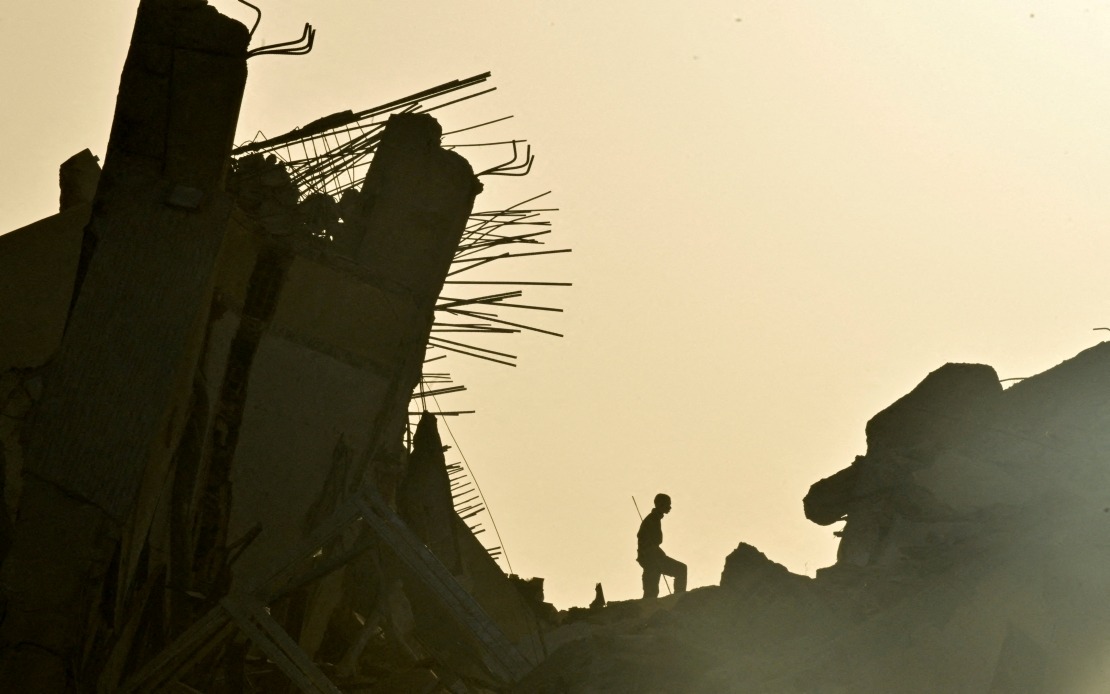
Venezuela is grappling with a humanitarian catastrophe following twin earthquakes that have claimed at least 1,450 lives and left more than 3,200 injured, according to government authorities. The back-to-back tremors, which struck on Wednesday with magnitudes of 7.2 and 7.5 respectively, have triggered an unprecedented disaster response involving emergency personnel from around the globe, even as the critical window for locating survivors rapidly narrows.
The seismic sequence has been particularly violent and prolonged. National Assembly President Jorge Rodríguez disclosed that the initial pair of earthquakes have since been followed by approximately 430 aftershocks, complicating both the rescue operation and creating additional hazards for workers navigating through collapsed structures. The relentless series of tremors has added psychological strain to rescue teams and heightened the risk of further structural failures in already-compromised buildings.
Geographic damage assessment reveals that the coastal region of La Guaira and the capital city of Caracas have borne the brunt of destruction. Entire blocks of high-rise residential and commercial towers have been reduced to rubble, transforming once-vibrant urban neighbourhoods into landscapes of devastation. The concentrated nature of damage in these population-dense areas explains the staggering casualty figures and the enormous challenge facing rescue coordinators.
Thousands of individuals are believed to remain trapped beneath the debris, though precise numbers remain uncertain given the scale of destruction and the difficulty in accounting for all residents across affected zones. The survival prospects for these individuals diminish substantially with each passing hour. Disaster management specialists universally acknowledge that the critical period for locating survivors extends approximately 72 hours from the moment of collapse—a threshold that creates mounting urgency for the ongoing search and rescue operations.
The international response has been substantial. Venezuela has mobilised approximately 30,000 emergency workers domestically, while rescue specialists from 24 nations have been deployed to assist in the search effort. This international contingent comprises roughly 2,700 trained rescue personnel, bringing crucial expertise in urban search and rescue operations, structural assessment, and victim extraction techniques. The participation of foreign teams underscores the magnitude of the disaster and reflects regional solidarity in responding to the crisis.
Damage assessments compiled by authorities indicate the scale of infrastructure loss is substantial. More than 2,500 residential buildings and associated facilities have either completely collapsed or sustained severe structural damage. The impact on Venezuela's already-strained health infrastructure is particularly concerning, with approximately 38 hospitals reported as damaged or non-functional. This creates a secondary crisis as the surviving injured population faces limited access to medical care precisely when healthcare demand is at its peak.
The destruction of approximately 780 homes renders thousands of people homeless in addition to those killed or injured. This dual impact—immediate loss of life combined with displacement and loss of shelter—creates compounding humanitarian challenges. Authorities must simultaneously manage rescue operations, provide emergency medical services, establish temporary shelters, and account for missing persons while the nation's infrastructure remains compromised.
For Malaysian and Southeast Asian observers, this disaster serves as a stark reminder of the vulnerability of densely populated urban centres to seismic activity. Venezuela's experience underscores the importance of investment in earthquake-resistant building codes, early warning systems, and comprehensive disaster preparedness planning. Regional nations with significant seismic risk, such as Indonesia, the Philippines, and Malaysia, can draw instructive lessons from how Venezuela's response has proceeded, both in identifying best practices and recognising potential gaps in emergency management protocols.
The long-term recovery challenge facing Venezuela will prove equally daunting as the immediate rescue phase concludes. Reconstruction of 2,500 damaged structures, restoration of critical health facilities, and restoration of essential services will require sustained international assistance and domestic commitment. The psychological and social dimensions of recovery—addressing trauma among survivors, reuniting separated families, and rebuilding community cohesion—will extend far beyond the initial crisis period and will shape Venezuela's trajectory for years to come.

