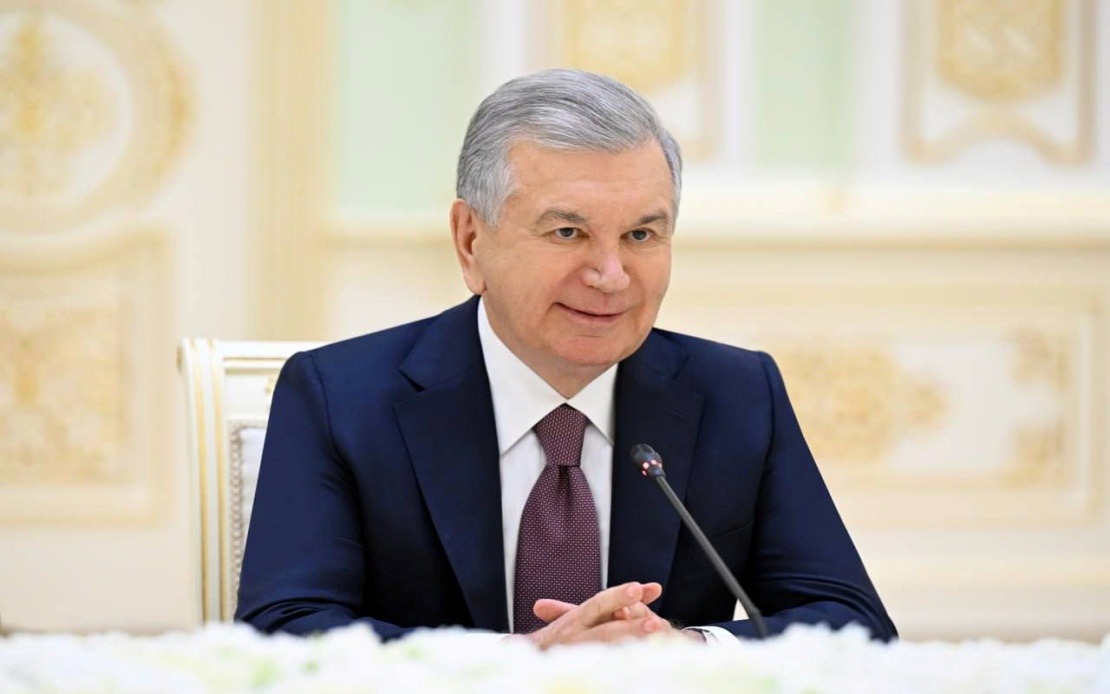
Uzbekistan President Shavkat Mirziyoyev has made an impassioned appeal for the world to harness the intellectual and spiritual resources of Islamic civilisation as a counterforce to escalating global tensions, extremism and religious intolerance. Speaking through presidential adviser Khayriddin Sultanov at the First International Islamic Civilisation Forum, Mirziyoyev articulated a vision of peace grounded in education, scientific inquiry and shared cultural heritage—a message with particular resonance for Southeast Asian nations navigating their own religious and ethnic pluralism.
The Uzbek leader's intervention reflects growing concern among Muslim-majority nations about the erosion of dialogue across civilisational lines. His diagnosis of the current moment is sobering: the world faces profound upheaval characterised not merely by geopolitical competition but by deliberate efforts to fracture understanding between religions and cultures. In such circumstances, Mirziyoyev contends, the philosophical and ethical foundations of Islamic tradition offer stabilising and unifying potential. This framing moves beyond defensive posturing about religion's role in global affairs, instead positioning Islamic intellectual heritage as an active source of solutions to contemporary crises.
Central to Mirziyoyev's argument is the elevation of science and education as the primary mechanisms through which civilisational values translate into practical benefits for humanity. Rather than presenting Islamic teachings as abstract moral imperatives, he emphasises their historical connection to concrete achievements in mathematics, astronomy, medicine and philosophy. This evidence-based approach appeals to policymakers and international institutions concerned with measurable progress on development and stability. For Malaysia and other regional economies, the emphasis on education as a unifying force carries particular weight given the region's own investments in knowledge-based development and its experience with religiously diverse societies.
Uzbekistan's own "Enlightenment Against Ignorance" initiative, launched at the United Nations in 2017, provides institutional scaffolding for these ideals. Rather than remaining rhetoric, the programme channels resources toward concrete activities: research, educational curricula, restoration of historical sites and cross-border humanitarian projects. This operational dimension lends credibility to calls for international cooperation and offers a template that other nations might adapt to their circumstances. For Southeast Asian policymakers, such frameworks demonstrate how national governments can position themselves as custodians of civilisational heritage whilst advancing pragmatic development agendas.
The historical examples Mirziyoyev invoked underscore the depth of Central Asia's intellectual contributions. Figures such as Muhammad al-Khwarizmi—whose name gave rise to the term "algorithm"—and Abu Ali ibn Sina, whose medical works dominated European universities for centuries, represent not peripheral but foundational figures in global intellectual history. By reclaiming these scholars within a distinctly Islamic civilisational narrative, Mirziyoyev positions the Muslim world not as a borrower of Western knowledge but as a primary originator whose contributions remain embedded in contemporary science. This rhetorical move carries implications for how Muslim-majority societies in Southeast Asia present their own historical achievements to international audiences.
The concept of a "Third Renaissance" anchored on innovation, science and spiritual development signals ambition beyond cultural preservation. Mirziyoyev frames this not as nostalgia but as forward-looking synthesis: honouring historical legacy whilst embracing artificial intelligence, digital heritage preservation and modern educational methods. For a region like Southeast Asia, where governments similarly seek to balance modernisation with cultural identity, this integrated vision offers an alternative to false dichotomies between tradition and progress. The implication is that Islamic civilisation can be simultaneously ancient and contemporary, spiritually rooted and technologically advanced.
The forum itself, drawing approximately 300 scholars, religious leaders and policymakers from more than fifty countries, demonstrates the institutional muscle behind these ideas. Held across three Uzbek cities—Tashkent, Samarkand and Termez—the gathering bridges academic and governmental spheres whilst including cultural institutions and international organisations. This inclusivity suggests an understanding that civilisational dialogue requires multiple channels and stakeholders rather than top-down pronouncements. For Southeast Asian observers, the forum model illustrates how regional powers can convene significant international gatherings around themes of shared identity and common purpose.
The partnership between Uzbekistan's Islamic Civilisation Centre and the Islamic World Educational, Scientific and Cultural Organisation (ICESCO) indicates how bilateral initiatives can scale into multilateral frameworks. ICESCO's involvement signals endorsement from an established international body, lending legitimacy whilst extending reach across the Islamic world. Such networking effects matter for countries seeking to amplify their diplomatic influence through institutional affiliation. Malaysia, itself active in Islamic educational and cultural organisations, recognises the value of these connections for advancing regional interests within global forums.
The substantive programme—eleven plenary sessions, four international scientific conferences, exhibitions of rare manuscripts and discussions of artificial intelligence applications for Islamic heritage preservation—demonstrates commitment to intellectual rigour rather than ceremonial gathering. The focus on digital methods for preserving manuscripts reflects acknowledgment that Islamic civilisation's future depends not on static reverence but on active engagement with contemporary technologies. This resonates with Southeast Asian efforts to digitise and make accessible regional cultural treasures whilst building technological capacity.
The forum's expected outcomes—adoption of the Tashkent Declaration, approval of the Islamic Civilisation Centre's development roadmap through 2030, and multiple bilateral cooperation agreements—are designed to translate discussion into institutional commitments. Such mechanisms create accountability and momentum beyond the event itself. For regional governments, the documented commitments provide reference points for their own engagement with Islamic civilisation initiatives and offer templates for how to structure international cultural and scientific cooperation.
For Southeast Asia more broadly, Mirziyoyev's intervention and Uzbekistan's hosting of this forum carry several implications. First, they signal that Central Asian Muslim-majority nations are actively shaping contemporary discourse about Islam's role in global affairs, not merely responding to Western or Asian agendas. Second, they demonstrate how smaller powers can punch above their weight through strategic institutional building and intellectual positioning. Third, they offer Southeast Asian nations—particularly Malaysia, Indonesia and Brunei—potential partners in advancing shared interests in Islamic education, heritage preservation and interfaith dialogue on global platforms.
The emphasis on science and education as vehicles for peace, whilst thoroughly consistent with modern governance rhetoric, also subtly challenges narratives that position Islamic societies as resistant to scientific progress or locked in civilisational conflict. By reclaiming scientific heritage and positioning contemporary research as an extension of Islamic intellectual tradition, Mirziyoyev reframes the terms of engagement. Southeast Asian nations with Muslim majorities benefit from such reframing, as it supports domestic narratives about the compatibility of Islamic values with technological advancement and modern knowledge production—a message with domestic political resonance.
Ultimately, the forum represents more than a celebration of Islamic heritage. It constitutes an organised effort by multiple stakeholders to position Islamic civilisation as a source of solutions to contemporary global challenges rather than as a problem requiring management. Whether subsequent action on cooperation agreements and development roadmaps translates this vision into sustained institutional change remains to be seen. Nevertheless, the convening itself signals that Muslim-majority nations are increasingly confident in asserting their own narratives about civilisational contribution and international cooperation on terms they help define.

