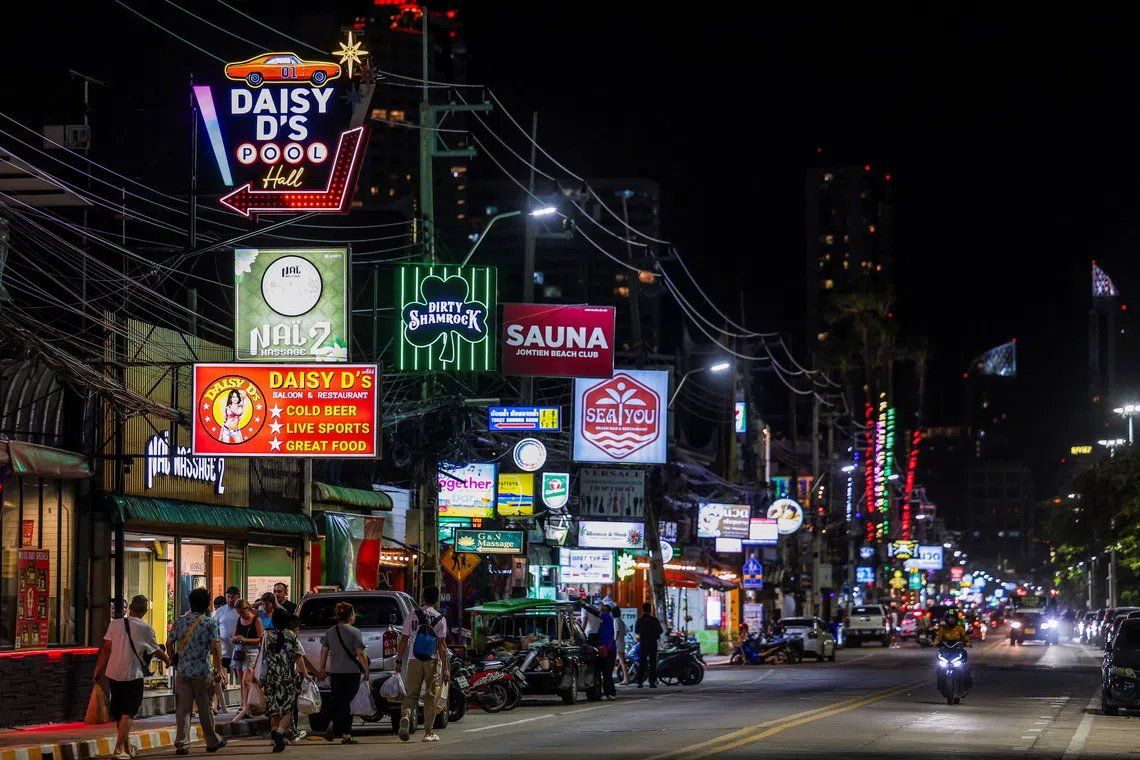
The USS Abraham Lincoln is set to arrive in Pattaya's nearby port of Laem Chabang this week, bringing nearly 5,000 sailors and Marines who have spent over 200 days supporting military operations across the Middle East. The arrival offers a rare economic lifeline to Thailand's most famous beach resort, even as authorities grapple with longstanding challenges related to the city's reputation as a major sex tourism hub. The visit underscores the complex dynamics that unfold whenever large contingents of foreign military personnel intersect with vulnerable local communities, raising both commercial opportunity and significant social concerns.
The Abraham Lincoln departed its home port of San Diego in November before being rerouted to support the US-Israeli military operations in the region against Iran. The deployment has set a modern-day record for consecutive days at sea, according to Democratic lawmakers who have scrutinised the assignment. The extended mission has tested the resilience of both vessel and crew, with two military-focused publications reporting troubling signs of deteriorating morale, suicide attempts, and mounting mental health challenges among personnel aboard. For the sailors involved, this week's shore leave represents a crucial psychological respite after months confined at sea under operational stress.
Pattaya's transformation from a modest fishing village into a boisterous tourism and entertainment centre is inextricably linked to American military presence dating back to the Vietnam War era. During that conflict, thousands of US servicemen sought rest and recreation in the city, fundamentally reshaping its economy and social fabric. Today, the municipality hosts over 300,000 hotel rooms and serves as a major international destination. Local business leaders are keen to capitalise on this windfall, with Pattaya Mayor Poramase Ngampiches estimating that individual sailors might spend between 1,000 and 3,000 baht daily—equivalent to $30 to $91—depending on their length of stay and accommodation choices. The economic stimulus could prove significant for a city that tourism operators describe as experiencing one of its slowest years on record.
Yet the anticipated influx has prompted intensive police preparations in Pattaya's notorious beachfront and nightlife zones. Over the weekend, authorities conducted raids that resulted in 40 to 50 detentions on suspicion of prostitution offences. Additional patrols have been mobilised throughout the week to maintain order and attempt to curtail illegal activities. Pattaya police chief Anek Srathongyoo acknowledged the challenge candidly, noting that enforcing laws against sex work remains difficult when operators and workers can solicit clients in public spaces beyond the immediate visibility of law enforcement. Prostitution remains technically illegal throughout Thailand, yet the practice persists openly in major tourism centres including Bangkok and Pattaya, creating an enforcement paradox.
The scale of the sex industry in Pattaya is difficult to overstate. A decade ago, the US Federal Bureau of Investigation formally designated the city as one of the world's leading sex tourism destinations—a designation that remains largely accurate. This massive underground economy operates with relative impunity, facilitated by both demand from international visitors and endemic corruption that enables operators to function despite nominal legal prohibitions. The arrival of 5,000 military personnel with disposable income and limited time ashore creates predictable pressure within this system, potentially driving increased exploitation of vulnerable populations and spreading health risks.
Academic researchers have raised specific concerns about the convergence of military shore leave and sex tourism. Pipatpong Fakfare, an associate professor at Bangkok University's School of Humanities and Tourism Management, emphasises that influxes of customers with limited time and specific intentions heighten risks of sexual exploitation and transmission of sexually transmitted infections. These concerns are amplified by emerging evidence of psychological distress among the visiting personnel themselves—reports of suicide attempts and stress-related issues aboard the Lincoln suggest that some sailors may arrive ashore in vulnerable mental states, potentially leading to poor decision-making and risky behaviour.
The economic distribution of visitor spending will significantly influence the overall impact on Pattaya's economy. Thanet Supornsahasrungsi, president of the Association of Chonburi Tourism Federation, points out that some sailors may choose to venture to Bangkok, thereby dispersing spending across a wider geographic region. Shore leave is typically staggered to maintain operational readiness aboard the vessel, meaning that visitor numbers will distribute across several days rather than concentrating all 5,000 personnel ashore simultaneously. This spacing potentially moderates both the positive economic stimulus and the negative social pressures that might arise from an overwhelming single-day influx.
Local entertainment business operators have expressed palpable relief at the prospect of increased revenue. Lisa Hamilton, president of the Pattaya Nightlife Business Association, articulated the desperation underlying this enthusiasm, noting that she has lived in Pattaya for over two decades without witnessing such prolonged economic stagnation. For legitimate hospitality venues—restaurants, bars, hotels, and entertainment establishments—the arrival represents a genuine business opportunity. The multiplier effects could extend to taxi operators, street vendors, and service providers throughout the city.
However, the optimism among business leaders must be weighed against the documented social costs that accompany military shore leave in destination cities globally. The intersection of temporary populations with specific leisure expectations, limited time ashore, and pre-existing vulnerable communities creates conditions that repeatedly generate exploitation, trafficking, and violence. Thailand's relatively permissive legal environment for sex work, combined with enforcement challenges and economic desperation among some populations, creates particular vulnerability to these dynamics. The American military presence, while economically significant, has historically entrenched rather than resolved these structural problems.
The Abraham Lincoln visit also reflects broader geopolitical realities reshaping the region. The vessel's deployment to the Middle East, extended well beyond normal rotations to support evolving US strategic interests and alliance commitments, underscores the intensifying competition between major powers across Asia. Thailand's role as a traditional US military ally, combined with its strategic location and modern port facilities, makes it an ideal intermediate stop for reassurance visits that demonstrate American commitment to the region. For Thailand, such visits reinforce security partnerships while generating immediate economic benefits, though at social costs that remain difficult to quantify in balance-sheet terms.
Looking forward, the Pattaya visit encapsulates the uncomfortable compromises that characterise modern international relations. Thailand benefits from the security architecture and economic opportunities that American engagement provides, yet absorbs social and human costs that international frameworks inadequately address. For the nearly 5,000 sailors spending their hard-earned shore leave, Pattaya offers recovery and diversion after months of operational strain. For local residents and vulnerable populations, their arrival creates both employment opportunity and exploitation risk in proportions that remain unpredictable and difficult to control.
The challenge for Thai authorities lies in maximising the legitimate economic benefits of the visit while minimising harm to vulnerable populations and containing criminal exploitation. This requires sustained investment in law enforcement, victim support services, and demand-reduction strategies—commitments that shore leave economics alone cannot motivate. The USS Abraham Lincoln's week in Pattaya will likely generate positive revenue for many businesses and provide needed respite for its crew, yet it will almost certainly perpetuate, rather than resolve, the underlying tensions that define this complex destination.

