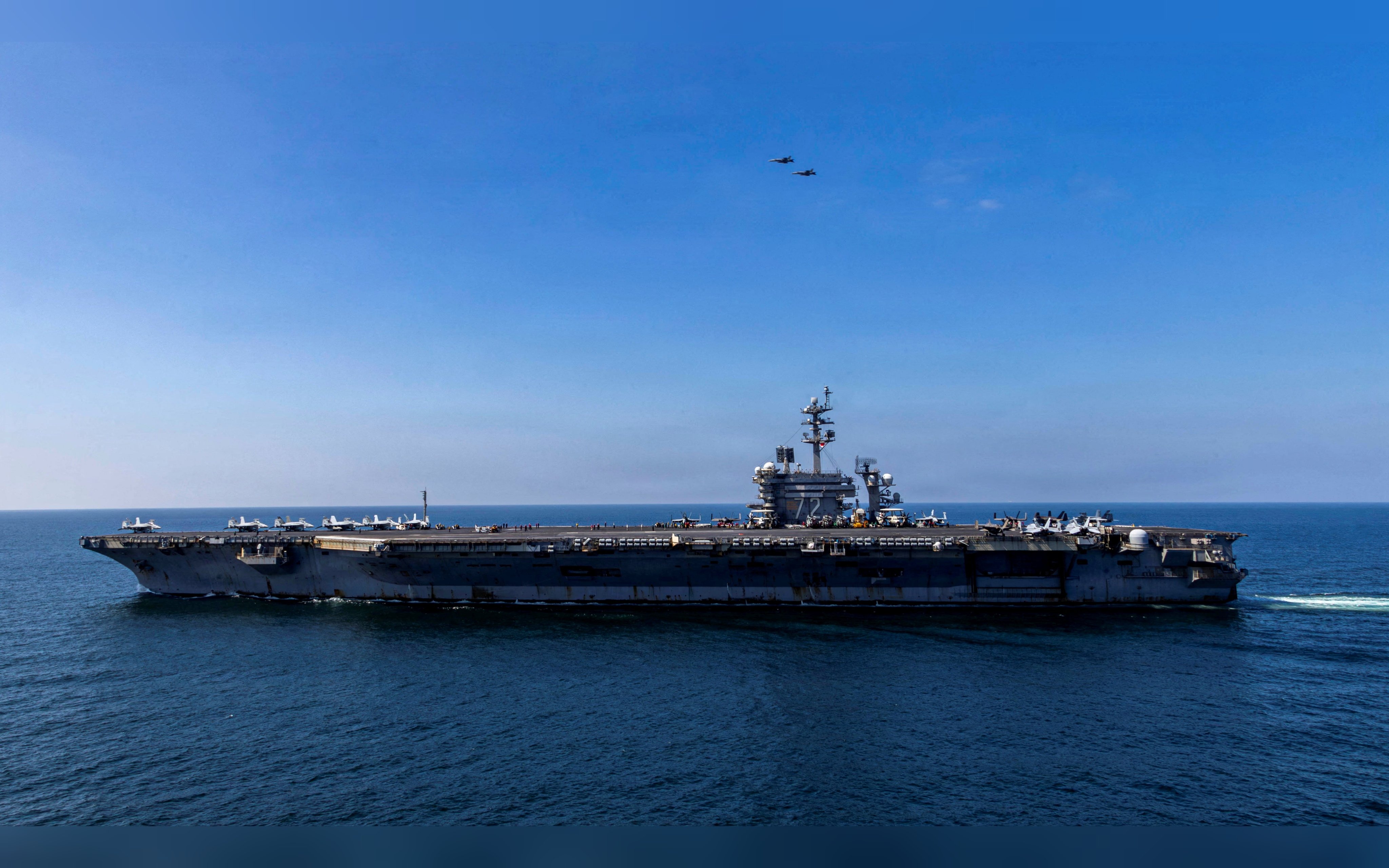
The United States military will rotate out the USS Abraham Lincoln aircraft carrier from West Asia and deploy the USS George Washington in its place, President Donald Trump confirmed on Friday. The decision follows mounting concerns from families of service members and senior lawmakers about the extended deployment and deteriorating conditions aboard the vessel, which has now spent more than 250 days at sea with minimal respite.
When questioned by reporters about whether the Lincoln's assignment had lasted too long, Trump offered a dismissive response, stating the deployment had not been unduly lengthy. However, Acting Navy Secretary Hung Cao took a more measured approach in acknowledging the challenges sailors and marines faced during their extended operational period. Cao emphasized that the Lincoln would return home soon as part of a scheduled rotation, stressing that the welfare and safety of personnel remains paramount in military decision-making.
The carrier, which began its original deployment in November, was redirected toward the Middle East in January amid escalating regional tensions. It has since accumulated an extraordinary operational record, with aircraft conducting over 10,000 sorties and delivering more than 1.5 million pounds of ordnance during the campaign. Of its total deployment duration, approximately 200 days were spent directly in combat operations, significantly straining the crew's endurance and morale.
The replacement rotation addresses serious welfare issues that emerged during the prolonged mission. Senator Richard Blumenthal of Connecticut had formally raised alarms about conditions aboard the Lincoln in correspondence to Defence Secretary Pete Hegseth and Acting Navy Secretary Cao. His letter documented multiple concerns including shortages of essential supplies, contaminated water systems, persistent plumbing malfunctions, and critically, deteriorating mental health among crew members. The senator also highlighted deck safety hazards and significant disruptions to mail delivery that left sailors without care packages for months.
Acknowledging these challenges publicly, Cao confirmed that a small number of sailors and marines required mental health treatment during the deployment, though he stated no fatalities resulted from these cases. The acting secretary's statement appeared to balance acknowledgment of hardship with military necessity, noting that combat operations inherently disrupt normal routines and create unpredictable circumstances that extend beyond standard planning.
The decision to rotate carriers reflects ongoing strategic commitments in West Asia, where American naval presence remains a cornerstone of regional security architecture. The USS George Washington will assume the Lincoln's operational responsibilities as part of long-established deployment cycles designed to maintain continuous carrier presence across critical waterways. This rotation maintains forward-deployed capabilities while providing relief for the extensively utilized Lincoln crew.
Cao's public statements emphasized that the deployment extension resulted directly from mission requirements rather than arbitrary command decisions. He framed the challenges as inherent to warfighting itself, characterizing the extended absence from home port as a consequence of operational necessity rather than mismanagement. This messaging attempts to balance acknowledgment of sailor welfare concerns with military operational imperatives and institutional credibility regarding personnel care.
For Southeast Asian observers, the carrier rotation carries implications for regional security dynamics. American naval operations in West Asia directly affect maritime commerce patterns and geopolitical alignments throughout Asia-Pacific. Malaysia, as a nation dependent on unimpeded sea lanes and concerned with regional stability, monitors US military commitments closely. The rotation signals sustained American engagement in the Middle East despite periodic calls for strategic rebalancing toward Asia.
The USS Abraham Lincoln's achievement of over 10,000 sorties demonstrates the intensive operational tempo that modern carrier operations demand. Such deployment metrics underscore the physical and psychological demands placed on naval personnel who operate far from home for extended periods. The combination of combat operations, inadequate supply chains, and infrastructure failures creates cumulative stress that eventually necessitates relief rotations regardless of strategic preferences.
Trump's dismissal of concerns about deployment length contrasts with Cao's more empathetic framing, revealing internal tensions within the administration regarding military personnel welfare. While both officials confirmed the rotation, they differed in acknowledging the legitimacy of hardship experienced by sailors and their families. This divergence reflects broader debates within defence establishment about balancing military commitments against personnel sustainability.
The USS George Washington transition represents continuity rather than strategic shift. Carrier rotations occur on predictable cycles designed to maintain readiness while ensuring crew recovery and maintenance. However, the public emphasis on welfare concerns suggests growing political sensitivity around military deployments, particularly as families increasingly voice concerns through elected representatives. Future rotations may face similar scrutiny if operational tempos remain elevated.
Looking forward, the rotation cycle will continue providing American military presence in waters critical to global commerce and regional security. For regional powers including Malaysia, the Lincoln's replacement with George Washington signals unchanged American commitment to Middle Eastern interests, with implications for maritime security architecture throughout Asia-Pacific and beyond. The incident underscores enduring tensions between military necessity and personnel welfare that will likely resurface as global security challenges persist.

