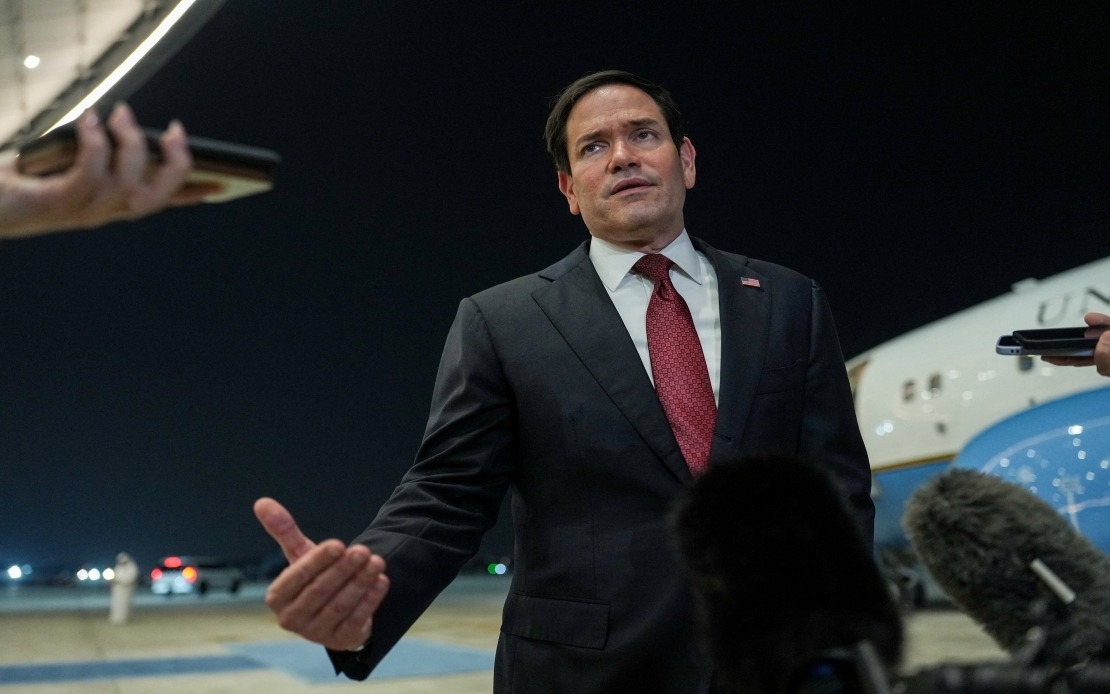
The United States will not be contributing government money towards any reconstruction fund for Iran, according to Secretary of State Marco Rubio, who addressed speculation about a potential multi-billion dollar investment scheme during remarks to journalists on Tuesday. Rubio's statement represents an early clarification on what many observers view as a contentious element of ongoing negotiations between Washington and Tehran, particularly given the historically fraught relationship between the two nations and domestic political sensitivities within the United States regarding financial commitments to Iran.
Rubio indicated that discussions about potential reconstruction financing represent an early-stage component of broader diplomatic negotiations, not a finalized commitment. The top US diplomat suggested that while other nations, particularly those in the Gulf region, might eventually participate in such arrangements, Washington intends to maintain strict distance from any direct government participation or investment. This positioning allows the Trump administration to pursue diplomatic progress without triggering concerns from congressional critics who view any substantial US funding for Iran-related initiatives with deep skepticism.
The clarification follows US President Donald Trump's dismissal last week of reports claiming a $300 billion reconstruction fund had been negotiated as part of broader US-Iran settlements. Trump's swift rejection of such figures underscores administration sensitivity to accusations of excessive concessions to Tehran, a concern that resonates powerfully with Republican constituencies and regional allies including Israel and Gulf Arab states who maintain hawkish positions on Iran policy.
Recent diplomatic developments suggest tangible progress in US-Iran relations despite decades of mutual hostility. Delegations from both nations convened in Burgenstock, Switzerland on Sunday, with Qatar and Pakistan serving as mediating facilitators. The American delegation operated under the leadership of a senior official identified as Vance, while Iran deployed Mohammad Bagher Ghalibaf, the country's parliamentary speaker, to head its negotiating team. Both sides subsequently reported constructive discussions, with Iran's Foreign Ministry spokesman Ismail Baghaei and the American representative announcing measurable progress towards resolving multiple outstanding disputes.
Significantly, the two governments completed a remote signing of a memorandum last week that addresses the military confrontation that erupted on February 28. This agreement represents perhaps the most concrete diplomatic achievement in recent months, establishing a framework for de-escalation and defining specific timelines for reciprocal actions. The document obligates the United States to terminate its naval blockade affecting Iranian shipping, while Iran commits to restoring maritime commerce through the strategically vital Strait of Hormuz, one of the world's most critical chokepoints for global energy transport.
Nuclear matters remain compartmentalized within the broader negotiating structure. Iran has committed to forgoing nuclear weapons acquisition, though the mechanics and verification procedures for this commitment require separate specialized negotiations. The two sides have established a 60-day timeline for concluding discussions on Iran's nuclear programme, a compressed schedule reflecting international pressure to resolve this most contentious dimension of the relationship. These negotiations will address enrichment levels, inspection protocols, and international oversight mechanisms that have repeatedly derailed previous diplomatic initiatives.
Rubio's framing of reconstruction possibilities as contingent on "progress made on a host of other security issues" signals that Washington intends to maintain linkage between various negotiating streams. This approach prevents premature concessions on any single dimension while preserving flexibility to trade progress in one area for advances elsewhere. The strategy reflects lessons learned from previous negotiations, where both sides grew frustrated when discrete issues became artificially separated from broader political contexts.
The reconstruction fund concept itself warrants examination given regional economic realities. Iran's economy has been severely constrained by decades of international sanctions, currency depreciation, and underinvestment in critical infrastructure. Gulf Arab states, particularly those with substantial oil revenues, possess the financial capacity to participate in reconstruction initiatives, and doing so could advance their strategic interests by stabilizing Iran and reducing migration pressures while potentially gaining preferential access to Iranian markets and resources. However, regional geopolitical considerations create complications, as Saudi Arabia, the United Arab Emirates, and other Gulf monarchies maintain security partnerships with the United States and Israel that complicate open cooperation with Iran.
For Malaysia and Southeast Asian observers, these developments carry implications extending beyond immediate US-Iran relations. Any stabilization of Iran affects global energy markets, supply chain security, and regional balance-of-power dynamics. An Iran with restored economic capacity and reduced international isolation might pursue more assertive regional policies, potentially complicating operations in the Strait of Hormuz that Malaysia's maritime trade depends upon. Conversely, successful deescalation could enhance overall regional stability and reduce insurance costs and shipping delays that affect Southeast Asian commerce.
The diplomatic momentum evident in recent weeks suggests substantive movement from both sides towards normalized relations, though significant obstacles remain. Rubio's explicit rejection of US government funding for reconstruction serves multiple purposes: it reassures domestic critics that concessions remain limited, maintains pressure on Iran by withholding the most lucrative benefit, and preserves flexibility for the administration to claim victory despite limitations on direct American investment. Whether other nations will step forward with reconstruction capital, and what conditions they might impose, remains uncertain, but the diplomatic framework appears sufficiently robust to merit cautious optimism about further progress.
The coming weeks will test whether both nations can sustain the momentum evident in recent negotiations while addressing the most sensitive outstanding issues, particularly nuclear matters. The success of these talks will reverberate across international relations, affecting everything from global oil prices to maritime security to regional alliance structures, making the outcomes of direct significance to Malaysian policymakers and businesses operating within interconnected global systems.