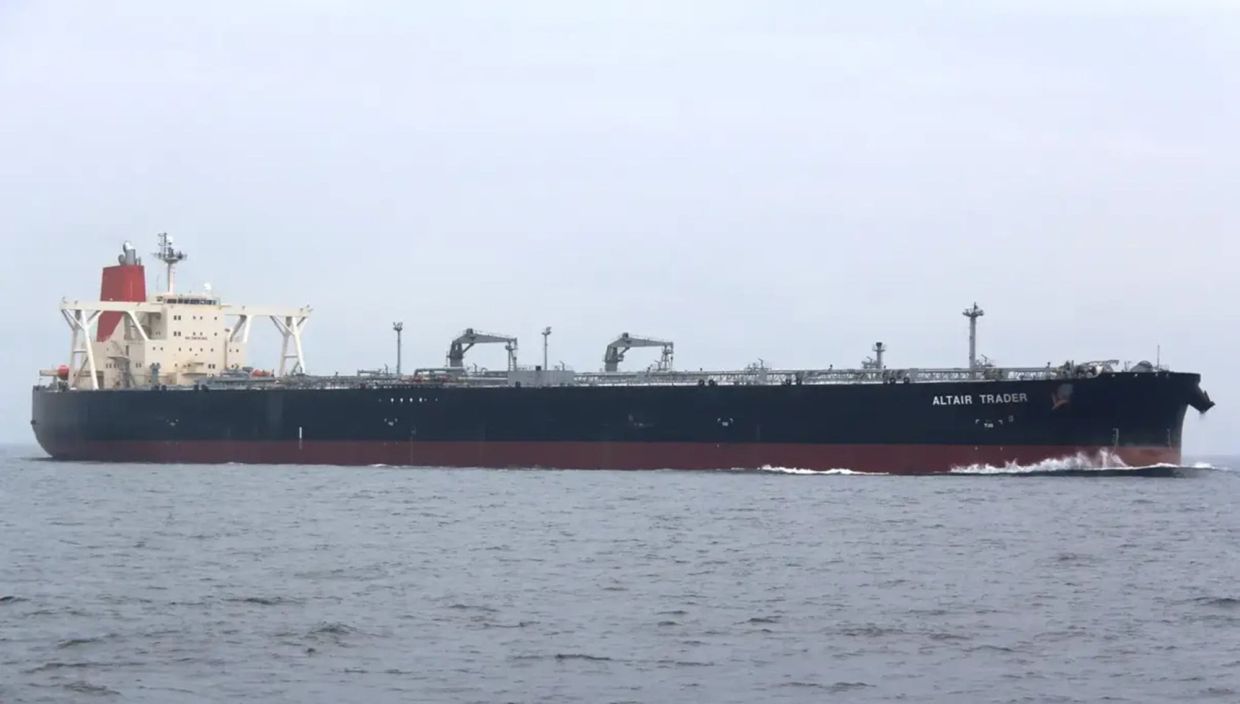
The United States moved on Wednesday to freeze assets and restrict business dealings with eight shipping companies headquartered in mainland China and Hong Kong, accusing them of participating in Iran's sanctions evasion scheme through the operation of vessels carrying Iranian crude and petroleum products. The Treasury Department action, coordinated with the State Department, represents an extension of Washington's multilayered approach to constraining Tehran's oil revenues, combining economic designations with ongoing naval enforcement operations along Iranian coastlines and ports.
Six of the eight identified vessels have been specifically linked to delivering Iranian crude to China, with Treasury documentation indicating that certain tankers transported millions of barrels during 2026 alone. These commercial shipping activities form part of what Washington characterizes as Iran's "shadow fleet"—a network of vessels that obscure ownership through flags of convenience and complex corporate structures to circumvent international restrictions on Iranian energy exports. The designations effectively prohibit American financial institutions and businesses from transacting with the affected companies, while simultaneously exposing foreign banks and international firms to potential secondary sanctions if they maintain commercial relationships with the designated entities.
One sanctioned vessel-management operation, Qi Hang Ship Management Limited, operates from mainland China and owns the Marshall Islands-flagged Well Sail, which Treasury says transported hundreds of thousands of barrels of Iranian petroleum products to the United Arab Emirates during 2024. The Hong Kong-registered Confident Apex Limited, owner of the Mozambique-flagged Lily, stands accused of delivering millions of barrels of Iranian crude since 2025. Additional vessels managed by Hong Kong enterprises—including the Al Salmi, Breeze V, Natsumi, and Crystal—are alleged to have transported millions of barrels destined for Chinese ports, establishing a consistent pattern of energy transfers that American officials view as circumventing their broader Iran containment strategy.
For Malaysian policymakers and regional business operators, these designations carry significant implications. The sanctions regime affects Southeast Asian shipping interests indirectly through the enforcement of secondary sanctions against international financial institutions, potentially complicating trade finance operations and increasing compliance burdens across the region's maritime sector. Malaysia's own shipping industry and banking sector must navigate increasingly stringent enforcement frameworks that could impact legitimate regional commerce if due diligence protocols are insufficiently developed.
Treasury Secretary Scott Bessent framed the action within the context of Iran's economic deterioration, noting that triple-digit inflation and currency instability have driven the regime toward maximizing hydrocarbon export revenues through unconventional channels. By targeting the logistics infrastructure that enables these energy transfers, Washington aims to restrict Tehran's access to foreign exchange precisely when the government faces mounting fiscal pressures. State Department spokesman Tommy Pigott explicitly connected the economic measures to ongoing naval blockade enforcement, emphasizing that sanctions designations complement military operations designed to restrict Iran's maritime commerce.
China has firmly rejected the allegations, with Liu Pengyu, spokesman for the Chinese embassy in Washington, characterizing the designations as groundless attacks on legitimate commercial relationships. Beijing argues that its cooperation with Iran reflects lawful trade practices deserving international respect, rather than sanctions evasion schemes. The diplomatic response underscores fundamental disagreements between Washington and Beijing regarding the legitimacy of China's Iran engagement and the extraterritorial application of American sanctions law to third-country enterprises.
Beyond the vessel designations, Treasury also targeted two Iranian entities involved in maritime insurance arrangements within the Strait of Hormuz. The Persian Gulf Marine Insurance Company and the Hormuz Safe Marine Services Authority stand accused of operating an "extortion scheme" whereby commercial vessels transiting one of the world's most critical energy corridors are coerced into purchasing insurance policies that purportedly protect against seizure risks. American officials argue that the dangers these policies address are deliberately manufactured by Iran itself, effectively creating artificial demand for protection services that generate revenue for the Islamic Revolutionary Guard Corps.
Hormuz Safe, developed by Iran's Ministry of Economy, accepts cryptocurrency and digital assets while providing insurance, traffic control, and security services to vessels navigating the strategic waterway. The digital payment mechanisms and blockchain-based insurance products represent innovative financial instruments that allow Iran to circumvent traditional banking restrictions. For Southeast Asian financial institutions and digital asset platforms, the designation serves as a warning that facilitating transactions with Iranian entities—even through emerging fintech channels—exposes them to potential sanctions exposure.
The State Department's characterization of these insurance arrangements as coercive mechanisms reflects a broader American narrative positioning Iran as a destabilizing force manufacturing artificial risks in international commerce. By framing insurance premiums as extortion rather than legitimate risk management, Washington delegitimizes Iran's control over critical maritime chokepoints and strengthens its legal justification for enforcing a comprehensive maritime blockade. This rhetorical framework influences how other nations and international shipping organizations view Iranian-managed services.
Regional implications extend beyond direct sanctions compliance. The enforcement actions signal Washington's determination to maintain maximum pressure on Iranian energy exports through coordinated economic and military means, reducing global crude availability and potentially supporting crude oil price stability that benefits energy exporters including Malaysia. Simultaneously, the targeting of Hong Kong and mainland Chinese shipping enterprises reflects escalating Sino-American competition over influence in the Middle East and access to Iranian resources, a dynamic that shapes broader geopolitical alignments affecting ASEAN stability.
For Malaysian business entities, compliance officers, and financial institutions, the designations necessitate enhanced screening procedures and updated sanctions list monitoring to ensure that commercial relationships do not inadvertently create exposure to American enforcement actions. The complexity of maritime corporate structures, with vessels often registered under flags of convenience while owned by holding companies in multiple jurisdictions, increases the difficulty of conducting thorough due diligence.
Beijing's promised response to defend the "legitimate rights and interests" of targeted Chinese companies suggests that sanctions escalation may prompt retaliatory measures affecting American and allied business interests in China. This tit-for-tat dynamic carries implications for Southeast Asian economies that maintain balanced relationships with both Washington and Beijing, potentially requiring these nations to navigate increasingly complicated geopolitical terrain as great-power competition intensifies over energy resources and maritime shipping control.

