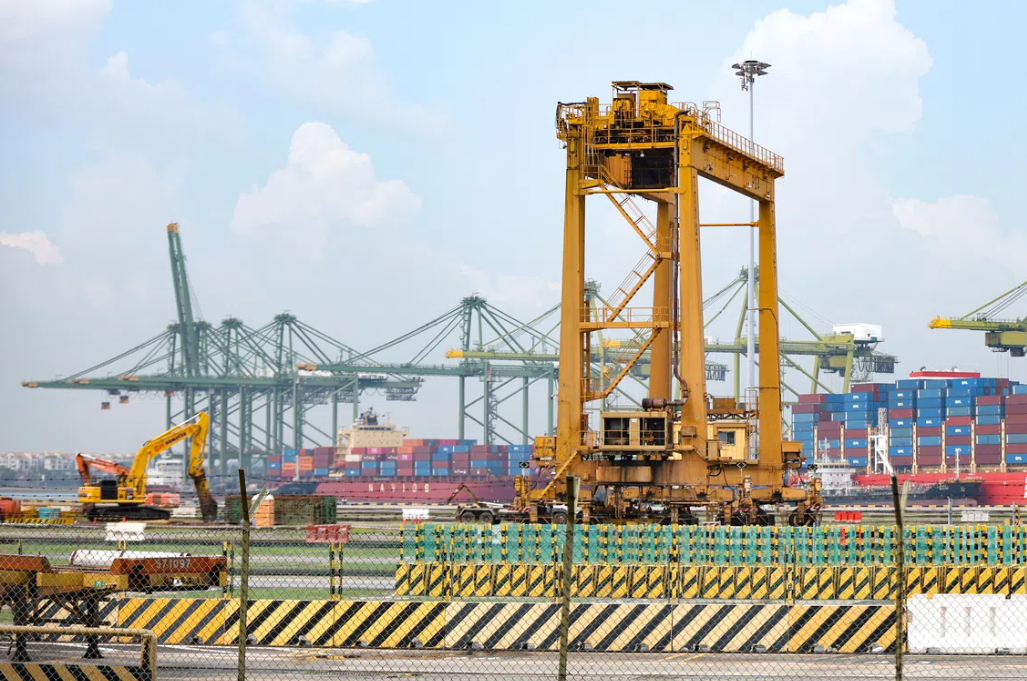
President Donald Trump's administration has sounded an alarm about what it characterizes as a sophisticated global infrastructure allowing Chinese exporters to sidestep American tariff regimes, naming Singapore and 39 other countries as critical nodes in this evasion network. The White House's August report, dubbed "The Great Transshipment Scam", details how Chinese manufacturers have adapted their export strategies by routing goods through intermediate jurisdictions with lower tariff exposures, effectively masking the true origin of their products before they reach American markets. This strategic repositioning represents an evolution in how exporters have responded to the trade tensions that intensified following the 2018 tariff announcements.
The mechanics of the scheme involve what officials describe as goods manufactured substantially in China receiving minimal processing or assembly abroad before being repackaged and exported to the United States under fabricated country-of-origin designations. By leveraging transshipment hubs—countries where goods move from one transport vessel to another without significant value-addition—Chinese exporters have circumvented the tariff barriers that were specifically intended to discourage reliance on Chinese supply chains. The White House estimates this practice may have depleted American customs revenue anywhere between US$40 billion and US$303 billion, though acknowledging uncertainty about the precise figure. This extraordinarily wide range reflects the challenge of quantifying illegal activity that occurs across multiple jurisdictions with varying enforcement capacities.
The administration's response includes deployment of what it terms a "Detective Border"—an artificial intelligence-powered system designed to identify shipments exhibiting suspicious patterns of rerouting. Officials have framed the initiative as marking the end of what they view as an era of consequence-free tariff evasion, though the report deliberately stops short of announcing immediate enforcement actions. In August 2025, the administration had already implemented an additional 40 percent tariff on goods determined to have undergone illegal transshipment, signaling that this represents an escalating campaign rather than a one-time announcement.
The 40 identified economies have been stratified into three distinct categories reflecting both their role in the transshipment architecture and the characteristics that make them attractive to Chinese operators. Tier 1 comprises major developed economies—Canada, the European Union, India, Israel, Japan and Taiwan—where transshipment risks exist but are intermingled within legitimate, substantial trade relationships. These nations possess sophisticated ports and logistics networks where distinguishing illegal rerouting from normal commerce becomes analytically challenging. Tier 2 encompasses countries with significant manufacturing and economic linkages to China: Brazil, Indonesia, Malaysia, Thailand, Turkey and Vietnam. These jurisdictions represent the sweet spot for transshipment operations—they possess meaningful manufacturing capacity that could plausibly explain Chinese inputs while maintaining geographic and logistical advantages for US-bound exports.
Singapore's placement in Tier 3 reflects Washington's assessment that smaller economies, despite smaller absolute volumes of illegal transshipment, present specific vulnerabilities that make them attractive targets. The categorization groups Singapore with Cambodia, Laos, Myanmar and the Philippines, countries the report characterizes as possessing "low-cost labour, free zones, port or border access, bonded warehousing, niche assembly capacity, preferential US access or limited Customs enforcement capacity." The inclusion of Singapore—widely regarded as having among the world's most professional customs administration and most transparent regulatory frameworks—alongside Myanmar, a nation with substantial governance challenges, suggests the White House assessment prioritizes logistical utility over institutional capacity.
For Malaysia and other Southeast Asian nations in Tier 2, the designation carries particular weight because it implies Washington believes these economies have become substantially integrated into Chinese supply chain reconfiguration. The report's emphasis on how these countries' export sectors have grown increasingly dependent on Chinese inputs, capital and logistics expertise suggests concern about Beijing acquiring what officials describe as "commercial and geopolitical leverage." This framing transforms what might appear as normal trade patterns into a strategic vulnerability, implying that Southeast Asian countries' manufacturing growth may inadvertently serve Chinese interests in circumventing American trade restrictions.
Singapore's response through its Ministry of Trade and Industry and Singapore Customs emphasizes that the nation's regulatory framework aligns with World Customs Organization best practices and that transshipped goods cannot be relabelled to falsely claim Singapore origin. Officials stressed that Singapore Customs maintains rigorous compliance requirements and cooperates extensively with international partners to detect illicit activity. The defensive posture reflects Singapore's vulnerability to tariff measures despite its reputation for compliance—the nation faces additional levies on roughly one-third of its domestic exports to the US following separate allegations about insufficient enforcement of prohibitions on forced labour goods.
The underlying tension illuminates a fundamental challenge facing Southeast Asian economies: even nations with sophisticated regulatory systems find themselves implicated in transshipment schemes largely beyond their direct control. Chinese exporters and logistics operators retain the agency to deploy shipments through Singapore or other hubs, and distinguishing between legitimate transshipment and illegal rerouting requires investigative resources that exceed what many authorities can realistically deploy. Singapore's situation is particularly complex because its status as a major global shipping hub means enormous volumes of goods legitimately pass through its ports; the mathematical problem of identifying suspicious patterns within this scale is genuinely difficult.
The timing of the White House report reflects the Trump administration's broader effort to reconstruct its tariff regime following what officials characterize as judicial undermining of their trade policy. The administration's aggressive stance on transshipment represents an attempt to close what it sees as a major loophole in its tariff architecture, ensuring that the protection intended for American manufacturers cannot be easily circumvented through jurisdictional arbitrage. The introduction of AI-powered detection systems suggests Washington recognizes that traditional customs inspection methods, even in well-resourced agencies, cannot match the scale and sophistication of modern supply chain manipulation.
For Malaysia specifically, which features prominently in Tier 2, the implications extend beyond immediate tariff risks. The report's emphasis on how Chinese capital and logistics have become integral to local manufacturing and export sectors raises questions about the sustainability of Southeast Asian development models that have relied heavily on Chinese investment and inputs. If American tariff policy continues tightening, and if Washington applies pressure on transshipment hub countries, Malaysia may face pressure to either reduce dependence on Chinese inputs or risk becoming collateral damage in a US-China trade conflict.
The broader strategic dimension involves what might be termed the "tariff leakage" problem: as trade barriers between major economies become more sophisticated, the incentive for intermediate countries to capture arbitrage opportunities intensifies. Singapore, Malaysia and other Southeast Asian nations occupy geographically and logistically advantageous positions that make them natural waypoints for goods in motion. The challenge is managing this structural advantage in an environment where major powers increasingly view transshipment not as neutral commerce but as strategic evasion requiring confrontation.

