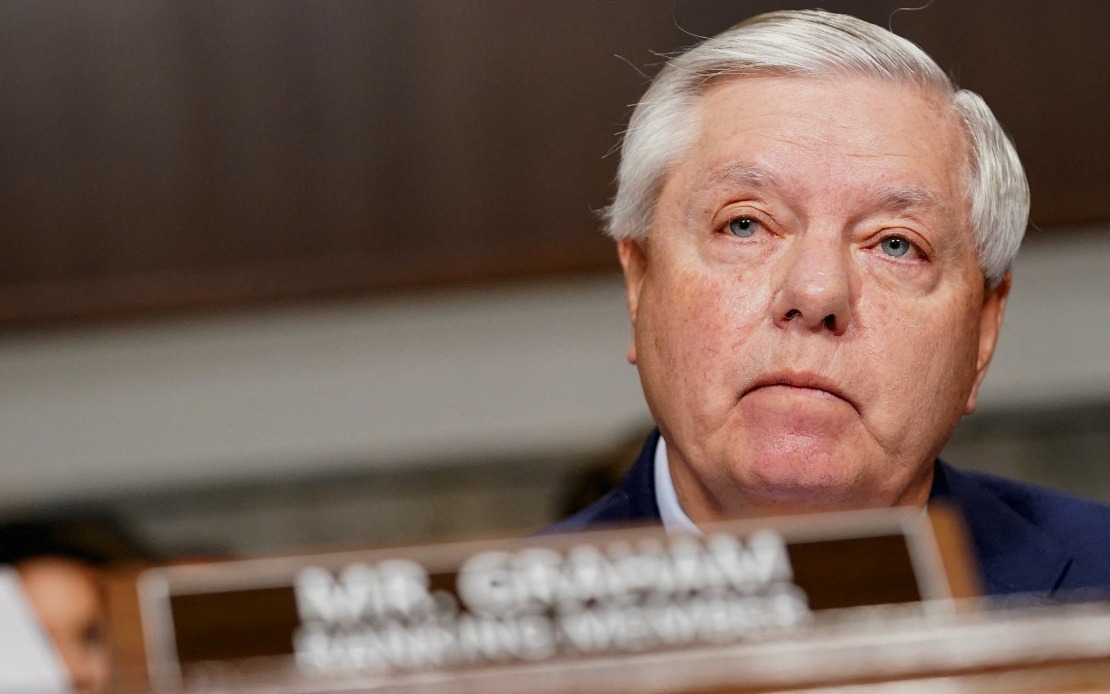
US Senator Lindsey Graham of South Carolina died on Saturday, July 11, following what his office described as a brief and sudden illness. The announcement came through an official statement released on Sunday, marking the end of a significant career in American politics that spanned more than two decades in the upper chamber of Congress.
Graham, aged 71, had established himself as one of the Republican Party's most recognisable figures and a consistent voice in national political debates. His passing represents a notable moment in US politics, particularly given his prominent role in recent years and his influence within the party establishment. His family requested privacy and prayers during what they described as an incredibly difficult period following the senator's death.
Elected to the Senate in 2002, Graham maintained his seat through successive reelection campaigns in 2008, 2014, and 2020, building a reputation as a seasoned legislator capable of navigating complex political landscapes. His electoral success across multiple cycles demonstrated considerable appeal to voters in his home state, where he consistently secured renewal of his mandate to represent South Carolina's interests in Washington.
Graham's relationship with former President Donald Trump became one of the defining aspects of his later political career. As a close ally of the former president, he wielded considerable influence within Republican circles and served as chair of the Senate Budget Committee, a position reflecting his standing among his peers. This alignment had shaped much of his recent legislative agenda and public positioning within the party.
At the time of his death, Graham was actively preparing to seek another six-year term in the Senate, with the November election cycle approaching. His campaign for what would have been his fifth consecutive Senate term represented a continuation of his long-standing presence in national politics. The sudden nature of his illness meant that the campaign apparatus was still in motion, making his passing unexpected within political circles.
Just days before his death, Graham had travelled internationally to Kyiv, Ukraine, where he conducted a meeting with President Volodymyr Zelenskyy on Friday. This visit underscored his continued engagement with foreign policy matters and demonstrated his active participation in diplomatic discussions during a period of significant geopolitical tension. His ability to maintain such commitments despite his health condition remained unexamined until the announcement of his passing.
For Malaysian and Southeast Asian observers, Graham's death carries implications for understanding American political dynamics and foreign policy trajectories. As a prominent voice on international affairs and defence matters, his positions had influenced discussions on regional security, alliance commitments, and the US presence in global hotspots. His loss removes one of the Republican Party's experienced voices from ongoing policy deliberations.
The sudden nature of Graham's illness and relatively quick passing shocked the political establishment, which had recently seen him engaged in active legislative and diplomatic work. The absence of prior public health announcements made the announcement of his death particularly unexpected, highlighting how swiftly serious medical conditions can develop even among those in the public eye with access to advanced healthcare resources.
Graham's legislative record included positions on defence spending, foreign intervention, and Republican Party orthodoxy, often placing him at the centre of debates that have shaped American policy in the post-9/11 era. His influence extended across multiple administrations and political cycles, making him a fixture in Senate deliberations on matters of significant national importance.
The Republican Party now faces questions about succession, campaign strategies for his seat, and the broader direction of conservative politics without one of its experienced hands. South Carolina's political landscape faces the prospect of a special election process or appointment procedures to fill the vacancy created by his unexpected departure from the Senate.
For international audiences tracking American politics, Graham's sudden death serves as a reminder of the unpredictability inherent in democratic governance, where the loss of key political figures can occur without warning despite their prominence and apparent engagement in official duties. His colleagues in Congress issued statements reflecting on his service and expressing condolences to his family during this period of loss.

