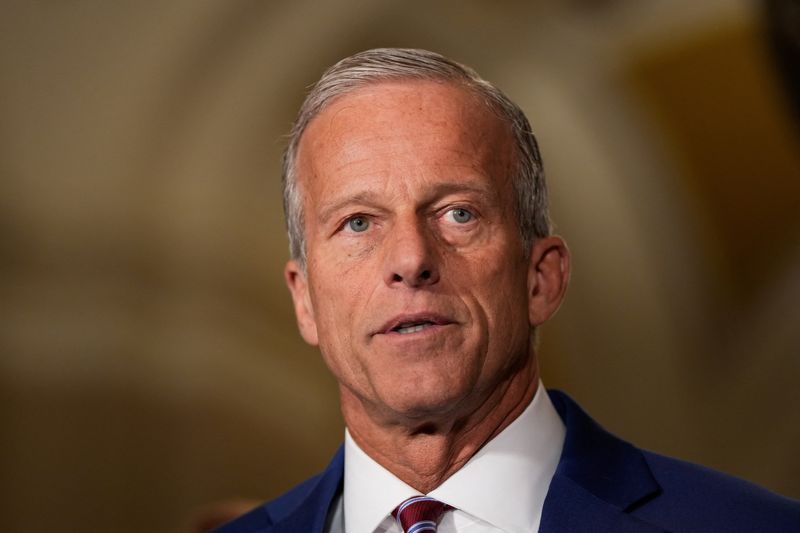
The US Senate is accelerating efforts to pass transformative cryptocurrency legislation before lawmakers break for their August recess, signalling renewed momentum in a long-running battle to establish federal oversight of digital assets. Senate Majority Leader John Thune, a Republican, filed procedural motions on Saturday to schedule a key vote on the Clarity Act when the chamber reconvenes in mid-September, potentially setting the stage for a full floor debate and vote on what would become the nation's first comprehensive crypto regulatory regime.
The legislative maneuver reflects confidence among Senate Republican leadership that they can assemble the 60 votes required under the chamber's rules to advance the measure, despite persistent Democratic resistance to several of its provisions. Republicans currently control 53 seats, meaning the bill requires support from at least eight Democratic senators alongside unified Republican backing to clear the procedural hurdle and advance to a floor vote. Such bipartisan cooperation remains uncertain, though negotiations continue on contentious elements, particularly those concerning restrictions on government officials' personal cryptocurrency investments.
At its core, the Clarity Act represents a fundamental attempt to impose order on a fragmented regulatory landscape that has frustrated crypto entrepreneurs and traditional financial institutions alike. The legislation would establish clear distinctions between digital tokens classified as securities—subject to Securities and Exchange Commission oversight—and those deemed commodities, which would fall under the Commodity Futures Trading Commission's purview. Industry advocates argue that this legal clarity is essential for legitimate cryptocurrency businesses to operate confidently within established regulatory boundaries, thereby encouraging mainstream adoption and innovation in digital finance.
The crypto industry has invested heavily in securing this legislative outcome, with companies and associated political action committees spending more than $119 million in 2024 to support candidates pledging support for the Clarity Act and related stablecoin legislation. This substantial financial commitment underscores the sector's recognition that federal regulatory clarity could fundamentally reshape the competitive dynamics between traditional finance and decentralized digital alternatives. The industry's campaign strategy has proven partially effective, as evidenced by Trump's prior signing of stablecoin legislation and his administration's current push for crypto reform during his second term.
For Malaysian and Southeast Asian observers, the Senate's actions carry significant implications. The region has become a hub for cryptocurrency activity, with jurisdictions like Singapore, Hong Kong, and increasingly Malaysia developing their own regulatory frameworks. If the Clarity Act passes, it would establish a benchmark against which regional regulators might evaluate their own approaches, potentially creating pressure for harmonised standards across Asia-Pacific markets. Additionally, a more clearly regulated US crypto market could attract institutional capital flows that presently remain cautious due to regulatory uncertainty, fundamentally altering the competitive landscape in which regional exchanges and platforms operate.
President Donald Trump has made cryptocurrency reform a cornerstone of his second-term economic agenda, viewing the sector as a strategic priority alongside his broader deregulation initiatives. Trump's personal financial interests in digital assets add tangible weight to his administration's advocacy. The president reported over $1.4 billion in income from his family's crypto ventures in the prior year, though he characterises his involvement as demonstrating confidence in the sector's long-term viability. This personal stake has prompted Democratic concerns about conflicts of interest, with some legislators demanding stronger provisions preventing government officials from profiting from cryptocurrency ventures while in office.
The financial services establishment has mounted countervailing pressure against certain provisions of the Clarity Act, particularly language permitting crypto companies to offer yield-bearing products tied to stablecoins. Banks argue such arrangements would allow cryptocurrency platforms to function as shadow banking competitors, effectively soliciting customer deposits without regulatory obligations imposed on traditional financial institutions. This banking sector opposition complicates bipartisan consensus-building, as several moderate Democrats remain sensitive to concerns raised by major financial institutions headquartered in their home states.
The legislative architecture of the Clarity Act attempts to balance competing interests through technical regulatory definitions and agency authority allocations. Rather than imposing blanket restrictions on crypto activities, the bill seeks to clarify which existing regulatory regimes apply to digital assets, thereby enabling compliance-conscious businesses to operate within established legal frameworks. Proponents contend this approach fosters innovation while maintaining financial system integrity, whereas critics worry it grants the crypto industry excessive deference and inadequate consumer protections.
Democratic leverage in negotiations hinges on their ability to withhold the eight votes necessary for passage, giving them negotiating power despite minority status. Discussions on restricting official crypto ventures remain fluid, suggesting Democrats may accept some version of the Clarity Act if Republicans agree to tougher constraints on political figures' digital asset investments. Such compromises, if reached, would reshape the final legislation's structure and signalling effects for regulators worldwide.
The timing of Senate action reflects acknowledgment that cryptocurrency issues will increasingly dominate financial regulation debates. As digital asset valuations climb and institutional adoption expands, regulatory clarity becomes a matter of competitive advantage for jurisdictions seeking to attract crypto-related economic activity. The Senate's procedural motion essentially commits to resolving this legislative matter before year-end, establishing a baseline regulatory framework that will influence how both domestic and international actors participate in evolving cryptocurrency markets throughout the coming decade.

