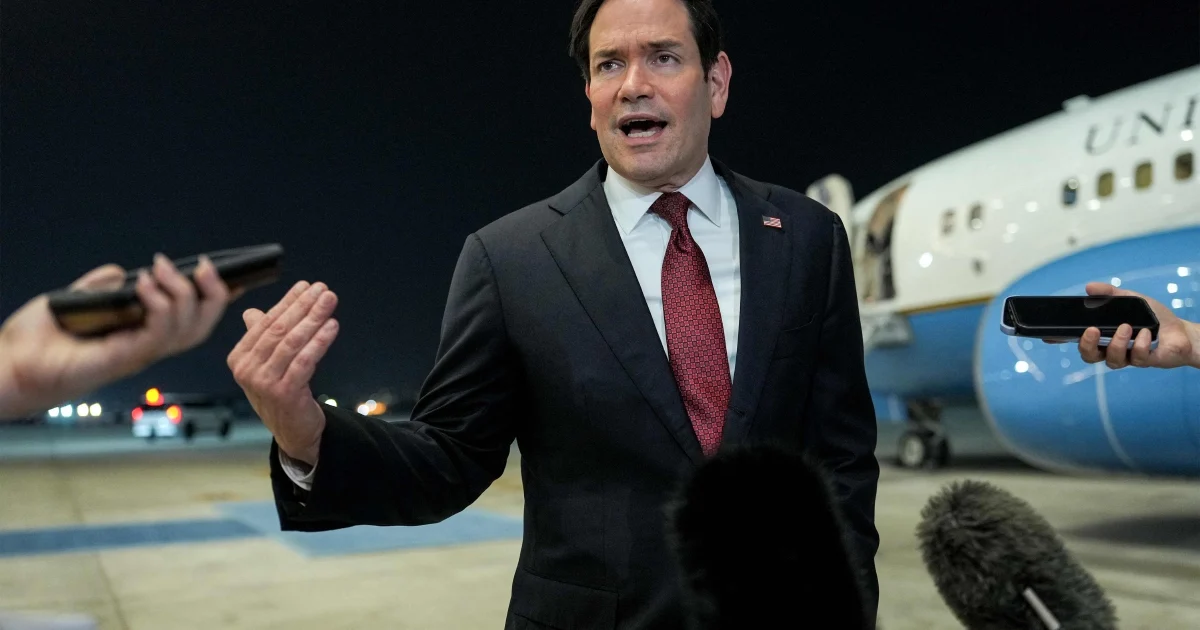
The United States has firmly ruled out accepting any levies or charges imposed by Iran on shipping through the Strait of Hormuz, according to comments made by Secretary of State Marco Rubio on Tuesday, underscoring mounting friction in preliminary talks designed to stabilize the volatile Middle East. The statement marks an early clash in diplomatic efforts that had sought to bridge longstanding divisions between Washington and Tehran, with fundamental disagreements emerging across multiple fronts including maritime commerce, atomic energy oversight, and weapons programmes.
The Strait of Hormuz represents one of the world's most economically critical maritime passages, with roughly one-fifth of global oil exports transiting its narrow waters annually. For Malaysia and other Southeast Asian economies heavily reliant on Middle Eastern energy supplies, any disruption to shipping through this chokepoint carries significant implications for regional fuel costs and supply security. The strait's strategic importance has made it a perennial flashpoint in US-Iran relations, with previous tensions triggering Malaysian concerns about energy price volatility affecting downstream industries and household budgets.
Rubio's categorical rejection of Iranian toll proposals signals that the incoming US administration is taking a hardline stance on maritime freedom of navigation, a principle Washington has historically defended through military presence and diplomatic pressure. The refusal suggests that Washington views any Iranian attempt to monetize shipping through the strait as tantamount to economic coercion, a position that aligns with American strategic doctrine emphasizing open international waterways. For Malaysia's substantial shipping and trading communities, whose vessels regularly navigate these waters, such firmness on access principles provides some reassurance regarding long-term commercial stability, though the underlying diplomatic tension introduces uncertainty.
The dispute over Hormuz tolls represents just one of several substantive disagreements complicating the negotiation landscape. Equally contentious are unresolved questions surrounding international nuclear inspections, with Washington apparently demanding robust verification mechanisms and unfettered access to Iranian nuclear facilities. Iran's historical resistance to intrusive monitoring, coupled with its assertions regarding peaceful nuclear intentions, creates a fundamental trust deficit that technical negotiations alone may struggle to overcome. These inspection disputes directly affect regional security calculations across Southeast Asia, where nations depend on international non-proliferation frameworks to prevent destabilizing weapons accumulation in strategically sensitive areas.
Missile development and weapons proliferation constitute additional layers of complexity in these nascent talks. The United States seeks constraints on Iran's ballistic missile programme and its provision of weapons to regional proxy forces, while Tehran regards such capabilities as legitimate deterrents against potential military aggression. This divergence reflects incompatible threat perceptions that may prove difficult to reconcile through conventional diplomacy. Malaysian policymakers and defence strategists monitor such developments closely, recognizing that Iranian missile capabilities and regional proxy activities have indirect ramifications for broader Asian security dynamics and international order.
The emergence of these multiple contentious issues so early in negotiations suggests that the diplomatic path ahead will prove arduous and potentially protracted. Rather than representing isolated disagreements amenable to straightforward compromise, these disputes reflect fundamentally opposed strategic worldviews and security priorities. Both Washington and Tehran appear unwilling to make significant concessions on issues they regard as core national interests, creating a dynamic where progress requires creative problem-solving rather than simple splitting of differences.
For Malaysia and the broader Southeast Asian region, the implications of prolonged US-Iran tensions extend beyond direct bilateral relations. Energy market volatility, maritime security concerns, and the broader question of regional stability all hinge partly on whether these negotiations progress or deteriorate further. Malaysian businesses with exposure to Middle Eastern markets face compounded uncertainty when diplomatic channels show signs of dysfunction, particularly given the region's historical vulnerability to supply shocks and geopolitical disruptions.
The involvement of the Strait of Hormuz in current disputes also underscores how geography intersects with geopolitics in ways that inevitably affect distant economies. Malaysian shipping companies, petrochemical industries, and consumers all maintain stakes in preventing crises that could disrupt or dramatically increase costs for commerce passing through this vital waterway. The US position defending free passage aligns with Malaysian commercial interests, though the underlying tensions generating these disputes remain deeply rooted in decades of mutual hostility and suspicion.
Looking forward, the trajectory of these negotiations will significantly influence regional stability calculus. Should talks collapse entirely, the risk of military escalation, however remote, cannot be discounted. Conversely, even a modest diplomatic breakthrough addressing any single dispute could create momentum for broader agreements. Malaysian analysts and policymakers will likely monitor developments closely, recognizing that outcomes here ripple across energy markets, maritime commerce, and the broader Asian strategic environment. The early strains evident in current discussions suggest that achieving a comprehensive settlement addressing all outstanding issues will require sustained commitment and skillful diplomacy from all parties involved.