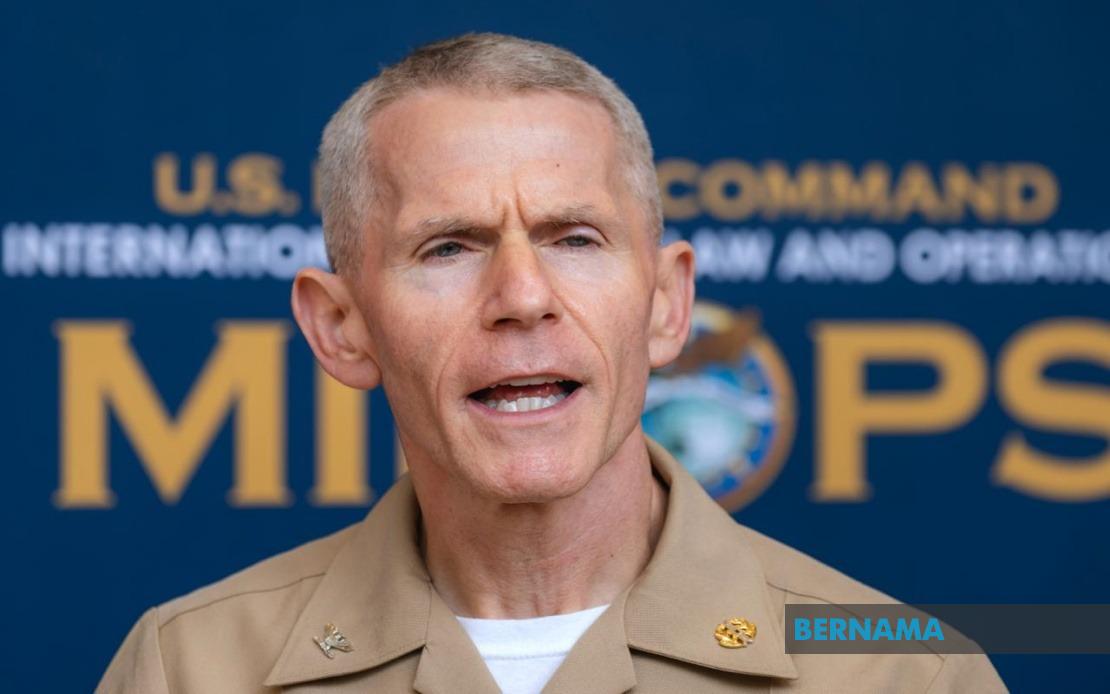
The United States Pacific Command has reiterated its determination to uphold security and stability across the South China Sea, framing its continued regional presence as essential to the broader Indo-Pacific strategy. Speaking at an international military law conference in Kuala Lumpur on Monday, USPACOM Staff Judge Advocate Navy Captain Dustin Wallace outlined the command's multifaceted approach to deterrence, emphasising that maintaining peace in these strategically vital waters forms a cornerstone of American defence policy across the region.
Wallace's comments underscore the geopolitical significance of the South China Sea, where competing territorial claims, rising military capabilities, and increasing commercial traffic create a complex security environment. The waters remain one of the world's busiest shipping lanes, with trillions of dollars in annual trade passing through chokepoints that connect global markets. For Malaysia and other Southeast Asian nations, the stability of these waters carries profound economic and strategic implications, affecting everything from energy supplies to regional supply chains. The US commitment signals Washington's intention to maintain a counterbalance to the increasing assertiveness of larger regional powers in asserting their maritime claims.
In articulating USPACOM's mission, Wallace emphasised the command's focus on preventing aggression and destabilising activities, framing these efforts within the context of established international law and maritime norms. The emphasis on freedom of navigation and freedom of commerce reflects longstanding American positions that seek to prevent any single nation from wielding excessive control over critical sea lanes. These principles resonate with the interests of maritime trading nations throughout the Indo-Pacific, including Malaysia, Singapore, and other ASEAN members whose economic prosperity depends on unimpeded access to international waters.
A particularly significant dimension of Wallace's remarks concerned the command's commitment to ASEAN centrality in regional security architecture. By explicitly endorsing ASEAN's role as the central forum for addressing regional challenges, USPACOM acknowledged the importance of respecting the collective voice of Southeast Asian nations rather than imposing solutions from outside. This diplomatic framing attempts to position American strategic interests as compatible with ASEAN's preference for managed multilateralism and consensus-based decision-making, though tensions between these approaches have periodically surfaced.
Wallace's articulation of working with each ASEAN nation according to its respective sovereign interests and priorities reflects recognition that the bloc encompasses diverse strategic outlooks and relationships with major powers. Indonesia, Vietnam, the Philippines, and Malaysia each maintain distinct security concerns and diplomatic alignments, necessitating tailored approaches rather than one-size-fits-all policies. This differentiated strategy allows the US to deepen partnerships with countries that share similar strategic perspectives while maintaining functional relationships with all ASEAN members, avoiding the appearance of divisive bloc competition.
The conference itself, MILOPS 26, serves as a venue for advancing dialogue on military law, operations, and policy among regional and international stakeholders. Hosted jointly by USPACOM, Malaysia's Defence Ministry, and the Malaysian Armed Forces, the gathering brought together more than 300 participants from over 30 countries, reflecting the conference's significance as a platform for shaping norms and expectations governing military conduct in the Indo-Pacific. The presence of military leaders, legal experts, and policymakers suggests an effort to build consensus around rule-of-law principles and the equality of nations under international maritime law.
The conference's theme, "From the Seabed to Space: Advancing Security, Freedom, and Prosperity for All Across the Indo-Pacific," encapsulates the breadth of contemporary security challenges facing the region. By explicitly linking security to freedom and prosperity, organisers emphasised that regional stability generates tangible benefits beyond military considerations, affecting economic growth, technological development, and environmental management. For Malaysian policymakers and business leaders, this framing reinforces arguments for maintaining stable, rules-based international order rather than allowing great-power competition to descend into conflict.
Wallace's emphasis on strengthening existing partnerships and building new relationships reflects USPACOM's recognition that sustained American influence in the Indo-Pacific requires continuous engagement and demonstrated commitment. Military-to-military relationships, training exchanges, and joint operations serve both to build interoperability and to signal alliance credibility. For ASEAN nations like Malaysia, maintaining these relationships provides access to advanced military technology, training opportunities for armed forces personnel, and reassurance regarding American security commitments during periods of regional uncertainty.
The broader context of USPACOM's statements involves managing the rise of Chinese military capabilities and influence in the region. Without explicitly naming Beijing, references to deterring aggression and destabilising activities implicitly address concerns about assertive behaviour in disputed maritime zones. Southeast Asian nations have increasingly sought to navigate between great-power competition while protecting their own interests, and American statements emphasising respect for sovereignty and international law provide diplomatic cover for regional states pursuing independent foreign policies.
For Malaysia specifically, USPACOM's commitment to regional security carries particular relevance given the country's location along major shipping routes and its claims in the South China Sea. The emphasis on freedom of navigation supports Malaysian interests in maintaining open sea lanes for commerce while the stress on working with each nation according to its interests allows Kuala Lumpur flexibility in managing its complex relationships with China, the United States, and fellow ASEAN members. Malaysia's role as host for MILOPS 26 also enhances its profile as a serious participant in regional security discussions rather than a passive observer of great-power competition.
The conference's focus on rule of law and sovereign equality reflects an attempt to legitimise international maritime norms through inclusive dialogue rather than unilateral imposition. By bringing together military lawyers and policymakers from diverse countries, organisers seek to build shared understanding of how international law should govern military operations, disputes resolution, and the treatment of neutral vessels. This legalistic approach appeals to Southeast Asian nations that prefer managing disputes through established frameworks rather than through military confrontation or power politics.
Looking forward, USPACOM's sustained commitment to the region depends on maintaining the diplomatic balance required to work effectively with all regional partners. The command's stated flexibility in adapting its approach to each nation's sovereign interests provides a framework for managing the diverse preferences within ASEAN while advancing core American strategic objectives. For Malaysia and other Southeast Asian nations, continuing to engage constructively with USPACOM while maintaining strategic autonomy represents the optimal position for protecting national interests amid ongoing great-power competition.

