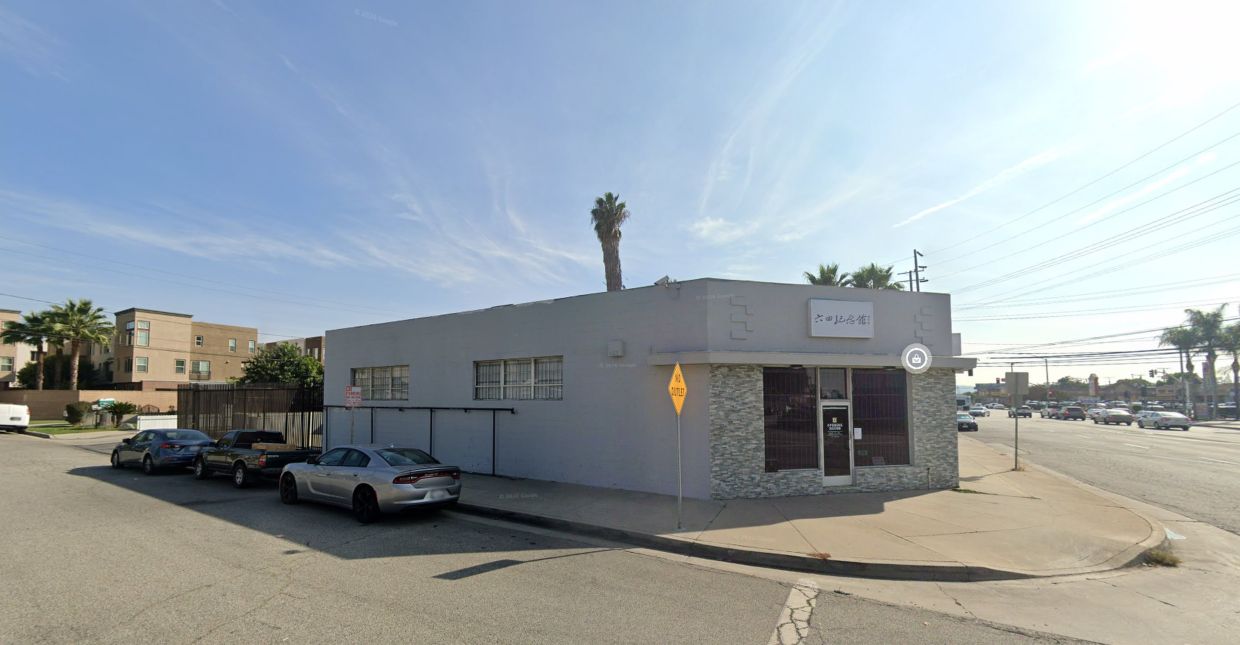
Two influential Republican figures in Congress have formally requested that the United States Justice Department conduct a comprehensive investigation into the vandalism and break-in at the June 4th Memorial Museum in El Monte, California, voicing concerns that the incident may represent state-sponsored intimidation targeting the Chinese diaspora. The demand, articulated in a formal letter delivered to federal authorities on Thursday, reflects escalating tensions over what some American officials regard as transnational repression efforts by Beijing.
John Moolenaar, who chairs the House Select Committee on China, and Christopher Smith, co-chairman of the Congressional-Executive Commission on China, co-authored the three-page missive urging the Justice Department and Federal Bureau of Investigation to examine whether the attack was orchestrated, endorsed, or carried out by agents of the People's Republic of China or its ruling Communist Party. Their intervention signals that this incident has transcended a simple criminal matter and entered the realm of high-level diplomatic and national security concern.
The museum, established in 2023 as a non-profit institution documenting the June 4, 1989 military crackdown on democracy protesters in Beijing's Tiananmen Square, reported that intruders breached the facility on May 31—strategically timed just days before the annual commemoration of the incident. The perpetrators spray-painted walls and displays with orange paint, damaged property, and disabled surveillance equipment, according to a statement released by the museum. Photographs circulated on social media captured the vandalism, showing deliberate streaking across framed newspaper clippings and exhibition materials.
The museum's public response underscored both defiance and concern, with officials stating they would not be intimidated despite acknowledging that the break-in contained clear elements of intimidation and threat. The institution, which operates as a grassroots endeavour funded through independent fundraising and crowdsourced donations from civil society supporters, suggested that the incident bore hallmarks of what activists and some analysts term "transnational repression"—the projection of state power beyond a nation's borders to silence political opponents and suppress dissent among expatriate communities.
For Malaysian readers and those throughout Southeast Asia, this episode illuminates broader patterns of concern among Western democracies regarding authoritarian influence operations targeting diaspora communities. The six-year history of deteriorating United States-China relations, punctuated by competing efforts to shape narratives about human rights and historical memory, has manifested in incidents such as this. The vandalism of a museum dedicated to remembering victims of state violence represents, in the eyes of American lawmakers, a disturbing attempt to erase or suppress historical narratives deemed inconvenient by Beijing.
The museum's relocation from New York to the Los Angeles area in 2023, undertaken primarily for cost considerations, placed it within the jurisdiction of expanding Chinese diaspora communities in Southern California. According to the museum's founding supporters, the institution had initially raised approximately $500,000 toward an ambitious $2 million endowment goal through the collaborative efforts of online artist collectives and independent donors committed to preserving the historical record of 1989. This modest financial foundation contrasts sharply with the resources typically available to state-backed institutions, rendering the museum vulnerable to disruption.
The Congressional letter represents the latest manifestation of scrutiny directed at Beijing's conduct by bipartisan American lawmakers increasingly focused on China-related matters. Both the House Select Committee on China, established in January 2023, and the Congressional-Executive Commission on China, created two decades earlier following Beijing's entry into the World Trade Organization, have expanded their oversight activities and investigative capacities. Though neither body possesses legislative authority, both wield considerable influence through their capacity to investigate, issue policy recommendations, and shape the contours of congressional debate regarding United States-China relations.
The Congressional-Executive Commission historically monitors human rights conditions and rule-of-law challenges across China, making the vandalism of a Tiananmen memorial squarely within its purview. Its involvement signals that American legislators perceive this incident not as isolated vandalism but as emblematic of broader patterns of suppression targeting the Chinese diaspora and international civil society actors engaged in documentation and commemoration activities. The bipartisan nature of the lawmakers' response underscores that concern about Chinese government conduct transcends typical partisan divides in Washington.
The El Monte Police Department initiated its own investigation following the museum's report, with officials indicating they had gathered preliminary evidence and would collaborate with federal authorities should the case proceed to the Justice Department. However, neither local law enforcement nor the Justice Department had immediately confirmed receipt of the Congressional letter or announced plans for a federal inquiry at the time of reporting. The Chinese embassy in Washington has historically declined to comment on such matters, though Beijing's official posture toward Congressional bodies engaged in China criticism has remained consistently dismissive, characterising these institutions as "political tools with zero credibility" motivated by Cold War mentality and ideological hostility.
For Southeast Asian observers, this episode carries implications extending beyond bilateral United States-China dynamics. Many regional governments maintain careful diplomatic balances between Washington and Beijing, often hosting their own diaspora communities with complex historical grievances. The incident raises questions about whether similar targeting of memorial sites, cultural institutions, or civil society organisations documenting contested historical events might occur throughout Asia-Pacific democracies. The willingness of American lawmakers to invoke federal law enforcement resources against potential transnational repression establishes a precedent that other democracies may study as they confront comparable challenges.
The vandalism also reflects the intensifying competition between Washington and Beijing over control of historical narratives and memory. The June 4th commemoration remains officially prohibited in mainland China, with online references and memorials systematically suppressed. The existence of the museum in California represents an attempt by diaspora activists to preserve and transmit historical memory beyond the reach of Chinese government censorship. The attack on this institution can thus be understood as part of a broader contestation over whose version of history prevails, conducted across borders through digital and physical means.
Looking forward, the investigation requested by American lawmakers will likely yield insights into the sophistication and scope of efforts directed at silencing or intimidating diaspora communities engaged in historical documentation. Should federal investigators determine that the vandalism involved coordination with or encouragement by Chinese state actors, it would constitute a significant escalation in transnational repression tactics. Conversely, if the incident proves to be the work of unaffiliated perpetrators, it would nonetheless raise questions about the climate of intimidation that prompts diaspora institutions to suspect state involvement even in the absence of direct evidence. Either outcome underscores the fragility of free expression and historical memory work in an era of intensified geopolitical competition.

