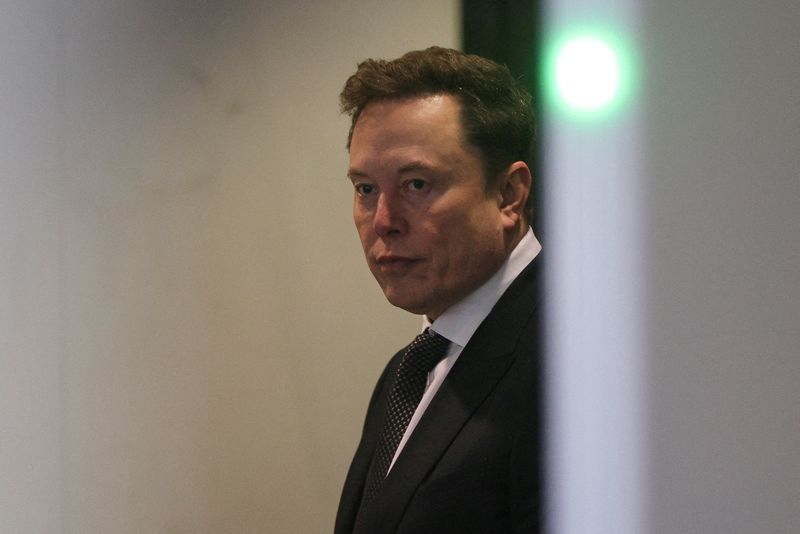
A United States federal judge has given her approval to a settlement between the Securities and Exchange Commission and Elon Musk regarding his purchase of Twitter shares, even while voicing substantial concerns that the agreement may have let one of the world's wealthiest individuals off lightly. U.S. District Judge Sparkle Sooknanan in Washington, D.C. signed off on the deal on Wednesday, though she made clear her unease with what she perceived as potential red flags surrounding the accord's terms and conditions.
The underlying dispute centers on Musk's delayed disclosure of early Twitter share purchases made in March and April 2022. Regulators alleged that the billionaire entrepreneur took eleven days longer than required to reveal these transactions to the market. According to the SEC's position, this delay proved financially advantageous to Musk, allowing him to accumulate stock at depressed prices before public knowledge of his involvement drove valuations upward. The agency calculated that Musk saved approximately $150 million through this timing advantage. Musk has consistently maintained that the disclosure delay was unintentional rather than calculated.
Under the settlement framework, a trust established in Musk's name will transfer $1.5 million to address the SEC's enforcement allegations. While the SEC characterised this as the largest penalty of its kind, Judge Sooknanan questioned why the regulator had not pursued its traditional remedy of requiring disgorgement of ill-gotten gains to compensate affected parties. The judge noted that the SEC's justification—that it had not historically sought disgorgement in comparable cases—raised uncomfortable questions about the appropriateness of the settlement arrangement itself.
Judge Sooknanan's written decision articulated her frustration with the structural design of the settlement. She wondered aloud why the SEC negotiated directly with Musk's trust rather than with Musk personally, a distinction that allowed the billionaire to publicly declare himself exonerated of wrongdoing. This arrangement struck the judge as unusual and potentially problematic, particularly given the substantial sums involved and the high-profile nature of the case. The judge emphasised that while courts must respect consent judgments, they are not merely rubber stamps passively approving whatever regulatory agencies and defendants negotiate.
A particularly revealing moment in the judge's reasoning emerged from her observation about the settlement's genesis. She noted that in May, when SEC lawyers appeared at a prior court hearing, they seemed genuinely surprised to learn that settlement discussions had already progressed between Musk's legal team and the regulator. This apparent disconnect raised troubling questions about the internal coordination and decision-making processes within the SEC itself. The judge explicitly wondered whether the regulator would extend comparable accommodation to other alleged securities law violators, or whether this represented a singular arrangement tailored specifically for Musk.
The timing of the settlement carries additional significance. The deal was announced on May 4, shortly after the departure of Margaret Ryan from her position as the SEC's enforcement chief in March. Ryan's exit followed only six months in the role and reportedly involved disagreements with other agency leadership regarding enforcement priorities and strategy. Her departure seemingly coincided with a shift in how the agency approached the Musk case, creating an impression, in Judge Sooknanan's assessment, that the change in leadership may have influenced the settlement's terms.
Musk's Tesla and SpaceX empire, along with his ownership of the social media platform now known as X (formerly Twitter), underscore the magnitude of his financial interests in regulatory outcomes. He acquired Twitter in October 2022 for $44 billion and subsequently integrated it into his broader business portfolio alongside his aerospace and automotive ventures. With a net worth exceeding $927 billion according to Forbes, Musk represents the kind of concentrated financial power that historically draws regulatory scrutiny. His prior role as an adviser to President Donald Trump added a political dimension to the judge's assessment, particularly given that the judge herself was appointed by former President Joe Biden.
The SEC attempted to defend its settlement in subsequent filings, asserting that no collusion had occurred in reaching the agreement and characterizing the $1.5 million penalty as substantial for its category. Agency officials also highlighted an injunction embedded within the settlement that would bind Musk when acting through his trust structure, which they noted constitutes the vehicle through which he manages much of his accumulated wealth. This injunction, the SEC argued, provides meaningful protection to the public by constraining Musk's ability to engage in similar conduct going forward.
Despite her approval, Judge Sooknanan made abundantly clear that she viewed the settlement through a lens of skepticism. Her decision distinguished sharply between her limited judicial role—assessing whether an agreement meets minimum fairness and reasonableness standards—and her responsibility to ensure that regulatory settlements do not become instruments that undermine public confidence in law enforcement. She explicitly rejected the notion that courts should function as rubber stamps for agency-defendant agreements, while simultaneously acknowledging the reality that fundamental questions about regulatory adequacy ultimately rest with voters and democratic processes rather than the judiciary alone.
For regional observers and readers across Malaysia and Southeast Asia, the Musk settlement illustrates broader patterns in how wealthy individuals navigate regulatory frameworks in developed economies. The case demonstrates how settlement negotiation dynamics, personnel changes, and procedural structures can influence outcomes in high-stakes regulatory disputes. It also highlights the tension between regulatory effectiveness and practical constraints on judicial oversight, a dynamic particularly relevant to developing jurisdictions that are building or refining their own regulatory institutions. The judge's expressed misgivings suggest that even when legal requirements are technically satisfied, substantial questions may persist about fairness and equitable treatment under securities law regimes.
The implications extend beyond Musk's particular circumstances to broader questions about regulatory consistency and the special treatment of billionaire entrepreneurs. Judge Sooknanan's decision to approve the settlement while simultaneously expressing significant reservations represents a delicate judicial balance—respecting agency authority while flagging concerns for public consideration. Her emphasis that electoral politics rather than courts should ultimately determine whether regulators have done enough to hold powerful individuals accountable reflects judicial restraint, yet it simultaneously places responsibility squarely on democratic institutions to scrutinize regulatory choices in politically polarized environments.

