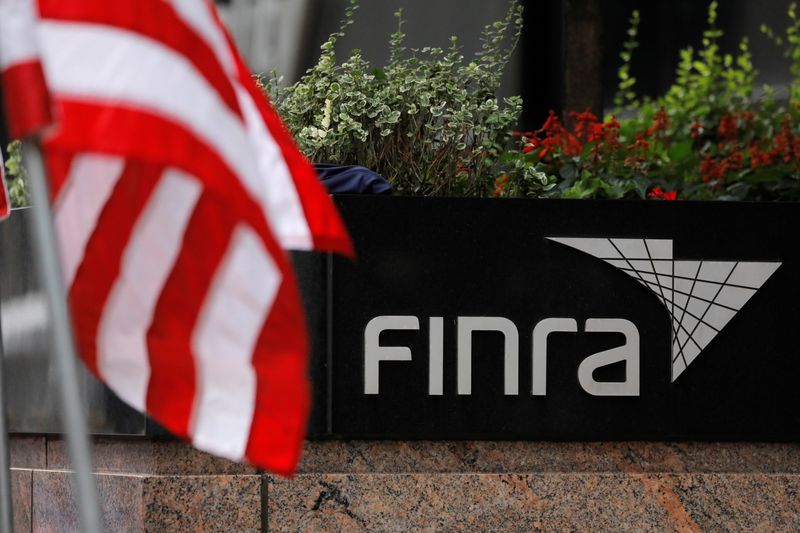
Steven Price has departed his position as senior vice president of market investigations at the Financial Industry Regulatory Authority (FINRA), one of Wall Street's most prominent regulatory bodies, to take the role of chief compliance officer at Finalis, a San Francisco-based fintech firm focused on dealmaking infrastructure. The move, announced Thursday by Finalis, underscores the competitive pressures reshaping the investment banking landscape as technology-enabled startups and boutique operations begin drawing talent away from established regulatory and financial institutions.
During his six-year tenure at FINRA, which operates as a self-regulatory organization overseeing broker-dealers across the United States, Price held significant enforcement responsibilities. He directly managed a portfolio encompassing thousands of investigations into potential securities violations, positioning him among the most influential figures in Wall Street's compliance architecture. His investigative work covered complex matters including insider trading allegations and suspected market manipulation—regulatory domains that remain central to protecting market integrity.
Price's final responsibilities at FINRA centered on oversight of the regulator's most sophisticated compliance operations. He directed investigations into potential breaches of securities law and previously spearheaded the development of the National Cause Program, an innovative initiative that deployed artificial intelligence to transform how FINRA processes compliance information. This AI-driven model fundamentally reorganized the watchdog's approach to centralizing and analyzing incoming complaints, tips, and referrals concerning potential misconduct, enabling faster identification of patterns and suspicious activities across the massive trading ecosystem.
The transition reflects broader transformations occurring within investment banking and financial services globally. Fintech platforms and specialized boutiques are increasingly capturing market share historically dominated by traditional Wall Street powerhouses. This shift has enabled individual bankers and deal professionals at large firms to establish independent operations, targeting smaller transactions and specialized sectors that larger institutions find less economically attractive. The democratization of deal-making technology allows these emerging competitors to operate with dramatically leaner organizational structures than their established counterparts.
Finalis exemplifies this new dealmaking model by providing the essential compliance infrastructure and regulatory licensing frameworks that boutique operations require to function independently. Rather than attempting to replicate the full service offerings of traditional investment banks, Finalis focuses specifically on enabling smaller firms to execute transactions efficiently. The company leverages artificial intelligence and automation to handle analytical and administrative tasks that conventionally required extensive teams at major Wall Street institutions. This technological substitution fundamentally changes the unit economics of dealmaking, allowing boutiques to operate profitably at transaction sizes that would be uneconomical for legacy firms burdened by larger overhead structures.
Finalis was founded in 2020 by Federico Baradello, an M&A lawyer who previously practiced at Kirkland & Ellis, one of the world's most prestigious corporate law firms. Since inception, the company has facilitated approximately $34 billion in transaction volume, demonstrating meaningful adoption within the dealmaking community. The scale of transactions processed suggests that Finalis has successfully positioned itself as a credible infrastructure provider, not merely an experimental platform but an established intermediary in the contemporary M&A ecosystem.
Price's appointment as chief compliance officer carries particular significance given his enforcement background. His decision to transition from regulatory oversight to supporting compliance at a fintech firm signals confidence in the legitimacy and governance standards of these emerging platforms. Furthermore, his expertise in deploying AI-driven compliance systems positions him to implement sophisticated monitoring protocols at Finalis, potentially creating competitive advantages in regulatory relationships and operational integrity. For a startup still establishing its institutional credibility, recruiting someone with Price's regulatory pedigree represents a substantial signal regarding governance maturity.
In his explanation for the move, Price noted that the opportunity to apply regulatory lessons learned at FINRA to accelerate dealmaking processes and connect relevant parties more efficiently represented compelling motivation. This language suggests that fintech platforms are positioning themselves not as deregulated alternatives to traditional finance, but rather as more efficient implementations of existing compliance principles. This framing may prove significant in ongoing discussions about fintech regulation, as it positions technological innovation as complementary to, rather than antagonistic toward, established oversight frameworks.
The departure also reflects broader talent dynamics affecting financial regulators. As fintech and investment banking opportunities expand, regulatory agencies face increasing difficulty retaining experienced personnel, particularly those with specialized technical knowledge in areas like AI implementation and complex enforcement matters. FINRA's lack of public comment on Price's departure may indicate a normalized acceptance of such transitions, or perhaps recognition that competition for skilled compliance and enforcement talent has fundamentally intensified.
For Malaysian and Southeast Asian financial professionals, this development holds instructive implications. As regional regulators consider appropriate governance frameworks for emerging fintech platforms and boutique investment banking operations, the Finalis model and Price's recruitment illustrate how sophisticated startups are building legitimacy through rigorous compliance architecture and experienced personnel. This suggests that the future competitive landscape in Asian financial markets will likely reward platforms that combine technological innovation with institutional-grade governance, rather than those pursuing purely deregulatory strategies.
The transaction demonstrates that disruption in global investment banking is not a theoretical future scenario but an active present-tense reality reshaping talent flows, institutional relationships, and competitive dynamics. As artificial intelligence continues advancing analytical capabilities and regulatory compliance becomes increasingly automatable, the traditional barriers to entry protecting large financial institutions from smaller competitors will continue eroding. Organizations like Finalis, backed by experienced professionals transitioning from regulatory backgrounds, exemplify how this transformation proceeds.

