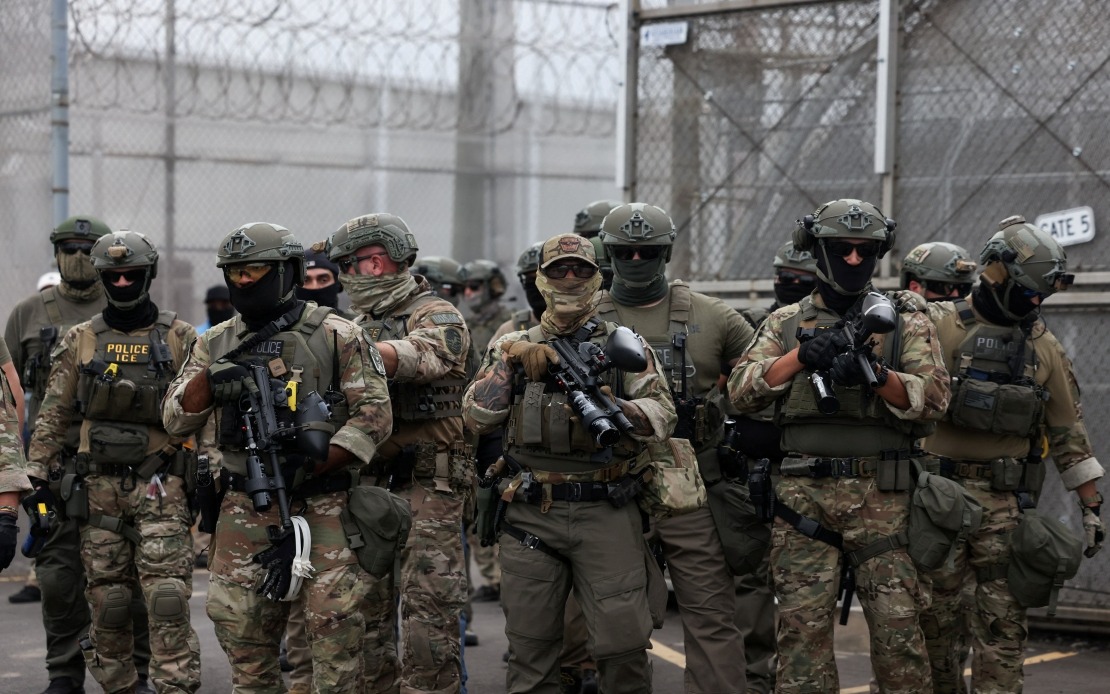
A federal court judge in California has issued a nationwide injunction preventing United States Immigration and Customs Enforcement from conducting arrests of migrants within and around immigration courthouses, effectively dismantling a contentious enforcement tactic that has defined the opening months of President Donald Trump's second term.
The judicial decision strikes at the heart of the Trump administration's more aggressive approach to immigration enforcement, which accelerated following the president's inauguration earlier this year. The new guidelines that ICE implemented at the start of this term specifically emphasized the operational advantages of conducting arrests at courthouses, where migrants are typically present to address deportation proceedings. The court's intervention now prevents the agency from pursuing this particular enforcement avenue nationwide.
Immigration courts across the United States handle a substantial volume of cases involving foreign nationals who face potential removal from the country. These proceedings are central to the American immigration system, determining the fates of millions who lack legal status or whose immigration cases remain unresolved. Prior to last year, courthouse arrests were uncommon, but ICE dramatically shifted its enforcement posture and began systematizing arrests at these venues, casting a wide net that sometimes caught migrants before their hearings had even concluded.
The consequences of this practice rippled through immigrant communities and sparked widespread concern among legal advocates. By apprehending individuals at courthouses, critics argued that ICE was weaponizing the judicial process itself, transforming venues meant for legal adjudication into enforcement hotspots. Migrants facing deportation proceedings already operate under tremendous stress and uncertainty; the added risk of arrest at court created a powerful disincentive to attend hearings, potentially depriving individuals of opportunities to present their cases before judges. Legal scholars and civil rights organizations warned that this approach fundamentally compromised due process protections that form the bedrock of American jurisprudence.
In its legal reasoning, the federal judge emphasized that ICE had failed to provide adequate justification for abandoning its previous restraint at courthouses. The agency offered operational arguments for why courthouse arrests served immigration enforcement objectives, but the court found these explanations insufficient. The judge noted that the government had not adequately grappled with or addressed the significant concerns surrounding such arrests, particularly regarding how the practice might discourage migrants from exercising their right to legal proceedings or otherwise undermine the fairness of the immigration court system.
The decision underscores the broader tension between executive enforcement authority and judicial oversight in immigration matters. The Trump administration has positioned aggressive deportation enforcement as a central governing priority, and the president has signaled strong commitment to removing undocumented immigrants and those he characterizes as security threats. Courthouse arrests fit neatly within this enforcement framework, offering ICE concentrated opportunities to apprehend targets. The court ruling, however, represents a significant check on this executive momentum, demonstrating that federal judges retain power to constrain immigration enforcement when they conclude it violates legal principles.
For the immigration bar and civil rights advocates, this ruling marks a meaningful victory in an increasingly difficult landscape. Immigration attorneys have grown accustomed to defending clients under heightened enforcement pressure, but the courthouse arrest tactic presented particular challenges because it blurred the line between the judicial and enforcement functions. Attorneys worried that their clients would face arrest while seeking legal representation, compounding the already formidable obstacles that undocumented immigrants face in navigating the legal system.
The ruling carries implications that extend beyond the immediate question of courthouse enforcement tactics. It signals judicial willingness to scrutinize immigration enforcement decisions and to demand that agencies provide reasoned explanations for policy shifts, even when those shifts occur at the executive level. This requirement for administrative justification represents an important procedural protection against arbitrary government action.
The nationwide scope of the injunction means that ICE cannot circumvent the ruling by simply concentrating enforcement efforts in particular jurisdictions or circuits. Every immigration courthouse across the country is now protected from the agency's arrest operations, at least pending any appeals or subsequent legal developments. This comprehensive geographic reach reflects the judge's assessment that the due process and fairness concerns at stake are fundamental rather than regional.
As the Trump administration weighs its options for appealing this decision or crafting alternative enforcement strategies, the ruling demonstrates that immigration enforcement remains subject to constitutional and statutory constraints. While the president and his appointed officials retain substantial latitude in setting immigration priorities, courts retain the authority to ensure that those priorities are pursued through legally defensible methods. The decision also highlights the continuing role that judicial branch oversight plays in policing executive overreach, even in areas like immigration where courts have traditionally afforded agencies significant deference.
For Southeast Asian observers, particularly those in nations with substantial diaspora communities in the United States, the ruling underscores the complex legal landscape that migrants navigate. Many Malaysians and other Southeast Asians work and live in the United States with varying immigration statuses, and enforcement priorities that expand ICE's reach have direct consequences for these communities. This judicial intervention provides some protection for vulnerable immigrants, though the broader enforcement environment remains contested and subject to ongoing legal disputes.