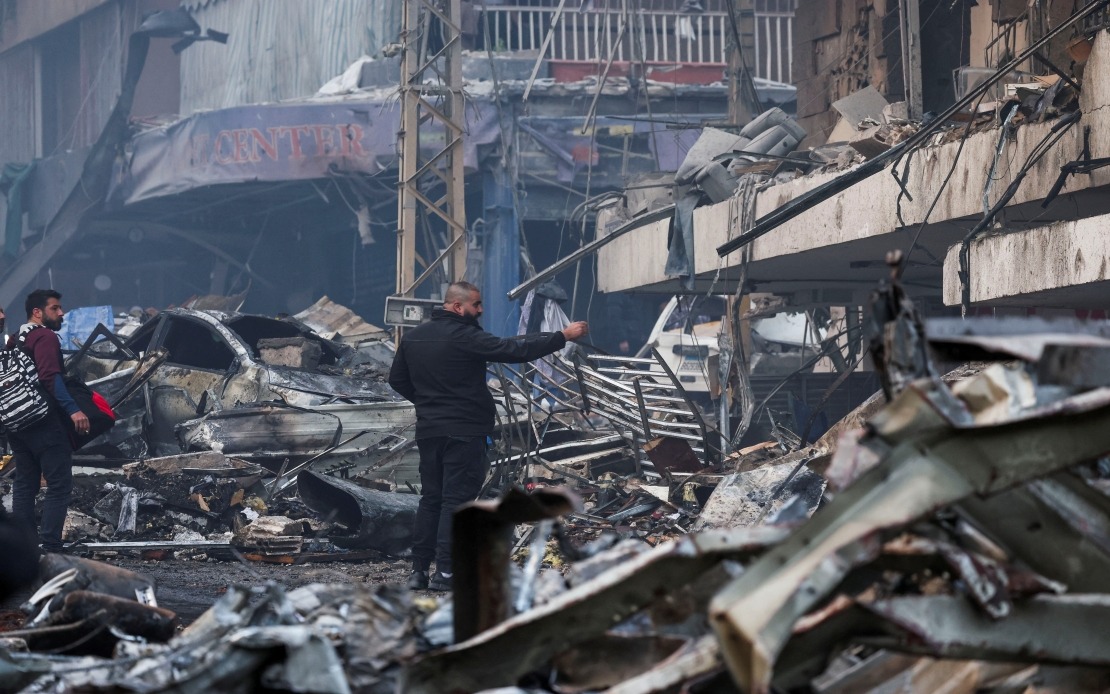
The United States has deployed a new monitoring mechanism through its military's Central Command to observe and report on the escalating conflict between Israeli forces and Hezbollah in Lebanon on a continuous basis. The initiative reflects Washington's intensified diplomatic engagement in the region following recent high-level communications between US Secretary of State Marco Rubio and both Israeli Prime Minister Benjamin Netanyahu and Lebanese President Joseph Aoun. According to unnamed US officials, the surveillance system aims to provide immediate visibility into ground conditions as international mediators pursue diplomatic resolutions to end the cycle of violence affecting Lebanon and the broader Middle East.
The establishment of this real-time tracking capability comes as officials from both Israel and Lebanon prepare to arrive in Washington for direct negotiations scheduled between June 23 and 25. These talks, which will be facilitated by the United States, represent a critical juncture in efforts to transform temporary ceasefire arrangements into durable peace and security agreements. The US government has framed the monitoring mechanism as essential infrastructure supporting these negotiations, enabling both parties to verify compliance with any agreements reached and build confidence in the diplomatic process. American officials emphasise that the ultimate objective extends beyond managing the current conflict to establishing a comprehensive framework addressing the legitimate security concerns of both nations as sovereign states.
The timing of this announcement coincides with a broader international effort to stabilise the region through parallel diplomatic channels. Qatar and Pakistan, acting as mediators, released a joint statement following the conclusion of US-Iran talks conducted at the Burgenstock resort in Switzerland. These mediators announced agreement on establishing what they termed a "de-confliction cell" that would bring together representatives from the United States, Iran, and Lebanon to monitor adherence to ceasefire obligations. The multi-layered approach—combining American military surveillance with international mediation structures—suggests recognition among major powers that sustainable peace requires both technical oversight mechanisms and diplomatic engagement.
The broader context involves a significant diplomatic breakthrough between Washington and Tehran. Last week, the two countries remotely signed a memorandum of understanding that establishes a 60-day window for intensive negotiations on multiple contentious issues. This framework addresses not only the immediate conflict in Lebanon but also longstanding disputes regarding Iran's nuclear programme, its enriched uranium stockpile, and broader regional stability concerns. The agreement commits all parties to immediate and permanent cessation of military operations across all theatres, removal of the US naval blockade on Iran, and guarantees for safe passage of commercial shipping through the strategically vital Strait of Hormuz.
For Southeast Asian observers, these developments hold significant implications. The region's economies remain sensitive to disruptions in Middle Eastern stability, particularly regarding maritime trade routes and energy supplies. The Strait of Hormuz remains one of the world's most critical chokepoints for global oil commerce, with several Southeast Asian nations heavily dependent on stable shipping through these waters. Malaysia, Singapore, and other regional trading hubs maintain substantial commercial interests in both Iranian and broader Middle Eastern markets. Any escalation in Lebanon-Israel tensions could affect regional insurance costs, shipping delays, and energy prices that flow through to Malaysian consumers and businesses.
The diplomatic architecture being constructed also reflects a shift in how the United States coordinates complex regional interventions. By establishing technical monitoring systems while simultaneously pursuing multiple mediation tracks through international partners, Washington appears to be building redundancy into its approach. This layered strategy acknowledges that no single mechanism—whether military surveillance or bilateral diplomacy—can independently resolve entrenched conflicts. The involvement of Qatar and Pakistan as facilitators of the US-Iran de-confliction cell represents acknowledgment that regional actors often possess credibility and access that outside powers cannot replicate.
The 14-point memorandum of understanding between Washington and Tehran establishes ambitious parameters for regional de-escalation. Beyond the immediate military operational requirements, the agreement addresses fundamental grievances on both sides that have fuelled regional tensions for decades. The commitment to remove the US naval blockade addresses Iranian economic concerns, while international monitoring of nuclear arrangements addresses Western security anxieties. The guarantee of commercial passage through the Strait of Hormuz essentially internationalises what has historically been a source of regional friction, potentially benefiting all maritime trading nations including Malaysia.
However, the success of these monitoring and mediation mechanisms depends critically on the willingness of all parties to honour their commitments. Historical precedent in Middle Eastern negotiations suggests that technical arrangements, while necessary, frequently prove insufficient without sustained political will and mutual confidence-building. The 60-day negotiating window represents a relatively compressed timeline for resolving issues that have accumulated over decades. Both the real-time CENTCOM monitoring system and the international de-confliction cell will face tests as negotiators work through specific implementation details and competing interests emerge during the diplomatic process.
For Malaysian policymakers and business leaders, the current diplomatic window presents both risks and opportunities. Should these negotiations succeed, Southeast Asian shipping and energy markets could benefit from improved regional stability and reduced conflict-related disruptions. Conversely, if negotiations falter, the region could face renewed volatility affecting commodity prices and maritime insurance premiums. Malaysia's position as a major trading nation and significant player in global supply chains means that Middle Eastern stability directly affects domestic economic performance. The involvement of Pakistan and Qatar as official mediators also strengthens the case for Southeast Asian nations to coordinate with both traditional allies and emerging diplomatic partnerships in managing regional risks.
The announcement of these monitoring mechanisms and diplomatic processes reflects broader recognition that managing the Israel-Hezbollah conflict requires coordinated international effort combining technological capability, diplomatic expertise, and mediator credibility. Whether through CENTCOM surveillance, de-confliction cells, or memoranda of understanding, the architecture being deployed suggests policymakers across multiple nations have concluded that military escalation serves no party's interests. The coming weeks will determine whether this multilayered approach can transform rhetoric into genuine de-escalation and whether the 60-day negotiating window produces substantive agreements that reshape Middle Eastern dynamics in ways that benefit broader international stability.