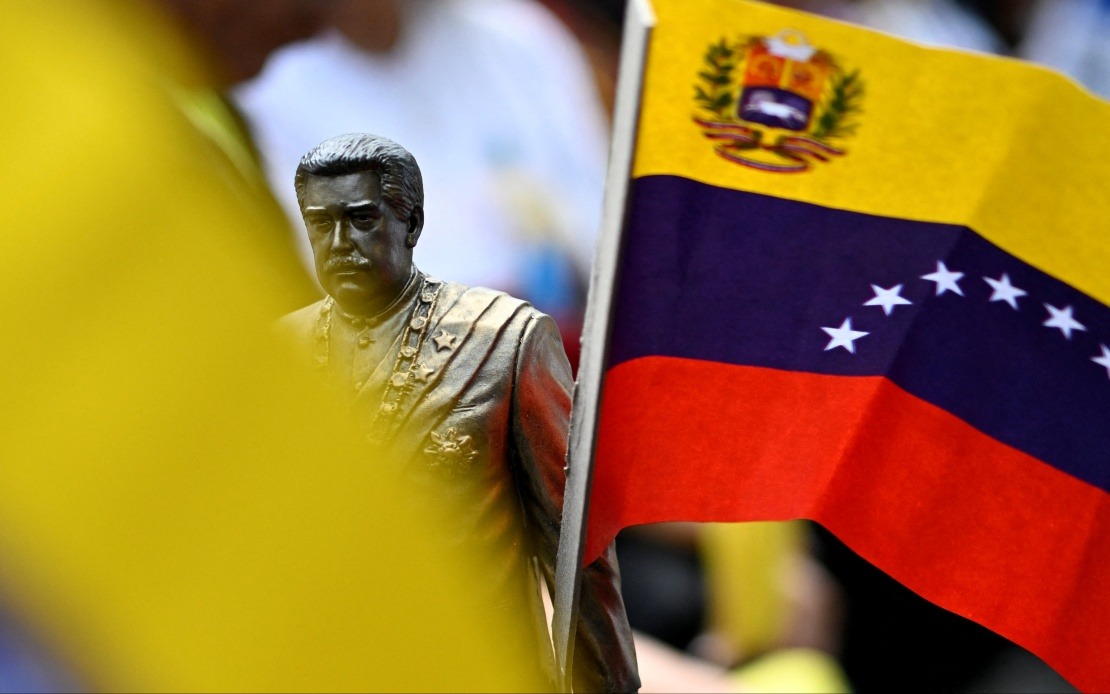
A United States federal judge has scheduled the trial of Venezuelan President Nicolas Maduro and his wife Cilia Flores to begin on June 1, 2027, following a brief hearing in a Manhattan courthouse on Wednesday. The pair, who have maintained their not-guilty pleas to charges of drug trafficking and illegal firearms transactions, made their third appearance before the court since their controversial capture. Judge Alvin Hellerstein established the trial date during a 15-minute proceeding that proceeded largely as anticipated by legal representatives from both the prosecution and defence.
The case stems from a dramatic military operation conducted by the United States in early January, when American armed forces conducted what officials characterised as a targeted operation in Venezuela. Maduro and his wife were taken into custody and subsequently transported to New York, where they have remained detained at the Metropolitan Detention Centre in Brooklyn. Since their initial arraignment on January 5, during which Maduro entered not-guilty pleas to all charges against him, the couple has remained in custody pending trial, marking an unprecedented situation in contemporary international relations.
Maduro's legal team, led by attorney Barry Pollack, has signalled its intention to challenge the very foundation of the prosecution by raising sovereign immunity as a defence. This legal strategy represents a fundamental challenge to the court's jurisdiction, arguing that a sitting president of a recognised nation cannot be prosecuted in foreign courts for actions taken in their official capacity. Should this immunity challenge succeed, it would effectively terminate the entire case without requiring Maduro to defend himself against the underlying allegations. The timeline to June 2027 provides substantial opportunity for this procedural battle to unfold before any trial on the merits occurs.
The capture and detention of Maduro have generated significant international controversy and sparked concerns about precedent within the global community. Demonstrations took place outside the heavily guarded Manhattan courthouse on Wednesday, with protesters voicing opposition to what they characterised as an illegal military intervention and unlawful abduction of a foreign leader. Demonstrators from various activist movements gathered to express solidarity with Venezuela and to protest what many perceive as a violation of international law and established norms of sovereignty.
Among those present was Allison Gunderson, a protester from Minneapolis, who articulated a widespread concern among demonstrators. Gunderson argued that the United States had violated fundamental principles of international law by forcibly seizing the president of a sovereign nation and subsequently prosecuting him in an American court. This framing reflects a broader perspective held by many international observers who view the operation as an extraordinary breach of established diplomatic practice and legal convention governing relations between nations.
Tom Burke, a steering committee member of the Anti-War Action Network, employed provocative language to describe what he considers the illicit nature of the operation. Burke characterised the abduction, detention, and prosecution sequence as fundamentally incompatible with international legal frameworks and norms. He further suggested that the United States action resembles armed robbery of state authority, warning that global perceptions of American trustworthiness have deteriorated as a consequence of such operations. Burke explicitly committed his organisation to systematic opposition to the proceedings throughout their progression.
The geopolitical implications extend beyond the immediate case, particularly for nations in the region and those with complicated relationships with the United States. Burke noted that international actors are closely monitoring American conduct and that confidence in American institutional integrity has been damaged. This observation carries particular weight for Southeast Asian nations, many of which maintain careful diplomatic balances between various great powers and have expressed concerns about unilateral military actions by any state.
Sara Flounders, an American political commentator, provided additional perspective by highlighting the temporal significance of the moment. At the time of the Wednesday court appearance, precisely 200 days had elapsed since Maduro's seizure in January, a milestone that Flounders emphasised should not be forgotten. She positioned the Venezuelan situation within a broader pattern of American overseas military operations, referencing analogous tensions involving Iran and Cuba. Flounders called for continued solidarity and opposition to what she characterised as recurring patterns of American intervention in other nations' sovereign affairs.
The international response to this case has been notably muted in some quarters and critically condemnatory in others, reflecting deep divisions in global opinion regarding American foreign policy and the limits of military intervention. The scheduled June 2027 trial date ensures that this matter will remain a focal point in discussions of international law, sovereignty, and the proper bounds of state power for years to come. The case presents fundamental questions about whether sitting leaders of recognised nations can be subjected to prosecution in foreign jurisdictions and what mechanisms, if any, constrain powerful states in their dealings with weaker ones.
For Malaysian observers and policymakers, this case offers instructive lessons about the nature of contemporary international relations and the precarious position occupied by smaller nations in a system that ostensibly respects sovereignty but demonstrates capacity for dramatic unilateral action. The precedent, if accepted internationally, could reshape assumptions about the protections afforded by international law and the practical limits of national independence. The extended timeline until June 2027 will allow the legal proceedings to develop while international scrutiny continues, making this case a significant benchmark for understanding the trajectory of international law and state practice in the coming years.
Meanwhile, the detention of Maduro and his wife continues to generate protests and diplomatic complications. The Metropolitan Detention Centre in Brooklyn has become an unexpected focal point in discussions of American justice, sovereignty, and power. Whether the June 2027 trial date ultimately proves consequential or whether sovereign immunity challenges derail the proceedings remains uncertain, but the case has already left an indelible mark on perceptions of American conduct and international legal norms.

