The United States has taken a formal step toward implementing a major Middle East peace framework by notifying Congress of funding arrangements for an International Stabilisation Force (ISF) intended to operate in Gaza. The notification, made on July 30, represents Washington's initial commitment to what the Trump administration describes as a historic 21-point peace plan aimed at resolving one of the region's most intractable conflicts. State Department officials characterised the move as foundational work toward broader implementation, though they declined to disclose specific funding amounts at this stage.
The ISF concept sits at the heart of Trump's proposed settlement architecture, envisioning a phased Israeli military withdrawal coordinated with a new Palestinian security apparatus and international peacekeeping presence. According to administration statements, the plan requires Hamas and other armed groups in Gaza to undergo complete disarmament, with the ISF functioning alongside revitalised Palestinian law enforcement structures. This multi-layered approach reflects efforts to address decades of mistrust and security concerns on both sides while establishing a framework for eventual Palestinian self-governance.
However, the ambitious initiative has encountered significant resistance from Israeli leadership, creating immediate tensions within what Washington characterises as a "massive global coalition." Prime Minister Benjamin Netanyahu rejected the plan this month, explicitly informing his Cabinet that Israeli forces will maintain ongoing military operations until Hamas undergoes what he considers genuine, verifiable disarmament. This divergence between American expectations and Israeli red lines underscores the persistent gulf between immediate security imperatives as understood in Jerusalem and the longer-term political settlement Washington seeks to broker.
Hamas, by contrast, has indicated its willingness to remain engaged with the roadmap, signalling at least rhetorical support for the negotiated framework. This positioning creates an unusual dynamic where Israel rather than Palestinian factions emerges as the primary obstacle to American-led peace architecture—a reversal that complicates traditional diplomatic narratives and suggests fundamental disagreements about implementation timelines and verification mechanisms.
The tension between Israeli and American positions became starkly apparent during recent high-level diplomatic engagement. Jared Kushner, serving as a senior White House advisor, travelled to the region to conduct shuttle diplomacy, meeting with Hamas representatives in Egypt before proceeding to Israel for discussions with Netanyahu alongside Nikolay Mladenov, the Board of Peace's chief envoy. During these meetings, Kushner and Netanyahu reportedly disagreed sharply over the continuation of Israeli military operations in Gaza. While Kushner expressed opposition to continued Israeli strikes, Netanyahu maintained that such operations would continue as integral to achieving genuine disarmament of Palestinian armed groups.
These diplomatic clashes reflect deeper strategic disagreements about how to transition from immediate military objectives to sustainable political arrangements. Netanyahu's insistence on sustained military pressure contrasts with the ceasefire framework that took effect on October 10, 2025, and Washington's apparent preference for gradually transitioning to stabilisation operations under international auspices. The fundamental question of sequencing—whether disarmament must precede withdrawal or proceed simultaneously—remains contested between American mediators and Israeli decision-makers.
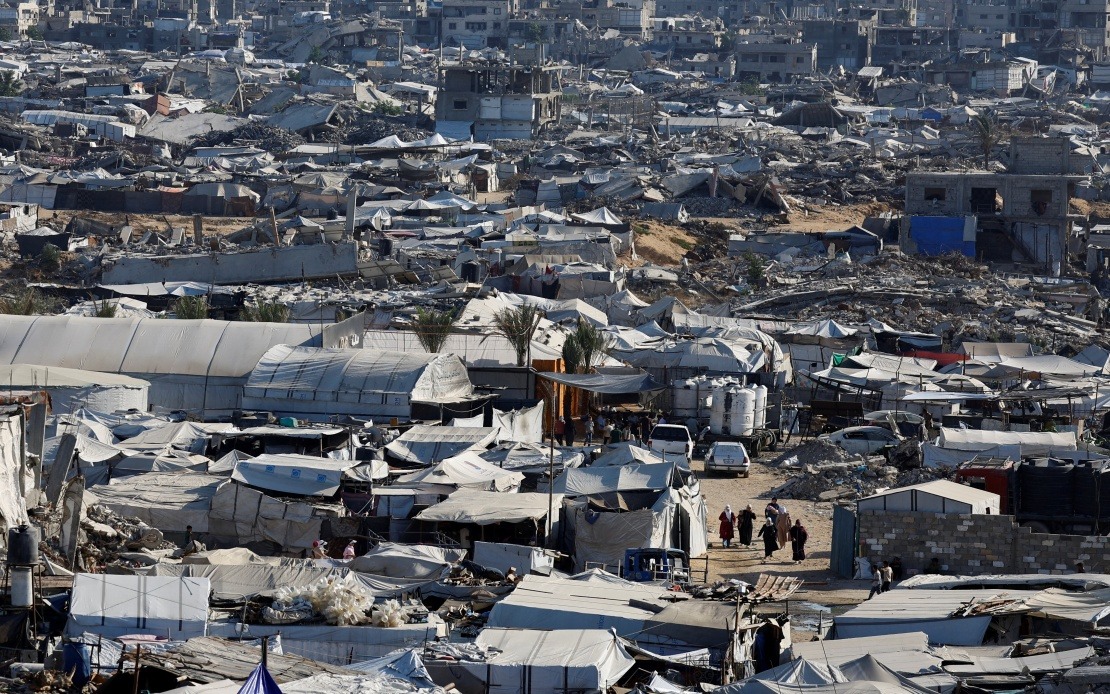
The human toll of ongoing military operations continues mounting despite formal ceasefire arrangements. According to Gaza's Health Ministry, Israeli military actions have resulted in 1,283 Palestinian deaths and 4,248 injuries since the ceasefire theoretically commenced. These figures underscore the gap between nominal agreements and ground-level reality, where security operations persist despite international diplomatic frameworks. The broader humanitarian catastrophe extends far deeper: since October 8, 2023, the overall toll exceeds 73,000 Palestinian deaths with more than 174,000 wounded, while approximately 90 percent of Gaza's infrastructure has been destroyed.
For Malaysian observers and Southeast Asian policymakers, these developments carry several implications. The conflict's persistence despite sustained American diplomatic engagement demonstrates the limits of external mediation when primary parties maintain fundamentally incompatible objectives. Malaysia, with its own experience managing intercommunal tensions and its substantial Palestinian diaspora, has historical interest in equitable conflict resolution frameworks. The Trump administration's willingness to fund stabilisation mechanisms, rather than pursuing narrower ceasefire arrangements, suggests a recognition that sustainable peace requires institution-building and long-term commitment—an approach with resonance for regional stability efforts elsewhere.
The funding notification to Congress, while technically routine, carries political weight as tangible American commitment to the proposed framework. Congressional notification requirements ensure legislative awareness and potential budgetary authority for stabilisation operations, signalling that Washington intends sustained involvement rather than temporary intervention. This institutionalisation of commitment may provide some incentive for other regional and international actors to invest in supporting mechanisms, though Israeli scepticism threatens to undermine the entire architecture.
The coming weeks will prove crucial in determining whether Israeli concerns about security and Palestinian commitment to disarmament can be reconciled within Washington's proposed framework, or whether fundamental disagreements will necessitate substantial revisions. The role of the Board of Peace, established to coordinate multinational efforts, will be tested in managing expectations across parties with divergent timelines and security assessments. For the broader Middle East and international community, including Southeast Asian nations with regional stakes, the outcome will shape approaches to other intractable conflicts where security concerns intersect with political settlement requirements.

