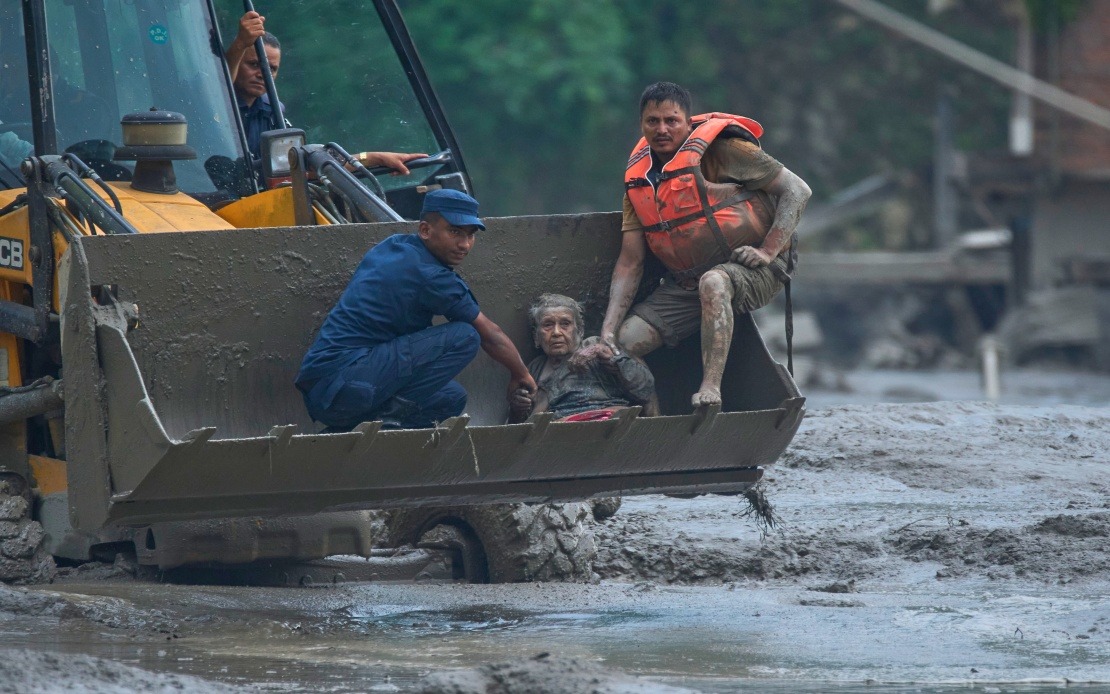
The governments of the United States and Canada announced their commitment to providing urgent humanitarian assistance to Nepal on Wednesday, responding to a natural disaster of extraordinary scale that has left scores of their nationals unaccounted for. Flash floods and destructive mudslides ravaged a mountainous region along Nepal's border with China, triggering what local authorities describe as one of the country's most severe weather-related catastrophes in recent years. The twin nations moved swiftly to signal their solidarity with the Nepali people and readiness to deploy resources in the coming days, even as the full extent of the damage and loss of life continues to emerge from affected areas.
US Secretary of State Marco Rubio expressed Washington's determination to back Nepal's government in its immediate response efforts, stating through the social media platform X that the State Department stands prepared to deliver necessary humanitarian support. His message carried undertones of deeper concern, with Rubio conveying that Americans are "united in prayer" for those impacted by the disaster. This language reflected the gravity of the situation and the high personal stakes involved for American citizens caught in the affected zone. The statement positioned the United States as a committed partner in Nepal's recovery, signalling that bilateral relations would extend to practical assistance beyond mere expressions of sympathy.
Canada's Prime Minister Mark Carney similarly characterised the unfolding catastrophe as "absolutely devastating" in his public comments, acknowledging the human toll and the emotional distress facing families separated by distance and circumstance. Carney's remarks on X underscored Canada's concern for its citizens affected by the disaster whilst also demonstrating empathy for the broader Nepali population facing displacement and grief. He explicitly stated that his government remains positioned to render support, though the precise nature and timeline of Canadian assistance has yet to be detailed by Ottawa's officials.
The casualty figures paint a sobering picture of the disaster's magnitude. Nepalese authorities have reported that at least 160 people have died across the affected zones, with a further 680 individuals still listed as missing following the initial flooding event. Among those unaccounted for are approximately 47 American citizens and roughly 24 Canadian nationals, according to data compiled by Nepal's government. Neither Washington nor Ottawa has independently verified these figures through their own diplomatic or intelligence channels, though both nations have acknowledged the figures as currently reported and are presumably working to obtain definitive confirmations.
The infrastructure damage sustained by Nepal extends far beyond the immediate loss of life and represents a significant setback to the country's development. At least 13 hydroelectric power generation facilities have been destroyed or rendered inoperable by the floods, a particularly severe blow to a nation dependent on such installations for electricity generation and export revenue. The floods have also swept away approximately 40 kilometres of roadway infrastructure, hampering the government's ability to deliver aid, evacuate residents, and assess the full scope of damage in mountainous areas where access remains severely restricted.
The scale of physical destruction includes some 200 commercial trucks and 19 bridges that were obliterated by the sheer force of water and debris flowing downslope. These figures, compiled by Nepal's government, suggest that the disaster has compromised both the nation's logistical capacity and its internal connectivity. The loss of bridges particularly threatens to isolate communities that may require weeks or months before alternative transportation routes can be established or repaired, complicating longer-term humanitarian operations and economic recovery.
From a regional perspective, this disaster highlights the vulnerability of South Asian nations to climate-driven extreme weather events. Nepal, positioned in the Himalayan region with steep topography and monsoon exposure, has historically faced challenges managing seasonal precipitation and managing hazard risk. The scale of this particular event suggests either unusual meteorological conditions or accumulated environmental degradation that may be amplifying the severity of natural hazards. For Malaysia and other Southeast Asian nations with similar geographic and climatic characteristics, the Nepali experience offers cautionary lessons about disaster preparedness and infrastructure resilience.
The rapid diplomatic response from Washington and Ottawa reflects both humanitarian concern and broader geopolitical considerations. Nepal occupies a significant position in regional dynamics, situated between two major powers and serving as a buffer state with considerable strategic importance. The presence of American and Canadian citizens in the country underscores the importance of these nations maintaining constructive relationships and demonstrating reliable partnership during crises. This coordinated messaging also signals to other nations in the region that developed democracies take their humanitarian obligations seriously.
The coming weeks will test both Nepal's internal capacity and the international community's willingness to sustain assistance beyond initial emergency declarations. The destruction of hydroelectric infrastructure creates not only immediate humanitarian concerns but also longer-term economic disruption that may require coordinated international investment to overcome. For Malaysia, observing how these crisis response mechanisms function provides valuable insights into preparedness and inter-governmental cooperation during transnational disasters where citizens of multiple nations require simultaneous support.

