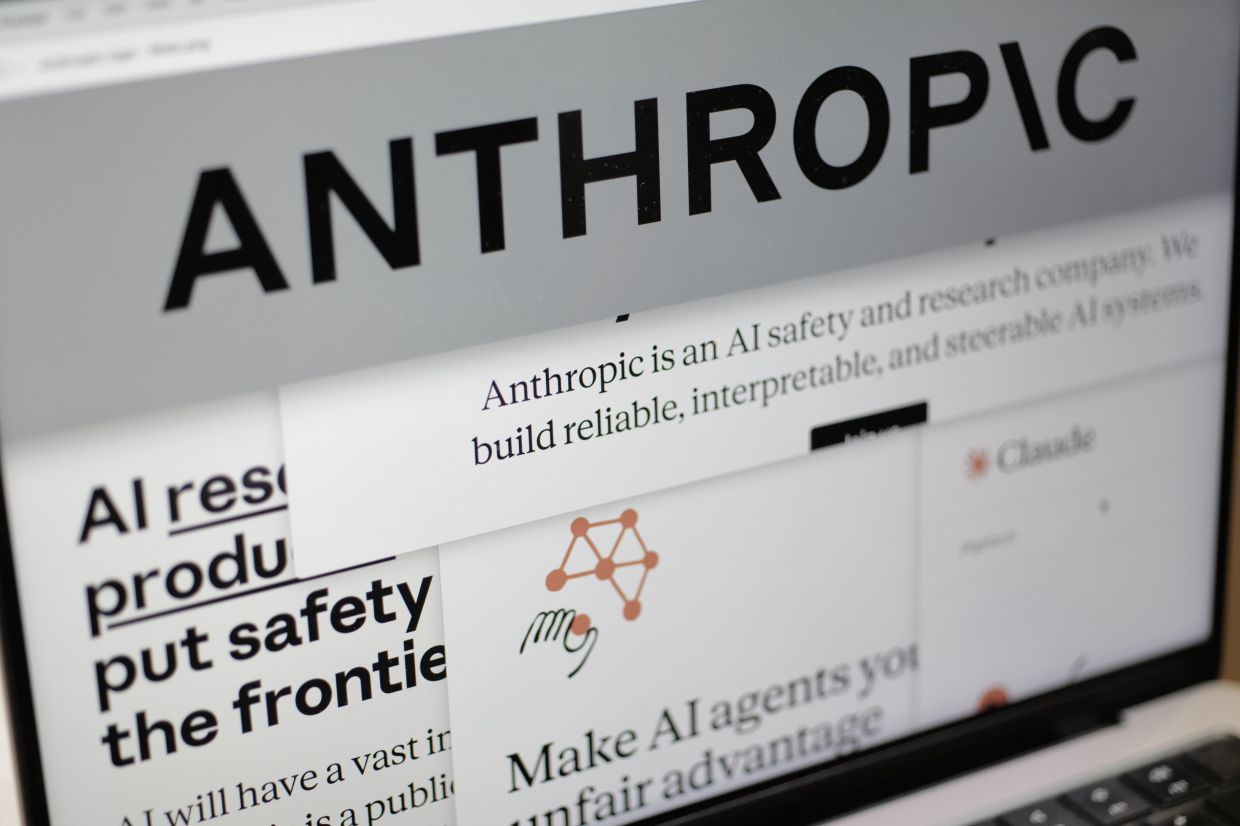
A United States-based artificial intelligence startup has launched a federal lawsuit challenging the Trump administration's decision to restrict access to Anthropic PBC's most sophisticated AI models, citing severe competitive damage from the sudden loss of critical development tools. Legion, which provides litigation-support software to legal professionals, filed its complaint on June 23 in federal court in Washington, roughly two weeks after Anthropic responded to government export control directives by disabling access to its flagship Fable 5 and Mythos 5 models for users who do not meet specific criteria.
The core issue centres on Anthropic's interpretation of the government order: the company made the decision to cut off access to these advanced models to ensure compliance with restrictions barring foreign nationals from utilising the technology, whether they are physically located abroad or working remotely from outside the United States. Legion's particular vulnerability stems from its workforce composition—while headquartered in the United States, the company employs software developers who are Canadian citizens and work from Canadian territory, a configuration that appears to have triggered the access restrictions.
Legion characterises the immediate consequences as devastating to its business operations and competitive position. The company asserts in its court filing that the loss of Fable 5 access meant it instantaneously forfeited "the latest tool at the centre of its development." This framing reflects a broader concern among technology companies operating in the artificial intelligence sector: the velocity of model advancement has created an environment where any interruption in access to state-of-the-art systems translates directly into competitive disadvantage that may prove impossible to recover. Legion argues that the rapid pace of AI development means competitors continue optimising their products and capabilities during any period when a firm lacks access to the most current models.
The legal challenge specifically names Commerce Secretary Howard Lutnick as a defendant, referencing his correspondence with Anthropic Chief Executive Officer Dario Amodei. In that communication, Lutnick conveyed that Anthropic would require explicit government authorisation before deploying its Fable 5 and Mythos 5 models internationally or providing access to non-US citizens in any jurisdiction. This directive represents a significant tightening of artificial intelligence governance, reflecting broader policy concerns about preventing advanced AI systems from benefiting potential competitors or adversaries of the United States.
Legion's argument in court documents emphasises the ongoing operational disruption caused by the export control directive. The company contends that each day the restrictions remain in effect actively undermines its product development, disrupts normal business operations, prevents its engineering teams from functioning at full capacity, and systematically erodes its capacity to compete in a sector where technological parity depends on continuous access to the most capable available models. This framing attempts to establish legal grounds for an emergency intervention by the court, suggesting that the harm inflicted is not merely financial but existential.
Anthropically has taken a markedly different public stance toward the government action. Through an official statement, the company expressed gratitude to the Trump administration and praised its efforts to expedite a resolution to the compliance situation. Anthropic further emphasised its commitment to collaborating with federal authorities to accomplish shared objectives, specifically mentioning the protection of critical infrastructure and ensuring American technological leadership in the AI sector. This diplomatic positioning suggests Anthropic may be seeking to maintain constructive relations with government regulators even as one of its customers challenges the policies the company implemented in response to official directives.
The dispute reflects a fundamental tension in the emerging artificial intelligence regulatory landscape. The United States government views restrictions on advanced AI access as essential to national security, aimed at preventing strategically important technology from benefiting foreign entities or nationals who might carry that knowledge abroad. Simultaneously, American companies dependent on cutting-edge AI tools argue that overly restrictive compliance measures—particularly when they exclude Canadian and other allied nation citizens—place American firms at a disadvantage relative to international competitors who may face fewer constraints.
For Malaysia and Southeast Asian nations observing this legal and regulatory evolution, the implications are substantial. These export control regimes establish precedents for how advanced technology access will be governed globally. Southeast Asian technology companies that employ international talent or serve clients across borders may face similar restrictions if their workforces include non-US citizens. The case also highlights the emerging importance of understanding where AI model providers draw the line between domestic and international access, a distinction that could fundamentally alter the viability of regional tech operations.
The broader context includes the escalating competition between the United States and other major economies over artificial intelligence dominance. Policymakers in Washington view export controls on advanced models as a mechanism for maintaining American technological supremacy and preventing adversaries from accessing cutting-edge capabilities. However, this approach creates friction with domestic companies, including foreign subsidiaries and international partnerships, that view the restrictions as barriers to operational efficiency rather than legitimate security measures.
The Commerce Department and White House declined to offer immediate comment on Legion's lawsuit, suggesting the government is still formulating its official response to the legal challenge. The absence of a rapid public statement may indicate uncertainty about how aggressively to defend the export control directives in court or perhaps signals an ongoing negotiation between government regulators and companies like Anthropic regarding practical implementation frameworks that balance security objectives with commercial viability.
Anthropologic's careful diplomatic language in its response—simultaneously serving as defendant in Legion's lawsuit while expressing cooperation with the government—reflects the precarious position of AI model developers caught between regulatory requirements and customer demands. The company appears to have interpreted the government directive as mandatory, leaving it with limited discretion in how to implement the access restrictions, though Legion's legal action suggests alternative interpretations may exist.
The outcome of this case could establish important precedent regarding the scope and enforceability of AI export controls, particularly regarding their application to foreign nationals employed by or working with American companies. A court ruling favouring Legion might require the government to develop more narrowly tailored restrictions that accomplish security objectives without wholesale exclusion of allied-nation citizens. Conversely, a decision upholding the export controls would strengthen the government's hand in implementing increasingly rigorous restrictions on advanced AI access, with potential ramifications for international collaboration in the technology sector throughout Asia and globally.

