The Upper Rajang Development Agency (URDA) is charting a strategic shift toward building a rural economy centred on innovation, technology, and high-value manufacturing rather than reliance on raw commodity exports. This pivot reflects growing recognition across Southeast Asia that traditional agricultural and resource-based models alone cannot sustain rural prosperity in an increasingly competitive global marketplace. The agency, led by chairman Datuk Seri Alexander Nanta Linggi, has signalled its intention to deepen collaboration with academic institutions, regional development bodies, and grassroots communities to achieve this transformation. The approach marks a significant departure from conventional development paradigms that have historically treated rural areas as resource suppliers rather than innovation hubs.
Nanta, who simultaneously serves as Kapit Member of Parliament and Malaysia's Works Minister, articulated a compelling case for repositioning rural development away from commodity dependency. He argues that lasting economic improvement in rural communities depends not on multiplying output of standardised raw materials, but on constructing integrated value chains that equip communities with the tools, knowledge, and market linkages needed to process, refine, and market goods at higher price points. This philosophy echoes development economics literature emphasising the role of value addition in breaking poverty cycles and enabling sustainable livelihoods. For rural Malaysia, particularly in East Malaysian states like Sarawak where resource extraction has long dominated, the implications are significant: communities could potentially move from being price-takers on global commodity markets to becoming participants in higher-margin, technology-enabled production.
Evidence for this approach's viability emerges from the demonstrated outcomes of URDA's High Impact Community Projects (HICP). These initiatives have already produced measurable results, with participating communities recording income increases exceeding 25 per cent. This performance suggests that deliberate investment in research dissemination, technological adoption, and skills transfer can translate into concrete economic gains within reasonable timeframes. The HICP results carry particular weight because they demonstrate real-world applicability rather than theoretical potential. For policymakers and development practitioners across the region wrestling with rural stagnation, such empirical outcomes provide persuasive validation of knowledge-intensive development strategies.
A cornerstone of URDA's strategy involves repositioning universities as strategic economic actors rather than mere research institutions isolated from community realities. Nanta emphasised that tertiary institutions possess untapped potential to serve as bridges between scientific knowledge and grassroots economic opportunity. When university research programmes are deliberately aligned with community needs, supported by coordinated government action, and implemented through dedicated development agencies, the result transcends conventional academic output. Instead of findings remaining confined to journals and conference presentations, they become the foundation for viable commercial enterprises that create employment and income. This model has gained traction globally, with institutions from land-grant universities in the United States to research centres across India increasingly functioning as economic development engines for surrounding regions.
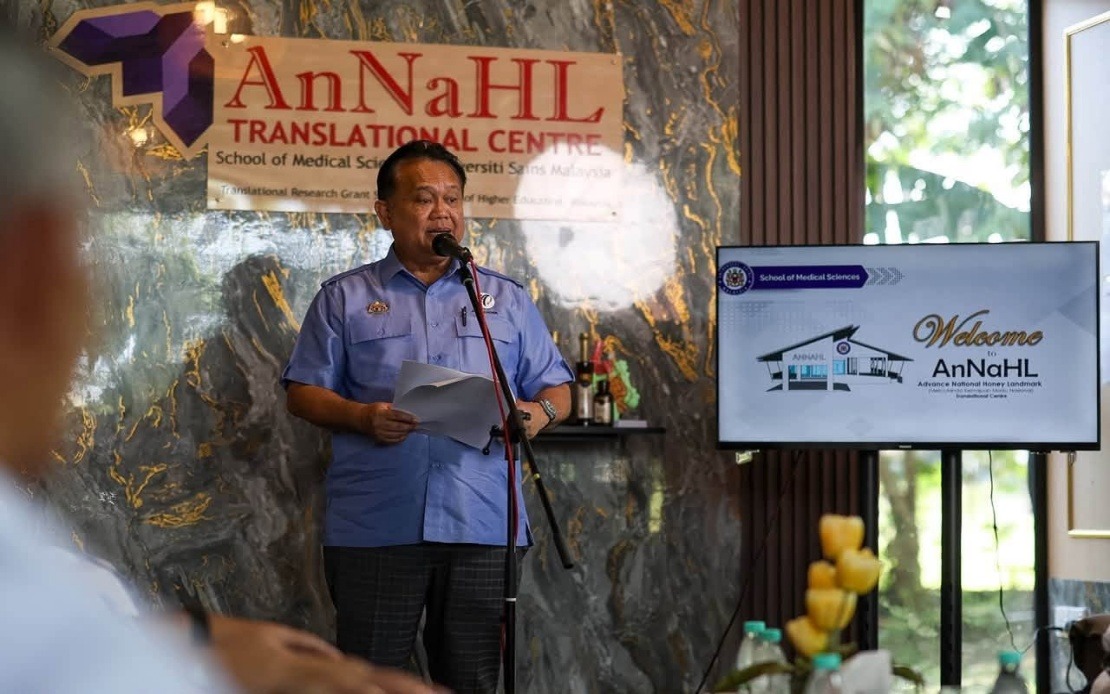
The practical instantiation of this strategy is visible in URDA's recent joint visit with the Regional Corridor Development Authority (RECODA) to the Advanced National Honey Landmark (AnNaHL) Translational Centre at Universiti Sains Malaysia's Health Campus in Kubang Kerian, Kelantan. This facility exemplifies the university-development agency partnership model. The centre's focus on stingless bee cultivation and honey production represents precisely the type of high-value agricultural diversification that can elevate rural incomes. Unlike conventional beekeeping using European honeybees, stingless bee farming requires less capital infrastructure, generates multiple revenue streams through honey, propolis, and pollen, and integrates well into smallholder agricultural systems. The centre's emphasis on processing, training, and market development creates a comprehensive ecosystem supporting producers rather than merely conducting research in isolation.
The selection of stingless bee farming and related activities across multiple locations within Kapit parliamentary constituency reflects deliberate strategic planning. Rather than scattered, uncoordinated initiatives, URDA is implementing clustered development projects that can achieve critical mass and economies of scale. This geographic concentration allows knowledge transfer networks to function more effectively, creates local expertise pools, and builds market visibility for products originating from specific regions. For consumers seeking authentic, locally-produced specialty foods, such geographic branding becomes a competitive advantage. The approach also acknowledges that successful rural transformation requires sustained institutional support, not one-off projects; clustering development initiatives within defined constituencies enables more effective oversight and intervention.
The broader context for URDA's initiative involves recognition that Sarawak's economy, whilst resource-rich, remains vulnerable to commodity price fluctuations and faces competition from low-cost producers in neighbouring countries. Rural communities in particular have limited employment options beyond subsistence agriculture, low-wage plantation work, or resource extraction. Without deliberate intervention to upgrade economic capabilities, rural-urban migration will continue, concentrating population and services in cities whilst draining human capital from countryside areas. By contrast, innovation-led rural development creates sustainable local opportunities that reduce migration pressure, preserve community social fabric, and distribute economic benefits more equitably across the state.
The implications of URDA's strategy extend beyond Sarawak. Rural development remains a pressing challenge across Malaysia and Southeast Asia as nations navigate the transition from commodity-dependent to knowledge-based economies. Most regional governments recognise that inclusive growth requires preventing rural regions from becoming economically hollowed out. However, translating this recognition into effective policy remains challenging. URDA's operational emphasis on partnerships, technology adoption, value addition, and market linkages provides a replicable model. Other development agencies, whether in Peninsular Malaysia's underdeveloped districts or in neighbouring countries facing similar rural stagnation, could adapt URDA's framework to local circumstances.
The involvement of RECODA alongside URDA in the AnNaHL visit signals inter-agency coordination that could amplify impact. Regional development authorities possess mandate and capacity to facilitate larger-scale market linkages, supply chain integration, and infrastructure investment. When development agencies work in concert rather than pursuing separate agendas, cumulative effect strengthens. Universities gain better understanding of practical constraints communities face. Communities access both research capacity and implementation support. Government agencies achieve coordinated leverage over resource deployment. This collaborative architecture, though administratively complex, appears essential for translating innovation into sustained economic transformation.
As Malaysia positions itself competitively amid regional economic integration and global technological change, the fate of rural communities significantly determines whether growth remains inclusive or concentrated in urban centres. URDA's explicit commitment to knowledge-driven, partnership-based rural development addresses this imperative. The challenge ahead involves sustaining political commitment beyond short-term electoral cycles, ensuring adequate funding reaches communities rather than remaining trapped in bureaucratic systems, and maintaining quality of university-community engagement so research remains grounded in community realities. If these implementation challenges can be navigated, URDA's model could help demonstrate that rural regions need not remain perpetually disadvantaged, but can instead become sites of innovation and prosperity.

