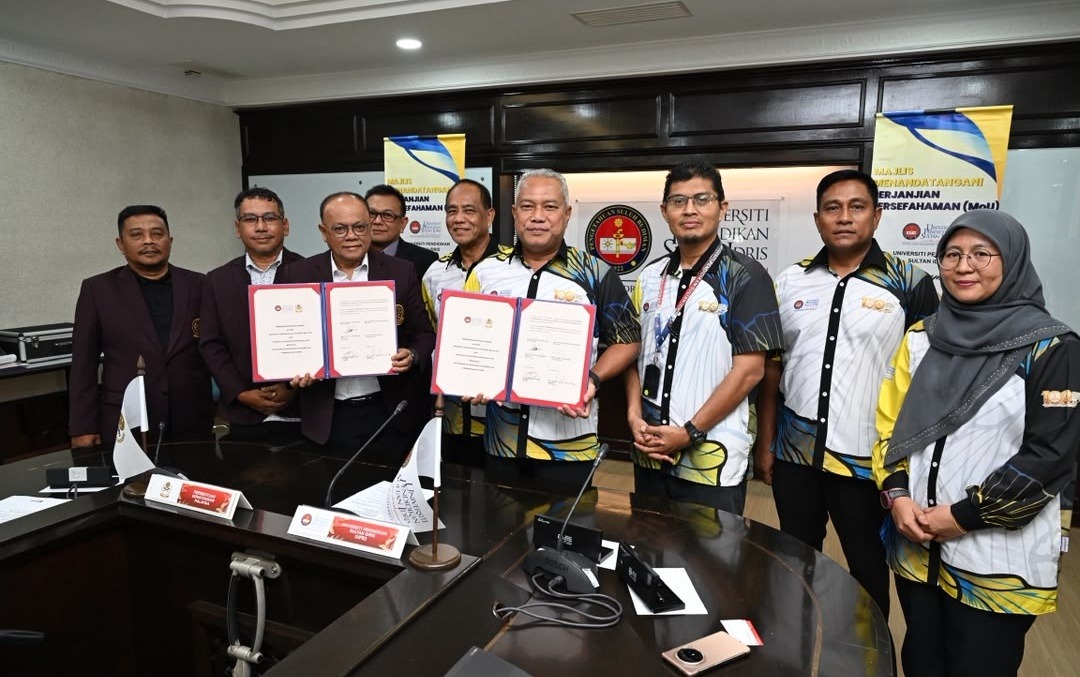
A significant collaboration between Universiti Pendidikan Sultan Idris (UPSI) and the Malaysian Sepaktakraw Federation (PSM) was formalised on July 15 with the signing of a Memorandum of Understanding aimed at advancing the traditional Southeast Asian sport through structured education and research initiatives. The agreement, executed at UPSI's Sultan Abdul Jalil Shah Campus in Tanjong Malim, represents a strategic commitment to intertwine athletic excellence with academic rigour—an increasingly critical approach as Malaysia seeks to maintain its competitive edge in a sport where the nation has historically excelled regionally.
The three-year accord, which may be extended through mutual consent, addresses a persistent challenge in Malaysian sports development: the reconciliation of intensive athletic training with formal education. UPSI Vice-Chancellor Prof Datuk Dr Md Amin Md Taff emphasised that the partnership would move beyond ceremonial intent to deliver tangible outcomes, with flexible scheduling arrangements that allow sepak takraw athletes to balance academic obligations against their training and competition calendars. This practical dimension tackles what has long frustrated promising young athletes in developing nations—the false binary between sporting ambition and educational attainment.
Critically, UPSI has committed to enrolling PSM-affiliated athletes across all levels of study, contingent upon meeting established academic standards. This conditionality preserves institutional integrity while creating genuine opportunity rather than performative inclusion. The university will leverage its substantial infrastructure and expertise to support athlete development, encompassing sports science consultation, coaching methodology, officiating standards, and technological applications in performance analysis. Such institutional capacity represents a resource many Malaysian athletes traditionally accessed only through overseas pathways, suggesting the partnership could reduce both financial barriers and brain drain within the sport.
The collaboration extends beyond athlete welfare to address systemic development gaps that have constrained sepak takraw's growth trajectory. A dedicated focus on talent identification, technical skill advancement, and the creation of a national training centre represents strategic infrastructure development. By consolidating these functions under academic and federation oversight, the arrangement may establish the systematic talent pipeline that separates elite-performing sports nations from those with intermittent success. This institutional scaffolding has proven essential for sports like badminton and squash, where Malaysia maintains world-class competitiveness through integrated domestic systems.
PSM Vice-President Tengku Zaihan Che Ku Abdul Rahman characterised the initiative as establishing a formalised educational pathway for athletes spanning Malaysian Sports Schools, State Sports Schools, and the broader national and state competitive structures. Such systematic progression is foundational to sustainable talent development, as it creates continuity between junior and senior competitive environments while maintaining educational standards throughout an athlete's career trajectory. The federation's positioning of this partnership as replicable demonstrates awareness that institutional collaboration may become a standard model for other Malaysian sports seeking to professionalise their talent development systems.
The emphasis on knowledge exchange between UPSI's sports science expertise and PSM's technical and competitive experience reflects an increasingly sophisticated understanding of modern athletic development. Malaysian sports historically struggled with the integration of scientific methodology—particularly biomechanics, nutrition, and recovery protocols—into training systems dominated by experiential coaching. This partnership directly addresses that gap by institutionalising the translation of academic research into practical athletic application. The sepak takraw context is particularly significant given the sport's technical complexity and the increasing physical demands of elite competition.
The agreement's specific attention to developing qualified coaches and technical officials points to a recognisable constraint in Malaysian sports administration. Coaching quality and certification standards remain inconsistent across many domestic sports, creating both safety concerns and limiting athlete development potential. By embedding coach development and official training within a university framework, the partnership creates mechanisms for standardising excellence and professionalising what have sometimes been informal or apprenticeship-based learning pathways. This institutional formality may prove as valuable as direct athlete support in elevating the sport's competitive standing.
For Malaysian athletes in sports schools—both national and state-level institutions—the arrangement opens possibilities previously requiring difficult choices between athletic and educational progression. Young athletes across Southeast Asia have traditionally faced barriers accessing quality tertiary education while pursuing elite sport, with Malaysia's state-level school systems providing useful but incomplete preparation. UPSI's participation effectively extends the educational infrastructure available to competitive athletes, potentially reducing dropout rates and improving long-term athlete welfare regardless of whether individuals achieve elite status.
The partnership also carries regional implications as a model for sports cooperation within Southeast Asia. Sepak takraw's concentration in the region—with Thailand, Vietnam, Indonesia, and Malaysia as primary competitors—means that talent development innovations by Malaysian institutions affect competitive balance throughout the region. If UPSI's systematic approach yields measurable improvements in athlete quality and consistency, other regional nations may pursue similar academic-sporting partnerships, potentially elevating overall competitive standards. Conversely, Malaysia's institutional advantages could deepen if the partnership succeeds in establishing a research and development advantage specific to the sport.
Looking forward, the anticipated progression toward a more detailed Memorandum of Agreement suggests both institutions envision deeper integration beyond the foundational MoU. Implementation specifics—including athlete selection criteria, scholarship mechanisms, and performance accountability measures—will determine whether this collaboration becomes a transformative institutional innovation or a well-intentioned but functionally limited agreement. The three-year timeline provides a natural evaluation point for assessing whether concrete benefits materialise for athletes and whether the national sepak takraw programme demonstrates measurable improvements in competitive outcomes and athlete retention through tertiary education.

